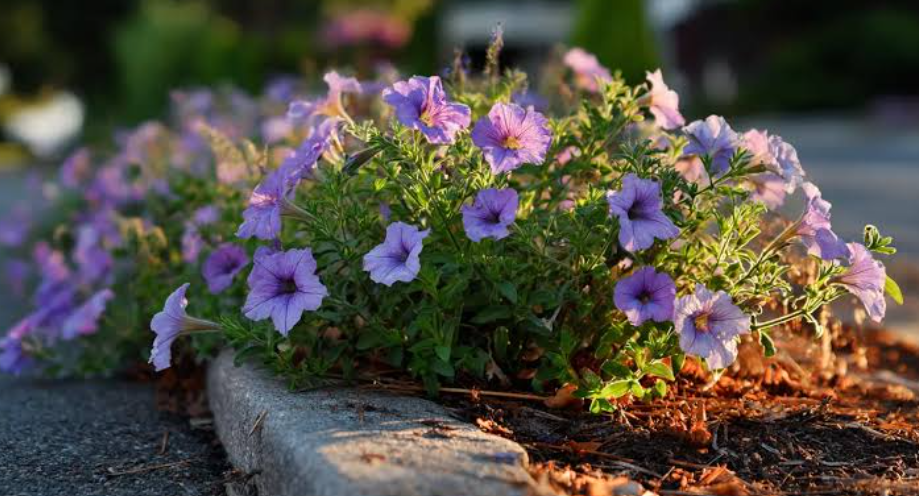
Petunias are one of the most versatile, most colorful, and most widely used annual flowering plants in landscape design, offering an extraordinary range of flower colors, plant habits, and design applications that make them indispensable in gardens of virtually every style and scale. From cascading hanging baskets to formal bedding schemes, from window boxes to large-scale commercial plantings, petunias deliver continuous, prolific color from late spring through the first frosts of autumn with minimal maintenance requirements that suit busy homeowners and professional landscapers alike.
1. Classic Bedding Display
Mass plant petunias in formal, geometric bedding schemes for a traditional, high-impact color display that suits formal garden settings, public parks, and front garden borders where maximum color intensity is the primary objective. Choose a single bold color — vivid red, electric purple, or pure white — for maximum visual impact, or use two contrasting colors in alternating blocks for a classic, structured bedding pattern that reads clearly from a distance.
2. Mixed Color Drifts
Plant petunias in loose, informal, mixed color drifts that blend several complementary colors together in a naturalistic, impressionistic pattern reminiscent of a wildflower meadow. Use warm tones — red, orange, yellow, and pink — together in one drift or cool tones — purple, lavender, white, and pale pink — in another for harmonious color combinations that look beautiful in cottage garden and informal planting styles.
3. Hanging Basket Cascade
Use trailing Wave or Supertunia varieties to create spectacular, overflowing hanging baskets where the long, flexible stems cascade 24 to 36 inches below the basket edge in a waterfall of vivid color. Plant a single bold color for maximum impact or combine complementary colors — purple and white, red and yellow, or pink and coral — for a more complex, interesting basket display that looks stunning flanking an entrance door or suspended from a pergola.
4. Window Box Planting
Plant petunias in window boxes for one of the most classically beautiful and universally appealing garden displays, combining trailing varieties that cascade over the front edge with mounding types that fill the center of the box with a generous, full, floriferous display. The Supertunia and Wave series trailing types are particularly effective in window boxes, quickly filling and overflowing the container to create the lush, abundant flower display associated with classic European alpine and cottage window box aesthetics.
5. Container Thriller-Filler-Spiller
Use petunias as the spiller component in the classic thriller-filler-spiller container design formula, where a tall, dramatic thriller plant in the center is surrounded by mounding filler plants and finished with trailing spillers like Wave petunias that cascade over the container edges. The prolific, long-season flowering of petunias makes them one of the finest spiller plants available for mixed container displays on patios, decks, and balconies throughout the summer months.
6. Garden Path Edging
Plant compact, mounding petunia varieties along both sides of a garden path to create a colorful, welcoming, flower-lined approach that guides visitors through the garden with vivid color and gentle fragrance. The Tidal Wave or Shock Wave series work particularly well for path edging, producing a continuous ribbon of color that stays attractive throughout the long growing season and can be trimmed lightly if needed to maintain a tidy edge along the path margin.
7. Front Door Welcome Planting
Frame the entrance to a home with petunias in large container urns or raised planters on either side of the front door, choosing colors that complement the house exterior and door color for a coordinated, welcoming, professional landscaping effect. Deep purple or red petunias suit red brick homes, white petunias suit dark grey or black exterior color schemes, and warm pink or coral tones suit cream and white rendered homes particularly well.
8. Poolside Planting
Plant petunias in generous drifts or containers around swimming pools for a vivid, tropical, resort-like color display that is virtually splash-proof and tolerates the warm, sunny, slightly humid conditions of the poolside environment exceptionally well. Choose bright, vivid tropical colors — hot pink, vivid orange, electric blue-purple, and pure white — that evoke a holiday, resort aesthetic and provide maximum visual impact when viewed from the pool or from adjacent outdoor seating and dining areas.
9. Slope and Bank Stabilization
Use spreading Wave petunia varieties to cover and stabilize sloped banks and gentle gradients where erosion control and attractive ground coverage are simultaneously required, as the vigorous, spreading stems of Wave types root at the nodes as they spread and create a dense, weed-suppressing, colorful mat across the slope surface. The spreading habit of Wave petunias can cover remarkably large areas from a relatively small number of plants, providing an economical and visually spectacular solution for bank coverage.
10. Raised Bed Color Blocks
Fill raised garden beds with petunias planted in bold, graphic color blocks — pure white, vivid purple, bright pink — for a clean, contemporary, high-impact formal garden display that is particularly effective when the raised bed edging material in wood, stone, or metal provides a strong structural contrast to the soft, abundant, colorful flower mass above. Raised bed petunias are particularly practical as the elevated position makes deadheading, watering, and maintenance considerably more comfortable than ground-level planting.
11. Balcony Railing Planters
Attach railing planters to balcony railings and fill them with trailing petunia varieties that cascade downward over the railing face, creating a beautiful, colorful curtain of flowers that transforms bare metal or timber railings into a spectacular flowering feature visible from both the balcony itself and from the street or garden below. The Easy Wave and Wave series trailing types are particularly effective in railing planters, quickly filling the container and producing long, cascading, flower-covered stems that hang far below the railing level.
12. Cottage Garden Border
Incorporate petunias into the informal, abundant, richly planted style of a traditional cottage garden border alongside foxgloves, delphiniums, roses, lavender, and other cottage garden staples, where the prolific, long-season flowering of petunias fills gaps between perennials and extends the color season well into autumn after many perennials have finished flowering. The more informal, loosely mounding growth habit of Grandiflora and Multiflora types suits cottage garden aesthetics better than the very rigid, formal habit of some modern compact series.
13. Monochromatic White Garden
Create an elegant, sophisticated all-white garden scheme using white petunias as the primary bedding and container plant, combined with white impatiens, white alyssum, silver dusty miller foliage, and white begonias for a luminous, serene, moonlit garden display that is particularly beautiful in the evening when white flowers appear to glow in low light. The pure white Ultra or Celebrity White petunia series provide outstanding, clean, pure white flowers of excellent garden performance suited to formal white garden planting schemes.
14. Hot Color Tropical Theme
Create a vivid, energetic, tropical-inspired garden display by combining the most intense, saturated petunia colors — electric purple, vivid magenta, fiery red, and bright orange — with complementary tropical-looking foliage plants including canna lilies, elephant ears, ornamental bananas, and coleus in deep red and bronze tones for a bold, exotic, high-impact planting scheme. The Supertunia Picasso series bicolor varieties with vivid veining add additional visual complexity to hot-colored tropical planting schemes.
15. Pastel Romance Garden
Design a soft, romantic, dreamy garden display using pastel petunia varieties — pale pink, soft lavender, blush cream, and very pale yellow — combined with ornamental grasses, roses in blush and apricot tones, and silver-leafed plants including artemisia and lamb’s ear for a gentle, romantic, painterly aesthetic that suits cottage, English country, and shabby chic garden styles. The Supertunia Vista Blush Pink and similar soft pastel varieties are particularly well-suited to romantic pastel garden schemes.
16. Vertical Wall Planter
Plant trailing petunias in vertical wall planter systems — pocket planters, palette planters, or modular wall-mounted containers — to create a living wall of cascading color on a fence, garage wall, or garden boundary that transforms a blank, uninspiring vertical surface into a spectacular, flowering garden feature. Wall-mounted petunia displays work particularly well on south-facing or west-facing walls that receive maximum sunshine throughout the day, with trailing Wave and Supertunia varieties producing the most generous and attractive cascade of flowers from vertical installations.
17. Driveway Border Planting
Line both sides of a driveway with generous drifts of petunias in a single bold color for a welcoming, impressive, colorful entrance to the property that creates a strong visual arrival experience for visitors approaching the home. Choose vigorous, weather-tolerant varieties like the Easy Wave series that can withstand the additional heat, dust, and reflected light of the driveway environment without losing flower quality, and repeat the same color scheme consistently on both sides of the drive for the strongest visual impact.
18. Children’s Garden
Plant petunias in a children’s dedicated garden area using the most vivid, cheerful, clear colors — bright red, vivid yellow, pure white, and electric purple — that appeal to children’s natural preference for clear, saturated, recognizable colors rather than the subtle, blended tones that suit adult aesthetic preferences. The fast growth, continuous flowering, and resilience of petunias suit the more casual, high-energy use patterns of children’s garden spaces, and the wide availability of petunia seeds makes them an excellent first seed-sowing project for young gardeners.
19. Evening Fragrance Garden
Select fragrant petunia varieties — many older Grandiflora types and some modern varieties including the Honey series are pleasantly fragrant in the evening — and plant them near outdoor seating areas, open windows, and along frequently walked paths where the fragrance can be appreciated at close range in the warm evening air when petunia scent is most pronounced and pleasantly pervasive. Combine fragrant petunias with other evening-scented plants including nicotiana, night-scented stock, and moonflower for a fully sensory evening garden experience.
20. Color Gradient Planting
Design a visually sophisticated color gradient or ombré planting scheme using petunias of closely related colors arranged in a smooth, progressive transition from one end of a border or bed to another — starting with deep purple, transitioning through mid-lavender, then pale lilac, then soft pink, and finally finishing with pure white at the far end — creating a smooth, painterly color transition that demonstrates the remarkable color range available within a single plant species. Color gradient plantings require careful variety selection and planning but produce extraordinary visual results.
21. Pollinator-Friendly Planting
Choose single-flowered, open-faced petunia varieties — particularly the older Grandiflora types with clearly visible central tubes — over double-flowered varieties where pollen access is restricted, and combine them with other pollinator-friendly plants to create a garden scheme that actively supports bees, butterflies, and hummingbirds throughout the long summer and autumn flowering season. Petunias are actively visited by bumblebees for nectar and by hummingbirds, particularly for red and vivid pink varieties, making them valuable components of wildlife-supporting garden designs.
22. Roof Garden and Terrace
Use petunias as the primary flowering plant in roof garden and terrace planting schemes where wind exposure, reflected heat from paving and building surfaces, and the need for lightweight containers with drought-tolerant plants make petunia’s resilience and prolific flowering particularly valuable. The Wave series trailing types are particularly well-suited to exposed roof garden and terrace conditions where their vigorous, spreading growth quickly covers large container surfaces and their weather tolerance reduces the impact of wind and heat stress on flowering performance.
23. Foundation Planting
Incorporate petunias into foundation planting schemes — the plantings immediately adjacent to house walls — where they provide seasonal color interest between permanent shrubs and perennials while filling the visual gaps that inevitably occur in the first years of establishment when new foundation plantings have not yet reached their full size. The mounding compact varieties including the Supertunia Mini series are particularly practical for foundation planting as their restrained size allows them to be used at the front of mixed foundation plantings without overwhelming the permanent plants behind them.
24. Color Theme Garden Rooms
Create distinct, color-themed garden rooms using petunias as the primary flowering element of each room’s color scheme — a blue and white room, an all-red hot room, a purple and silver room — with the room boundaries defined by hedges, trellises, or changes in paving material. The extraordinary color range of modern petunia varieties — spanning virtually every color except true green and black — makes them uniquely well-suited to color-themed garden room design where the primary plant must reliably deliver a specific, unwavering color throughout the entire season.
25. Vegetable Garden Companion Planting
Interplant petunias throughout the vegetable garden as companion plants that simultaneously improve the visual appeal of the productive garden, attract beneficial insects including pollinators and pest predators, and deter certain pest insects from adjacent vegetable crops. Petunias are reported to repel aphids, tomato hornworms, and asparagus beetles when planted nearby, making them a practically useful as well as visually attractive addition to the kitchen garden where beauty and productivity can be meaningfully combined.
26. Mediterranean Style Garden
Plant petunias in terracotta pots, amphoras, and Mediterranean-inspired containers alongside olive trees, lavender, rosemary, and ornamental grasses for a sun-baked, Mediterranean-style garden display that evokes the terraces and courtyards of southern France, Tuscany, and the Greek islands. Choose colors that suit the terracotta and warm stone aesthetic — vivid purple, deep blue-purple, rich coral, and warm crimson — alongside the silvery foliage of Mediterranean herbs for a harmonious, authentic Mediterranean garden palette.
27. Moonlight Garden
Create a magical evening and nighttime garden display using pure white petunias combined with other white-flowered plants — white nicotiana, white sweet alyssum, white impatiens — and silver or pale grey foliage plants including dusty miller, silver sage, and artemisia in a garden designed to be most beautiful after dark when white flowers reflect ambient light and appear to glow luminously against the dark garden background. White petunias are among the most effective white evening garden plants available, combining long season, prolific flowering, and genuine evening luminosity.
28. Amphitheatre Terracing
Use petunias to plant the terraced levels of an amphitheatre-style terraced garden, with each terrace level planted in a different but related color that creates a dramatic, visual layering effect when viewed from below or from an elevated vantage point. The horizontally layered colors of a well-planted terraced petunia display create one of the most visually impressive large-scale garden displays achievable with annual plants, combining the structural interest of terraced landscaping with the maximum color impact of mass petunia planting.
29. Interplanted Bulb Succession
Plant petunias between spring bulbs to provide continuous color from the moment the spring bulb display finishes, tucking petunia transplants into the gaps between fading tulip and daffodil foliage in late spring so that the petunias begin flowering just as the bulb display ends and continue producing color through the entire summer and autumn in the same bed. This succession planting approach maximizes the seasonal color productivity of every square foot of garden space and eliminates the gap in color that typically occurs between spring bulb and summer annual displays.
30. Stairway and Steps Planting
Plant petunias in pots positioned at the base and sides of outdoor steps and stairways, using trailing varieties that cascade down the step risers to soften the hard, architectural lines of stone or concrete steps with an abundance of soft, colorful, cascading flowers. A stairway flanked by generous petunia plantings in complementary colors creates a welcoming, visually dramatic garden entrance that encourages visitors to slow down and appreciate the planting as they move through the garden.
31. Aromatic Herb and Flower Border
Combine petunias with aromatic herbs — lavender, rosemary, sage, and thyme — in a mixed border that provides both sensory fragrance and vivid color simultaneously, creating a garden space that rewards both the visual and olfactory senses throughout the summer months. Purple and lavender petunia varieties complement the blue-purple tones of lavender and sage flowers particularly harmoniously, and the petunia’s continuous, prolific flowering extends the color of the border well beyond the limited flowering season of most culinary herbs.
32. Large-Scale Public Planting
Use robust, weather-tolerant petunia varieties including the Tidal Wave and Easy Wave series for large-scale public landscape plantings in parks, civic spaces, roundabouts, and public gardens where maximum seasonal color impact with minimum maintenance requirements is the primary landscape objective. The Wave series varieties can cover extraordinary areas from relatively small numbers of plants — a single Wave petunia can spread 3 to 4 feet in a single season — making them among the most cost-effective annual flowering plants for large-scale public landscape applications.
33. Naturalistic Prairie Style
Incorporate petunias into naturalistic prairie-style planting schemes alongside ornamental grasses, coneflowers, rudbeckia, and native wildflowers, choosing the simpler, more open-faced, single-flowered petunia varieties that have a less artificially cultivated appearance than the very formal, densely petalled modern bedding types. The slightly looser, more casual habit of older Grandiflora petunia varieties suits the naturalistic aesthetic of prairie-inspired garden design better than the very compact, geometrically uniform modern series varieties.
34. Night Garden Lighting
Combine white and pale yellow petunias with strategic garden lighting — uplighting, pathway lighting, and spotlighting — to create a dramatic, theatrical nighttime garden display where the illuminated white and pale flowers appear to float in the darkness with a dramatically beautiful effect quite different from the daytime garden appearance. White petunias around garden light fixtures catch and amplify the light beautifully, and the combination of warm white LED lighting with white petunia flowers creates one of the most elegant and atmospheric effects achievable in a contemporary residential garden.
35. Wildflower Meadow Transition
Plant petunias in the transition zone between a formal garden and a wildflower meadow area, using them to bridge the aesthetic gap between the highly cultivated formal garden and the wilder, more naturalistic meadow planting with a middle zone of color-rich but somewhat informal petunia planting that gradually transitions in density and formality between the two contrasting garden styles. Purple and magenta petunia varieties in particular work well in meadow transition zones as their color harmonizes with the purple, pink, and white tones typical of British and European wildflower meadow plantings.
36. Four-Season Interest Container
Create the summer and autumn component of a four-season interest container by planting petunias in summer following spring bulbs, planning to replace the petunias with winter-interest plants including ornamental kale, winter pansies, and dwarf evergreen grasses when autumn frosts terminate the petunia display. This four-season rotation approach maximizes the year-round ornamental productivity of permanent container plantings by ensuring that each seasonal plant is specifically selected for maximum performance during its designated season, with petunias providing the most prolific, long-lasting, and colorful contribution of the four-season rotation during the critical summer and early autumn period.