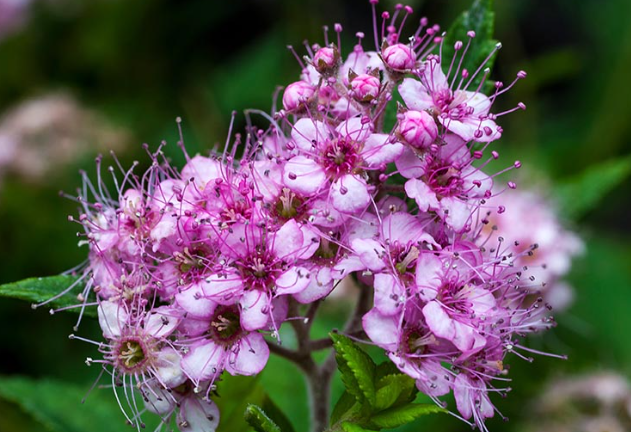
Spirea is a genus of flowering shrubs in the rose family (Rosaceae), comprising around 80 to 100 species native to the temperate regions of the Northern Hemisphere, with the greatest diversity found across Asia, Europe, and North America. These deciduous shrubs are among the most widely planted ornamental plants in temperate gardens worldwide, valued for their profuse blooms, attractive foliage, and remarkable adaptability to a wide range of growing conditions. Whether used as foundation plantings, hedges, mass plantings, or specimen shrubs, spirea consistently delivers high visual impact with relatively low maintenance demands, making it a staple of residential and commercial landscaping alike.
Spirea shrubs typically range in height from 2 to 6 feet, with spreads that can match or exceed their height, making them versatile for a wide range of landscape applications. Most species are hardy across USDA zones 3 through 9, meaning they can withstand winter temperatures as low as minus 40 degrees Fahrenheit in their hardiest forms — a remarkable cold tolerance that contributes to their popularity across much of North America, Europe, and temperate Asia. Bloom times vary significantly by species, with early-blooming types like Bridal Wreath flowering in spring on old wood and summer-blooming types like Japanese spirea flowering on new wood from late spring through summer, giving gardeners options for extending color across multiple seasons.
The genus has been extensively hybridized over the past century, producing dozens of cultivated varieties with improved foliage color, compact growth habits, and extended bloom periods. Some of the most popular modern cultivars, such as the Goldflame and Magic Carpet series, were selected specifically for their striking golden or red-tinted foliage that provides ornamental value even when the plants are not in bloom. The spirea market is a significant segment of the ornamental shrub industry in the United States, where nursery production of flowering shrubs represents a multi-billion dollar sector and spirea cultivars routinely appear among the top-selling landscape shrubs at garden centers nationwide.
Spirea is also notable for its ecological value, as its flowers are rich in nectar and pollen and attract a wide range of pollinators including bees, butterflies, and hoverflies. Several species have naturalized outside their native ranges and are considered invasive in parts of North America, particularly Japanese spirea (Spirea japonica) and Himalayan spirea (Spirea tomentosa lookalikes), prompting some states to restrict their sale and encouraging gardeners to seek native alternatives where possible. Despite these concerns, responsible cultivation of non-invasive cultivars and sterile hybrids continues to make spirea one of the most rewarding and accessible shrubs available to gardeners of all skill levels.
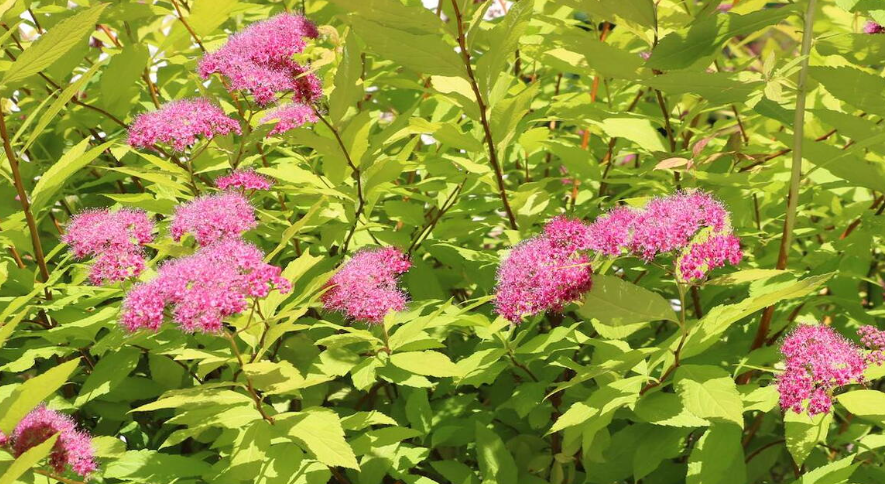
Types of Spirea (Spiraea spp.)
Bridal Wreath Spirea (Spiraea prunifolia)
Bridal Wreath is one of the most beloved classic spirea varieties, producing cascading arching branches smothered in small, perfectly double white flowers in early to mid spring. It can reach 6 to 8 feet in height and spread, making it one of the larger spirea species, and its foliage turns attractive shades of orange and red in autumn. Hardy in USDA zones 4 to 8, it is best suited to spacious landscapes where its graceful arching form can be displayed without heavy pruning.
Vanhoutte Spirea (Spiraea x vanhouttei)
Vanhoutte spirea is a hybrid between Spiraea trilobata and Spiraea cantoniensis and is arguably the most widely planted spirea in North America. It produces spectacular masses of white flowers along arching stems in late spring, creating a fountain-like effect that makes it one of the showiest shrubs of the season. Growing 6 to 8 feet tall and wide, it is hardy in USDA zones 3 to 8 and is frequently used as a hedge, screen, or large specimen shrub.
Japanese Spirea (Spiraea japonica)
Japanese spirea is one of the most commonly cultivated species in the genus, valued for its flat-topped clusters of pink to rose-red flowers that appear from late spring through summer. It is a compact, mounding shrub typically growing 2 to 5 feet tall and wide depending on the cultivar, and it blooms on new wood, meaning it can be pruned in late winter without sacrificing the season’s flowers. Hardy in USDA zones 4 to 9, it has naturalized in parts of North America and is classified as invasive in several eastern states.
Goldflame Spirea (Spiraea japonica ‘Goldflame’)
Goldflame is one of the most popular spirea cultivars in the world, prized as much for its foliage as for its flowers. New spring growth emerges in vivid shades of copper, orange, and red before maturing to golden yellow in summer, then shifting to orange-red tones again in autumn, providing three seasons of color. It produces rosy-pink flower clusters in early summer, grows 2 to 3 feet tall and wide, and is hardy in USDA zones 4 to 9.
Magic Carpet Spirea (Spiraea japonica ‘Magic Carpet’)
Magic Carpet is a dwarf cultivar of Japanese spirea that stays exceptionally compact, typically reaching only 18 to 24 inches in height and spread. Its new foliage emerges in brilliant red-orange tones, matures to golden yellow, and is adorned with small pink flower clusters in early summer, making it one of the most colorful small shrubs available. It is hardy in USDA zones 3 to 9 and is particularly popular for use in rock gardens, borders, and mass plantings.
Little Princess Spirea (Spiraea japonica ‘Little Princess’)
Little Princess is a compact, mounding cultivar that grows 2 to 3 feet tall and wide, forming a neat, well-behaved dome of fine-textured blue-green foliage. It produces abundant rosy-pink flower clusters in early summer and often reblooms if deadheaded promptly, and its foliage takes on pleasant reddish tones in autumn. Hardy in USDA zones 4 to 9, it is a reliable, low-maintenance choice for small gardens, edging, and foundation plantings.
Anthony Waterer Spirea (Spiraea x bumalda ‘Anthony Waterer’)
Anthony Waterer is one of the oldest and most enduring spirea cultivars, having been in cultivation since the late 19th century and remaining popular for good reason. It produces large, flat-topped clusters of bright carmine-pink flowers from early to midsummer and grows 3 to 5 feet tall and wide with a rounded, spreading habit. Hardy in USDA zones 3 to 9, it is one of the hardiest of the summer-blooming spireas and is extremely tolerant of urban conditions including pollution and compacted soils.
Neon Flash Spirea (Spiraea japonica ‘Neon Flash’)
Neon Flash is a vigorous, upright cultivar known for producing some of the most intensely colored flowers in the genus, with brilliant magenta-red flower clusters that stand out dramatically against its dark green foliage. It grows 3 to 4 feet tall and wide, blooms in early to midsummer, and reblooms reliably if spent flower heads are removed. Hardy in USDA zones 4 to 9, it is a popular choice for adding bold color to summer landscapes.
Snowmound Spirea (Spiraea nipponica ‘Snowmound’)
Snowmound is a vigorous, arching shrub that produces a spectacular display of small white flowers along the length of its branches in late spring, creating the mounded, snow-covered appearance that gives it its name. It grows 3 to 5 feet tall and wide and has attractive blue-green foliage that remains clean and healthy looking through the summer season. Hardy in USDA zones 3 to 8, it is one of the best white-flowering spireas for use as a specimen or in mixed shrub borders.
Double Play Gold Spirea (Spiraea japonica ‘SMSGJSG’)
Double Play Gold is a modern cultivar selected for its outstanding golden-yellow foliage that holds its color throughout the entire growing season without fading to green in summer heat. It produces pink flower clusters in early summer but is grown primarily as a foliage plant, forming a compact mound 2 to 3 feet tall and wide. Hardy in USDA zones 4 to 9, it pairs beautifully with purple-foliaged plants for high-contrast combinations in the landscape.
Double Play Artisan Spirea (Spiraea japonica ‘SMSJMDD’)
Double Play Artisan is a standout cultivar with striking orange-red new growth that matures to an unusual blue-green, providing a two-toned effect throughout the growing season. Pink flowers appear in summer, and the foliage shifts to shades of orange and red in autumn, giving this cultivar exceptional four-season interest. It grows 2 to 3 feet tall and wide and is hardy in USDA zones 4 to 9.
Tor Birchleaf Spirea (Spiraea betulifolia ‘Tor’)
Tor is a cultivar of the native birchleaf spirea, a species indigenous to North America, making it an ecologically valuable alternative to Asian spirea species. It grows 3 to 4 feet tall and wide with a neat, rounded habit and produces flat clusters of white flowers in late spring, followed by exceptional fall foliage in shades of orange, red, and purple. Hardy in USDA zones 3 to 7, it is an excellent choice for gardeners seeking native or near-native plant options.
Pink Ice Spirea (Spiraea japonica ‘Pink Ice’)
Pink Ice is a distinctive cultivar known for its variegated foliage, which displays an unusual mix of green, white, and pink tones throughout the growing season. It grows 2 to 3 feet tall and wide and produces pink flower clusters in summer that complement its colorful leaves. Hardy in USDA zones 5 to 9, it is best sited in a location with some afternoon shade to prevent the foliage from scorching and to preserve its striking variegation.
Limemound Spirea (Spiraea japonica ‘Limemound’)
Limemound is a compact cultivar with soft lime-green to yellow foliage that provides a fresh, luminous quality in the landscape throughout the growing season. It produces light pink flowers in early summer and its foliage deepens to orange and red tones in autumn, adding seasonal interest well beyond the bloom period. Growing 3 to 4 feet tall and wide and hardy in USDA zones 4 to 9, it is particularly effective when used to brighten shaded or partially shaded areas of the garden.
Shirobana Spirea (Spiraea japonica ‘Shirobana’)
Shirobana, also known as Shibori spirea, is a fascinating cultivar that produces flower clusters in three distinct colors simultaneously — white, pink, and deep rose — on the same plant, creating a naturally multicolored effect without any human intervention. It grows 2 to 3 feet tall and wide with a neat mounding habit and blooms in midsummer, with the different colored flowers often appearing in different sections of the same flower cluster. Hardy in USDA zones 4 to 9, it is a conversation piece in any garden setting.
Crispa Spirea (Spiraea japonica ‘Crispa’)
Crispa is an unusual cultivar distinguished by its deeply cut, crinkled, and twisted foliage that gives it a fine-textured, almost ferny appearance quite different from typical spirea. It produces rose-pink flower clusters in summer and grows 3 to 4 feet tall and wide with a loose, open habit. Hardy in USDA zones 4 to 8, it is valued by gardeners who want textural variety in their shrub plantings.
Triumphans Spirea (Spiraea x billardii ‘Triumphans’)
Triumphans is a tall, upright hybrid spirea that produces striking rose-purple flower spikes rather than the flat-topped clusters typical of most spireas, giving it a distinctly different silhouette in the landscape. It can reach 5 to 6 feet in height with a spreading, suckering habit that makes it effective for naturalizing or controlling erosion on slopes. Hardy in USDA zones 3 to 8, it blooms in midsummer and provides a bold vertical accent in mixed shrub borders.
Meadowsweet Spirea (Spiraea alba)
Meadowsweet is a native North American spirea species found naturally in moist meadows, stream banks, and wetland edges across the eastern and central United States and Canada. It grows 3 to 4 feet tall with upright stems bearing narrow, toothed leaves and terminal clusters of small white flowers in midsummer, providing valuable habitat for native pollinators. Hardy in USDA zones 3 to 6, it is an excellent choice for rain gardens, bioswales, and naturalized wet areas where many ornamental shrubs would struggle.
Steeplebush Spirea (Spiraea tomentosa)
Steeplebush is a native North American spirea with distinctive steeple-shaped spikes of rose-pink to purple flowers that appear in midsummer to early autumn, making it one of the later-blooming members of the genus. The undersides of its leaves are covered in dense, rust-colored woolly hairs that give the species its tomentosa name and add a subtle textural quality to the plant. Hardy in USDA zones 3 to 6, it thrives in moist, acidic soils and is a valuable plant for wet native gardens and wildlife habitats.
Ural False Spirea (Sorbaria sorbifolia)
Ural false spirea is technically not a true spirea but is closely related and often sold and used in the same landscape contexts. It produces large, feathery plumes of white flowers in midsummer and has attractive pinnate leaves that resemble those of an ash tree, giving it a bold, tropical texture quite different from true spireas. Hardy in USDA zones 2 to 7, it spreads aggressively by suckers and is best used in large naturalized areas or as a bank stabilizer where its spreading habit is an asset.
Mellow Yellow Spirea (Spiraea thunbergii ‘Ogon’)
Mellow Yellow, also sold under the name Ogon, is a cultivar of Thunberg spirea with soft, fine-textured golden-yellow foliage that creates a delicate, airy effect in the landscape throughout the growing season. It blooms very early in spring, often before the foliage fully emerges, with small white flowers lining its slender arching branches in a display that signals the end of winter. Hardy in USDA zones 4 to 8, it grows 3 to 5 feet tall and wide and is one of the first shrubs to show color in the spring garden.
Thunberg Spirea (Spiraea thunbergii)
Thunberg spirea is among the earliest blooming of all spireas, producing masses of small white flowers along its wiry, arching branches in late winter to early spring, often while the plant is still leafless. Its narrow, fine-textured leaves give it a delicate, almost bamboo-like appearance through the growing season, and they turn soft orange and yellow in autumn. Hardy in USDA zones 4 to 8, it grows 3 to 5 feet tall and wide and is prized for its very early season bloom and graceful, informal habit.
Grefsheim Spirea (Spiraea cinerea ‘Grefsheim’)
Grefsheim is a vigorous hybrid spirea that produces one of the most spectacular spring flower displays of any shrub in its size class, with arching branches completely blanketed in small double white flowers in mid-spring. It grows 4 to 5 feet tall and wide with a fountaining, graceful habit and clean blue-green foliage that remains attractive through the summer. Hardy in USDA zones 4 to 7, it is an excellent alternative to Vanhoutte spirea where a slightly more refined appearance is desired.
Golden Princess Spirea (Spiraea japonica ‘Golden Princess’)
Golden Princess is a compact, golden-foliaged cultivar that offers a neat, low-mounding habit suitable for small gardens, containers, and formal edging. New growth emerges with bronze and orange overtones before maturing to bright golden-yellow, and pink flower clusters appear in early summer. It grows 24 to 36 inches tall and wide and is hardy in USDA zones 4 to 9, making it one of the most versatile small foliage shrubs available to temperate gardeners.
Superstar Spirea (Spiraea japonica ‘Superstar’)
Superstar is a newer cultivar selected for its exceptionally large and vividly colored flower clusters, which are a deeper, more saturated pink than most Japanese spirea cultivars. It grows 3 to 4 feet tall and wide with a dense, upright habit and blooms from early to midsummer with reliable reblooming if deadheaded. Hardy in USDA zones 4 to 9, it is an excellent choice for gardeners who prioritize flower power over foliage color in their spirea selection.
Dakota Goldcharm Spirea (Spiraea japonica ‘SMSPBW’)
Dakota Goldcharm is a dwarf cultivar developed by the South Dakota Agricultural Experiment Station, selected specifically for superior cold hardiness and compact, uniform growth. It forms a tidy mound just 15 to 18 inches tall and wide with golden-yellow foliage and pink flowers in summer, making it one of the smallest spirea cultivars commercially available. Hardy in USDA zones 3 to 9, it is ideal for rock gardens, small borders, and low-maintenance mass plantings in cold climates.
Firelight Spirea (Spiraea japonica ‘Firelight’)
Firelight is a vigorous cultivar distinguished by its exceptionally vivid new growth, which emerges in brilliant shades of flame-orange and red before gradually maturing to green and then turning fiery again in autumn. It produces large clusters of deep pink flowers in midsummer and grows 3 to 4 feet tall and wide with a rounded, full habit. Hardy in USDA zones 4 to 9, the intense seasonal foliage transitions make it one of the more dramatic spirea cultivars for four-season interest.
White Gold Spirea (Spiraea japonica ‘White Gold’)
White Gold is a distinctive cultivar that combines white flowers with golden-yellow foliage, creating a softer, more harmonious color combination than the pink-flowered golden spireas that dominate the market. It grows 2 to 3 feet tall and wide with a compact, mounding habit and blooms in early to midsummer. Hardy in USDA zones 4 to 9, it is particularly effective in low-contrast, monochromatic garden designs built around white, cream, and gold tones.
Sparkling Supreme Spirea (Spiraea japonica ‘Sparkling Supreme’)
Sparkling Supreme is a robust cultivar known for its large, vivid pink flower clusters and its ability to rebloom heavily through the summer with minimal deadheading. It grows 3 to 5 feet tall and wide with a vigorous, upright-spreading habit and dark green foliage that provides a strong contrast to the bright flowers. Hardy in USDA zones 4 to 9, it is a good choice for gardeners who want a larger, more assertive spirea with maximum flower impact.
Willow-Leaved Spirea (Spiraea salicifolia)
Willow-leaved spirea is a suckering, upright species native to central Europe and parts of Asia, producing narrow spikes of pink to white flowers in midsummer on plants that can reach 4 to 6 feet in height. It spreads readily by underground stolons and can form large colonies over time, making it well suited to naturalizing in moist, partly shaded areas where other plants struggle. Hardy in USDA zones 3 to 7, it has naturalized in parts of North America and is valued in wildlife gardens for its late-season nectar.
Three-Lobed Spirea (Spiraea trilobata)
Three-lobed spirea is a species native to central Asia and Siberia, recognized by its small, rounded, three-lobed leaves and masses of tiny white flowers produced along arching stems in late spring. It grows 3 to 4 feet tall and wide with a compact, rounded habit and is notably more drought tolerant than many other spirea species once established. Hardy in USDA zones 3 to 7, it is an underused species with excellent cold hardiness and clean summer foliage that deserves wider recognition in North American gardens.
Ogon Thunberg Spirea (Spiraea thunbergii ‘Ogon’)
A golden-leaved form of Thunberg spirea, Ogon combines the species’ characteristic early bloom and fine-textured, arching habit with soft yellow foliage that lightens the spring garden considerably. White flowers appear along the branches in very early spring, often coinciding with late winter bulbs, before the golden leaves fully emerge to carry the display through summer and into autumn. Hardy in USDA zones 4 to 8, it grows 4 to 5 feet tall and wide and is most striking when backlit by morning or afternoon sun.
Fortune’s Spirea (Spiraea fortunei)
Fortune’s spirea is a Chinese species introduced to Western horticulture in the 19th century by plant hunter Robert Fortune, producing flat-topped clusters of pink to white flowers in early summer on upright, arching stems. It grows 4 to 6 feet tall and is less commonly seen in modern gardens than its Japanese relatives, but it offers a somewhat more informal, naturalistic character that suits cottage and woodland garden styles. Hardy in USDA zones 5 to 9, it is valued in warmer climates where some of the cold-hardy Japanese spirea cultivars may perform less reliably.
Bullata Spirea (Spiraea japonica ‘Bullata’)
Bullata is a slow-growing, very dwarf cultivar with unusually puckered, crinkled, dark green leaves that give it a coarse, distinctive texture quite unlike any other spirea. It grows only 12 to 18 inches tall and wide over many years and produces small clusters of deep rose-pink flowers in summer, making it more of a collector’s plant than a mainstream landscape shrub. Hardy in USDA zones 5 to 8, it is best used as a specimen in a rock garden or trough where its unusual foliage texture can be appreciated up close.
Spirea douglasii (Rosy Spirea)
Rosy spirea is a native North American species found along stream banks and in moist clearings from California north to British Columbia and east to Idaho and Montana. It produces showy, upright spikes of rose-pink flowers from midsummer into early autumn and spreads by stolons to form dense, wildlife-friendly thickets 3 to 6 feet tall. Hardy in USDA zones 5 to 9, it is an excellent native plant for erosion control, riparian restoration, and wildlife habitat gardens in the Pacific Northwest and Mountain West.
Spirea densiflora (Mountain Spirea)
Mountain spirea is a low-growing native species found in subalpine and alpine habitats across western North America, from the Rocky Mountains to the Sierra Nevada and Cascades. It produces dense, rounded clusters of rose-pink flowers in midsummer and typically stays under 3 feet in height, making it naturally suited to rock gardens and native plant landscapes. Hardy in USDA zones 4 to 7, it is more drought and cold tolerant than many ornamental spireas and has value as a low-water native planting option for western gardens.
Spirea betulifolia (Birchleaf Spirea)
Birchleaf spirea is a native North American species with attractive, oval, birch-like leaves and flat-topped clusters of white flowers in late spring and early summer. It grows 2 to 4 feet tall and wide with a neat, rounded habit and is notable for its outstanding autumn foliage, which turns brilliant shades of orange, red, and burgundy. Hardy in USDA zones 3 to 7, it is one of the best native alternatives to Asian spirea species and is increasingly available through native plant nurseries.
Spirea virginiana (Virginia Spirea)
Virginia spirea is a rare, federally threatened native species found only in a handful of stream corridors in Virginia, West Virginia, Tennessee, Kentucky, and Georgia. It produces clusters of white flowers in early summer on arching, stoloniferous stems and grows 3 to 6 feet tall in moist, rocky streamside habitats. Hardy in USDA zones 5 to 8, it is grown by specialty nurseries and conservation-minded gardeners, and cultivating it in appropriate garden settings can help reduce pressure on wild populations.
Spirea x cinerea ‘Charming’
Charming is a compact cultivar of the hybrid gray spirea, offering a slightly smaller and more restrained version of the spectacular spring white-flower display that makes the cinerea hybrids so appealing. It grows 3 to 4 feet tall and wide with gracefully arching branches that are covered in small white flowers in mid-spring, before the leaves fully emerge. Hardy in USDA zones 4 to 8, it is an excellent choice for smaller gardens where the full size of Grefsheim or Vanhoutte would be too large.
Double Play Big Bang Spirea (Spiraea japonica ‘SMSBBBD’)
Double Play Big Bang is one of the most versatile and floriferous of the modern Double Play series cultivars, producing large clusters of rose-pink flowers that cover the plant from early summer onward with excellent rebloom through the season. Its foliage emerges red-orange in spring, matures to green in summer, and shifts to orange and red again in autumn, providing genuine four-season ornamental interest. Growing 3 to 4 feet tall and wide and hardy in USDA zones 4 to 9, it is widely regarded as one of the best all-around spirea cultivars currently available.