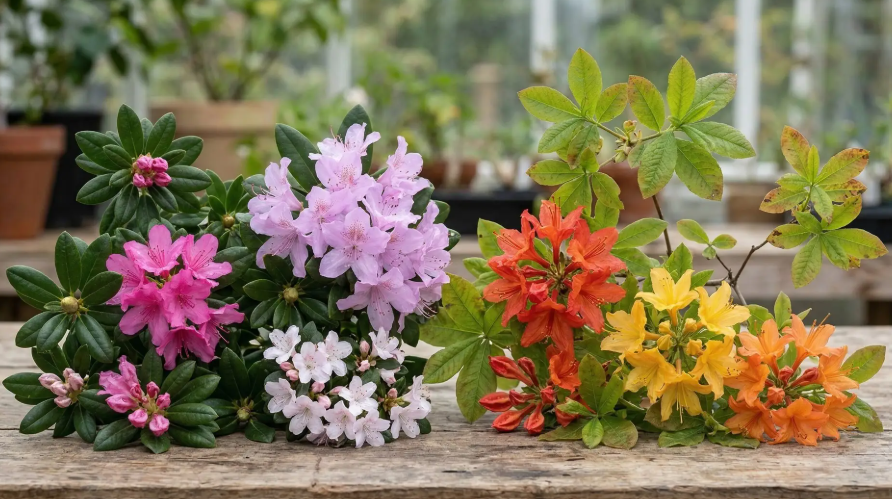
Azaleas are flowering shrubs belonging to the genus Rhododendron, a vast genus in the family Ericaceae that encompasses over 1,000 species worldwide. Azaleas were historically classified as a separate genus but are now recognized as two subgenera within Rhododendron — Tsutsusi (evergreen azaleas) and Pentanthera (deciduous azaleas) — with the majority of species native to Asia, particularly China, Japan, and Korea, and a significant number indigenous to eastern North America. The global azalea market is enormous, with the United States alone importing and producing hundreds of millions of azalea plants annually, making them one of the top-selling flowering shrubs in the American nursery industry.
Azaleas range in size from compact dwarf cultivars under 12 inches tall to large shrubs and small trees reaching 15 to 20 feet in height, and they bloom in virtually every color except true blue and black. In the United States, azaleas are most celebrated in the Southeast, where they thrive in the warm, humid climate and acidic soils of states like Georgia, South Carolina, and Mississippi — the city of Valdosta, Georgia, is known as the Azalea City, and the famous Azalea Trail in Mobile, Alabama, draws tens of thousands of visitors each spring. Worldwide, azalea festivals in Japan, Belgium, and South Korea attract millions of visitors annually, reflecting the plant’s deep cultural significance across multiple continents.
Azaleas prefer acidic soils with a pH between 4.5 and 6.0, partial shade to full sun depending on the variety, and consistent moisture with excellent drainage — conditions that mirror their natural habitat on forested hillsides and mountain slopes. They are shallow-rooted plants that benefit from a layer of organic mulch to retain moisture, moderate soil temperature, and protect the fine feeder roots that sit close to the soil surface. Improper soil pH is the single most common reason azaleas fail in home gardens, as alkaline soils prevent the plant from absorbing iron and other essential nutrients, leading to chlorosis and decline.
All parts of azalea plants contain grayanotoxins, chemical compounds that are toxic to humans, dogs, cats, horses, and livestock if ingested, causing symptoms ranging from nausea and vomiting to more serious cardiac and neurological effects in larger doses. Despite this toxicity, azaleas remain among the most widely planted ornamental shrubs in the world, with their spectacular spring bloom displays, long-lived garden performance, and remarkable diversity of form and color making them indispensable to residential, commercial, and public landscape design. With proper siting, soil preparation, and a modest amount of care, azaleas can live for decades — some specimens in Japanese temple gardens are known to be several hundred years old.
Also Read: How To Grow Azalea From Seed
Types of Azaleas
Encore Autumn Fire (Rhododendron ‘Conlea’)
Encore Autumn Fire is one of the most popular cultivars in the revolutionary Encore series, the first azaleas bred to bloom reliably in both spring and autumn rather than only once in spring. It produces vivid red flowers in a semi-double form and grows 3 to 4 feet tall and wide with a dense, evergreen habit that provides year-round structure in the landscape. Hardy in USDA zones 6 to 9, it has transformed the way gardeners think about azalea seasonality and remains one of the best-selling azalea cultivars in the United States.
Encore Autumn Princess
Encore Autumn Princess is a compact Encore series cultivar producing soft, blush-pink to white flowers with delicate pink edging in both spring and fall bloom cycles. It grows 3 to 4 feet tall and wide with a neat, rounded habit and dense evergreen foliage that makes it effective as a foundation planting or low hedge even when not in bloom. Hardy in USDA zones 6 to 9, its soft, feminine coloring pairs beautifully with deep purple and burgundy companions in mixed shrub borders.
Stewartstonian Azalea
Stewartstonian is a Glenn Dale hybrid azalea producing vivid brick-red to orange-red flowers in mid-spring on an upright, well-branched evergreen shrub growing 4 to 6 feet tall and wide. Its foliage takes on attractive bronze-red tones in winter, providing ornamental value beyond the spring bloom season. Hardy in USDA zones 5 to 8, it is one of the most cold-hardy of the evergreen azaleas and has been a staple of mid-Atlantic and northeastern American landscapes for decades.
Girard’s Rose
Girard’s Rose is a compact evergreen azalea producing large, rose-pink flowers in mid to late spring on plants that grow 3 to 4 feet tall and wide. Part of the Girard series developed by Peter Girard in Ohio, it was specifically selected for superior cold hardiness, making it more reliable in colder northern gardens than many evergreen azalea cultivars. Hardy in USDA zones 5 to 8, it is a dependable and widely available cultivar for gardeners in the transitional zone between the deep South and the northern states.
Also Read: Azalea Bushes that Blooms 3 Times a Year
Delaware Valley White
Delaware Valley White is a classic evergreen azalea producing an abundance of pure white flowers in mid-spring, creating a clean, luminous display that contrasts beautifully with the plant’s dark green foliage. It grows 4 to 6 feet tall and wide with a spreading, informal habit and is notably more heat and drought tolerant than many white azalea cultivars once established. Hardy in USDA zones 6 to 9, it has been a garden staple for generations and remains one of the best white evergreen azaleas available.
Karen Azalea (Rhododendron ‘Karen’)
Karen is a deciduous azalea producing large, fragrant, lavender-purple flowers in mid to late spring, offering a color that is unusual and highly sought after in the azalea world. It grows 4 to 6 feet tall with an open, spreading habit and brilliant orange-red autumn foliage that provides a second season of ornamental interest. Hardy in USDA zones 4 to 7, it is among the more cold-hardy deciduous azaleas available and is an excellent choice for northern gardens where evergreen types may struggle.
Gibraltar Azalea
Gibraltar is one of the finest Exbury hybrid azaleas ever produced, bearing large, vivid orange flowers with a yellow blotch in mid to late spring on a deciduous shrub growing 4 to 6 feet tall. The Exbury hybrids, developed at the Rothschild estate in England, are renowned for their spectacular flower size, vivid colors, and outstanding fragrance, and Gibraltar consistently ranks among the best performers in the group. Hardy in USDA zones 5 to 8, it provides brilliant autumn foliage color in addition to its spectacular spring bloom.
Cannon’s Double
Cannon’s Double is an unusual and historic evergreen azalea producing fully double, soft pink flowers that lack stamens entirely, giving the blooms a carnation-like fullness and a longer vase life than single-flowered types. It grows 4 to 6 feet tall with a spreading habit and has been in cultivation in American gardens since the 19th century, particularly in the historic gardens of the American South. Hardy in USDA zones 7 to 9, it is a treasured heirloom cultivar maintained by azalea enthusiasts and historic garden preservationists.
Northern Hi-Lights
Northern Hi-Lights is a deciduous azalea from the University of Minnesota’s Northern Lights series, bred specifically for exceptional cold hardiness in climates where most azaleas would perish. It produces large, fragrant, white flowers with a yellow blotch in late spring and displays brilliant orange-red autumn foliage. Hardy in USDA zones 3 to 7, it represents one of the most significant achievements in azalea breeding for cold climates and has opened azalea gardening to regions previously considered unsuitable for the genus.
Mandarin Lights
Mandarin Lights is another outstanding member of the Northern Lights series, producing large clusters of vivid orange flowers in late spring on a deciduous shrub growing 5 to 6 feet tall and wide. Like all members of the Northern Lights series, it was developed at the University of Minnesota to withstand temperatures as low as minus 30 to minus 40 degrees Fahrenheit without significant damage to the flower buds. Hardy in USDA zones 3 to 7, it brings a tropical warmth of color to gardens in climates that rarely support such bold flowering shrubs.
Also Read: Azalea Bushes That Bloom All Summer
White Lights
White Lights is a fragrant, white-flowered member of the Northern Lights series, producing clusters of sweetly scented white blooms with a subtle yellow blotch in late spring. It grows 5 to 6 feet tall and wide with a rounded, deciduous habit and reliable orange-red autumn foliage that extends its ornamental season well beyond spring. Hardy in USDA zones 3 to 7, it is one of the most fragrant azaleas available and an excellent choice for planting near patios, paths, and windows where the scent can be appreciated.
Rosy Lights
Rosy Lights is a deciduous Northern Lights hybrid producing large clusters of fragrant, deep rose-pink flowers in late spring on a vigorous, upright shrub growing 5 to 7 feet tall. Its fragrance is particularly strong and sweet, making it one of the most sensorially rewarding azaleas for use near outdoor living areas. Hardy in USDA zones 3 to 7, it is one of the taller and more vigorous members of the Northern Lights series and is effective as a large specimen or informal screen in cold-climate gardens.
Lemon Lights
Lemon Lights is a soft-yellow-flowered member of the Northern Lights series, offering a rare cool-climate option in a color that is scarce among cold-hardy azaleas. It produces clusters of pale lemon-yellow flowers with a slightly deeper yellow blotch in late spring and grows 5 to 6 feet tall with a rounded, deciduous habit. Hardy in USDA zones 3 to 7, its soft, luminous flower color is particularly beautiful in woodland garden settings where it can be contrasted against dark evergreen backgrounds.
Orchid Lights
Orchid Lights is a compact, dwarf member of the Northern Lights series, growing only 3 to 4 feet tall and wide, making it the most manageable of the group for smaller garden spaces. It produces lavender-pink to orchid-purple flowers in late spring and has the same exceptional cold hardiness as its taller siblings in the series. Hardy in USDA zones 3 to 7, its smaller stature makes it suitable for foundation plantings, container growing, and mixed shrub borders in cold northern gardens.
Mollis Azalea (Rhododendron x molle)
Mollis azaleas are a group of deciduous hybrids derived from crosses between Asian species, producing large, vivid flowers in shades of yellow, orange, salmon, and red in mid-spring before the foliage fully emerges. They grow 4 to 6 feet tall with an upright, open habit and provide reliable autumn foliage color in shades of orange, red, and yellow. Hardy in USDA zones 5 to 7, they are a traditional feature of European gardens and have been widely grown since their development in Belgium in the mid-19th century.
Knap Hill Hybrids
Knap Hill hybrids are a group of large-flowered deciduous azaleas developed at the Knap Hill Nursery in England in the late 19th and early 20th centuries, known for their exceptionally large individual flowers and wide color range spanning yellow, orange, pink, red, and white. They grow 5 to 8 feet tall with a vigorous, spreading habit and provide excellent autumn foliage color in addition to their spectacular spring bloom. Hardy in USDA zones 5 to 8, they remain among the finest deciduous azaleas for large garden settings.
Exbury Hybrids
Exbury hybrids are an extension of the Knap Hill breeding program, developed at the Rothschild estate at Exbury in Hampshire, England, and are widely considered to represent the pinnacle of deciduous azalea breeding. They produce enormous flower trusses in a stunning range of colors including bicolors, multicolors, and rarely seen shades of cream and soft apricot, with many cultivars offering outstanding fragrance. Hardy generally in USDA zones 5 to 7, they are spectacular specimen plants for large woodland gardens and shrub borders.
Satsuki Azalea (Rhododendron indicum)
Satsuki azaleas are a group of Japanese evergreen azaleas that bloom later than most others, typically in late May and June, making their Japanese name — which means fifth month — historically accurate. They are beloved in Japan for their use in bonsai, and they produce large, often bicolored or variably patterned flowers in shades of pink, red, white, and combinations thereof on plants that grow 2 to 4 feet tall with a low, spreading habit. Hardy in USDA zones 6 to 9, they are prized collectors’ plants in both Japan and the West.
Kurume Azalea (Rhododendron kiusianum hybrids)
Kurume azaleas are a group of Japanese evergreen azaleas originating from the Kurume region of Kyushu, Japan, known for their extremely prolific, hose-in-hose flower production that can completely obscure the foliage in full bloom. They are typically compact, growing 3 to 5 feet tall and wide, with small, dense leaves and flowers in a wide range of pink, red, white, and purple shades. Hardy in USDA zones 6 to 9, they are among the most popular landscape azaleas in the American South and Pacific Northwest.
Also Read: Types of Purple Azalea Varieties
Hino Crimson
Hino Crimson is one of the most widely planted Kurume azaleas in the United States, producing an extraordinary mass of small, vivid crimson-red flowers in mid-spring that completely cover the plant. It grows 2 to 4 feet tall and wide with a compact, mounding habit and small, dark evergreen leaves that remain attractive through the seasons. Hardy in USDA zones 6 to 9, its intense red color, compact size, and reliable performance have made it a staple of foundation plantings and low hedges across the South and Mid-Atlantic regions.
Christmas Cheer
Christmas Cheer is an early-blooming Kurume azalea producing bright rose-pink flowers as early as February or March in mild climates, making it one of the first flowering shrubs of the year in warmer regions. It grows 4 to 6 feet tall with a spreading, mounding habit and is valued for its early season bloom that provides color when little else is flowering in the garden. Hardy in USDA zones 7 to 9, it is a classic Southern landscape azalea with a long history of cultivation in American gardens.
Formosa Azalea (Rhododendron ‘Formosa’)
Formosa is a large-growing Southern Indica azalea producing enormous, vivid magenta-purple flowers up to 3 inches across in early to mid-spring on a vigorous shrub that can reach 8 to 10 feet tall and wide. It is one of the most dramatic and widely planted azaleas in the American South, where its scale and color intensity make it a landscape statement rather than simply a garden accent. Hardy in USDA zones 7 to 9, it is a defining plant of the Southern spring landscape and a staple of historic gardens across the Gulf Coast states.
George Lindley Tabor
George Lindley Tabor is a classic Southern Indica azalea producing large, soft pink flowers with a deeper pink blotch in mid-spring on a vigorous shrub growing 6 to 8 feet tall and wide. Named for the Florida horticulturist who selected it in the early 20th century, it has been a beloved feature of Southern landscapes for over a century and remains one of the most popular pink azaleas in the Deep South. Hardy in USDA zones 7 to 9, its large scale and prolific bloom make it suitable only for spacious landscapes where it can develop naturally.
Judge Solomon
Judge Solomon is a Southern Indica azalea producing large, vivid pink flowers with a slightly ruffled edge in early to mid-spring on a vigorous, upright shrub growing 6 to 8 feet tall. It is a classic old Southern variety maintained in historic gardens throughout the Gulf Coast states and is valued for its vigorous growth, reliable blooming, and the warm, clear pink of its large flowers. Hardy in USDA zones 7 to 9, it is a traditional heirloom azalea with deep roots in American Southern horticultural history.
Also Read: Azalea Bushes With Orange Flowers
Mrs. G.G. Gerbing
Mrs. G.G. Gerbing is a pure white Southern Indica azalea producing large, pristine white flowers in early to mid-spring on a vigorous shrub growing 6 to 8 feet tall and wide. It is one of the finest white azaleas in the Indica group and a longstanding favorite in Southern American gardens for its clean, luminous white blooms that glow in shaded garden settings. Hardy in USDA zones 7 to 9, it is often used in combination with deep pink and purple azaleas for dramatic color contrast in large landscape compositions.
Pride of Mobile (Elegans)
Pride of Mobile, also sold as Elegans, is a watermelon-pink Southern Indica azalea that blooms in mid to late spring, later than most Indica types, extending the azalea season by several weeks. It grows vigorously to 8 to 10 feet tall and wide and produces an abundance of large, ruffled, deep pink blooms that are among the most intensely colored of the Indica group. Hardy in USDA zones 7 to 9, it is a defining plant of the American South’s spring landscape and has been in continuous cultivation for well over a century.
Red Ruffles
Red Ruffles is an evergreen azalea producing vivid red, semi-double flowers with ruffled petal edges that give each bloom an additional layer of texture and visual interest. It grows 3 to 5 feet tall and wide with a compact, mounding habit and is valued for both the intensity of its red color and the distinctive ruffling that distinguishes it from plain single-flowered red azaleas. Hardy in USDA zones 6 to 9, it is a popular landscape cultivar for foundation plantings and mixed shrub borders in the mid-Atlantic and southern states.
Fashion Azalea
Fashion is a Glenn Dale hybrid azalea producing salmon-orange to coral-pink flowers in mid-spring on an evergreen shrub growing 4 to 6 feet tall and wide. The Glenn Dale hybrids were developed by the U.S. Department of Agriculture at Glenn Dale, Maryland, specifically to combine the flower size and color range of tender Indica azaleas with the cold hardiness needed for mid-Atlantic American gardens. Hardy in USDA zones 6 to 9, Fashion is one of the most distinctive of the Glenn Dale cultivars for its warm, unusual salmon-coral color.
Treasure Azalea
Treasure is a Glenn Dale hybrid producing very large, white flowers with a pale pink edge and a distinctive ruffled form in mid to late spring on an evergreen shrub growing 4 to 6 feet tall. Its exceptionally large individual flowers are a hallmark of the Glenn Dale breeding program, which prioritized flower size alongside cold hardiness. Hardy in USDA zones 6 to 9, Treasure is a collector’s azalea valued for the sheer scale and refinement of its blooms rather than for mass color impact.
Vuyk’s Rosy Red
Vuyk’s Rosy Red is a compact evergreen azalea from the Dutch Vuyk van Nes nursery, producing large, vivid rosy-red flowers in mid-spring on a plant that grows 3 to 4 feet tall and wide. The Vuyk hybrids are known for producing larger individual flowers than most Kurume azaleas while maintaining a compact, manageable growth habit, and Rosy Red is among the best performers in the group. Hardy in USDA zones 6 to 9, it is widely used in European and American landscapes for its combination of large flowers, rich color, and tidy habit.
Vuyk’s Scarlet
Vuyk’s Scarlet is another outstanding member of the Vuyk hybrid series, producing vivid scarlet-red flowers up to 2.5 inches across in mid-spring on a compact, spreading evergreen shrub. It grows 3 to 4 feet tall and wide and is one of the most intensely colored red azaleas available in a compact plant size, making it particularly useful for small gardens and tight foundation plantings. Hardy in USDA zones 6 to 9, it is a benchmark red azalea widely grown across Europe and increasingly popular in North American gardens.
Also Read: Azalea Bushes With White flowers
Gumpo White
Gumpo White is a Satsuki-type azalea producing large, pristine white flowers in late spring to early summer — notably later than most azalea cultivars — on a very low, spreading evergreen shrub that typically stays under 2 feet tall and spreads 3 to 4 feet wide. Its late bloom time, dwarf stature, and tidy, ground-hugging habit make it one of the most useful azaleas for small-scale landscape applications, including low borders, rock gardens, and container plantings. Hardy in USDA zones 6 to 9, it is one of the most widely planted dwarf azaleas in American landscapes.
Gumpo Pink
Gumpo Pink is the pink-flowered counterpart to Gumpo White, producing soft pink flowers with a slightly ruffled edge in late spring to early summer on the same low, spreading habit that makes the Gumpo series so useful in the landscape. It grows under 2 feet tall and spreads 3 to 4 feet wide, making it an excellent choice for low borders, mass plantings, and situations where a very low-maintenance, low-growing flowering shrub is needed. Hardy in USDA zones 6 to 9, it is among the most reliable and widely available dwarf azaleas in the American nursery trade.
Koromo Shikibu
Koromo Shikibu is an exquisite Japanese Satsuki azalea producing unusual, spidery, lavender-pink flowers with deeply divided, strap-like petals that give the blooms a delicate, almost orchid-like appearance entirely distinct from typical azalea flowers. It grows 3 to 4 feet tall with a compact, spreading habit and blooms in late spring to early summer. Hardy in USDA zones 6 to 9, it is a prized collector’s plant and a specialty item in Japanese azalea enthusiast circles worldwide.
Rosebud Azalea
Rosebud is a Kurume-type evergreen azalea that produces fully double, rose-bud-shaped flowers in soft rose-pink tones, with each bloom resembling a miniature double rose rather than a conventional azalea flower. It grows 3 to 5 feet tall and wide with a compact, mounding habit and blooms prolifically in mid-spring, the double flowers lasting notably longer than single-flowered types. Hardy in USDA zones 6 to 9, it is one of the most charming and distinctive evergreen azaleas for small garden use.
Flame Azalea (Rhododendron calendulaceum)
Flame azalea is a spectacular native North American species found naturally in the Appalachian Mountains from Pennsylvania south to Georgia, producing vivid clusters of orange, yellow, or red flowers in late spring to early summer. It grows 4 to 8 feet tall with an open, upright habit and brilliant orange-red autumn foliage, and it is widely considered one of the most beautiful native shrubs of eastern North America. Hardy in USDA zones 5 to 8, it is a valuable choice for naturalistic and native plant gardens in the eastern United States.
Pinxterbloom Azalea (Rhododendron periclymenoides)
Pinxterbloom is a native North American deciduous azalea found naturally in moist woodlands and stream banks from Maine south to Georgia, producing delicate, spidery pink to white flowers in mid-spring before or as the leaves emerge. It grows 4 to 6 feet tall with an open, airy habit and is one of the most important native azaleas for woodland garden use, providing nectar for hummingbirds and long-tongued native bees. Hardy in USDA zones 3 to 8, it is among the most cold-hardy native azalea species available.
Swamp Azalea (Rhododendron viscosum)
Swamp azalea is a fragrant native North American deciduous species that blooms in midsummer — much later than most azaleas — producing clusters of white to pale pink, tubular flowers with a powerful, sweet fragrance. It is naturally found in wetlands, swamp margins, and moist woodland edges from Maine to Florida and west to Missouri, growing 5 to 8 feet tall in a loose, upright habit. Hardy in USDA zones 3 to 9, it is invaluable for rain gardens, bioswales, and moist native plant gardens where few other flowering shrubs perform reliably.
Coast Azalea (Rhododendron atlanticum)
Coast azalea is a low-growing, stoloniferous native species found in the coastal plain from Delaware south to Georgia, producing fragrant white to pale pink flowers in mid to late spring that are among the most sweetly scented of any azalea. It grows 1 to 3 feet tall and spreads by underground stolons to form wide colonies, making it effective as a flowering ground cover in naturalized and native plant settings. Hardy in USDA zones 5 to 8, it is an outstanding plant for fragrance gardens and native habitat restoration.
Also Read: Azalea Bushes With Yellow Flowers
Plumleaf Azalea (Rhododendron prunifolium)
Plumleaf azalea is a rare and remarkable native species from a very limited range in southwestern Georgia and adjacent Alabama, notable for blooming in midsummer to late summer — the latest of any native azalea species in North America. It produces vivid orange-red to red flowers in July and August when almost nothing else is in bloom, on a large shrub growing 8 to 15 feet tall in its native habitat. Hardy in USDA zones 5 to 9, it is an extraordinary addition to native plant gardens and is increasingly available through specialty nurseries.
Cumberland Azalea (Rhododendron bakeri)
Cumberland azalea is a native species from the southern Appalachian Mountains producing vivid orange to red flowers in late spring to early summer on a deciduous shrub growing 3 to 6 feet tall. It is closely related to flame azalea and occupies a similar woodland edge habitat, and it offers some of the most vivid orange-red colors available in a native deciduous azalea. Hardy in USDA zones 5 to 7, it is an underused native species that deserves wider cultivation in native and naturalistic garden settings.
Pinkshell Azalea (Rhododendron vaseyi)
Pinkshell azalea is an elegant native species from the high elevations of the Blue Ridge Mountains of North Carolina, producing delicate, pale pink flowers in early to mid-spring before the foliage emerges. It grows 5 to 10 feet tall with an upright, open habit and brilliant red-orange autumn foliage, and its early, graceful blooms have a quiet refinement that is unlike the showier hybrid azaleas. Hardy in USDA zones 4 to 7, it is an outstanding native plant for cool, moist, woodland garden settings.
Sweet Azalea (Rhododendron arborescens)
Sweet azalea is a native North American deciduous species producing intensely fragrant, white to pale pink flowers in late spring to midsummer, with a honey-like fragrance that is among the strongest and sweetest of any azalea. It grows 8 to 10 feet tall in moist, shaded woodland settings and provides brilliant red and orange autumn foliage color. Hardy in USDA zones 4 to 7, it is an exceptional native plant for fragrance gardens and moist, partly shaded landscape settings.
Piedmont Azalea (Rhododendron canescens)
Piedmont azalea, also called Florida pinxter or honeysuckle azalea, is a native deciduous species widely distributed across the southeastern United States, producing fragrant pink to white flowers in early spring before the leaves emerge. It grows vigorously to 10 to 15 feet tall in its natural habitat along stream banks and woodland margins, and it is among the most fragrant of the native azaleas. Hardy in USDA zones 6 to 9, it is a large, bold native plant suited to spacious landscape settings and naturalized gardens.
Texas Azalea (Rhododendron oblongifolium)
Texas azalea is a native deciduous species found in moist, shaded ravines and stream banks in eastern Texas, Arkansas, and Oklahoma, producing white to pale pink flowers in late spring to early summer with a pleasant, light fragrance. It grows 4 to 8 feet tall and is one of very few azalea species native to Texas, making it an important native plant for gardeners in that state who want regionally appropriate, wildlife-supporting shrubs. Hardy in USDA zones 6 to 9, it is better adapted to the heat and periodic drought of the South-Central states than most azalea cultivars.
Occidentale Azalea (Rhododendron occidentale)
Western azalea is the primary native azalea of the Pacific Coast, found naturally in moist canyons, streambanks, and forest edges from southern Oregon south through California. It produces large, fragrant, white to pale pink flowers with a yellow blotch in late spring to early summer and grows 4 to 10 feet tall with a loose, open habit and good autumn color. Hardy in USDA zones 6 to 9, it is the foundation species for a group of Pacific Coast hybrids bred for garden performance in western North American gardens.
Roseum Elegans
Roseum Elegans is a large-growing Rhododendron catawbiense hybrid that is often classified and sold alongside azaleas due to its similar landscape use, producing lilac-pink flower trusses in late spring on an evergreen shrub growing 6 to 10 feet tall and wide. It is one of the most cold-hardy large evergreen rhododendrons available, and its vigorous growth and adaptability to a wide range of conditions have made it a landscape workhorse for generations. Hardy in USDA zones 4 to 8, it is invaluable for cold-climate gardeners who want the visual impact of large-scale spring flowering shrubs.
Midnight Flare
Midnight Flare is an Encore series azalea producing deep, vivid red semi-double flowers in both spring and fall on a compact evergreen shrub growing 3 to 4 feet tall and wide. Like all Encore azaleas, it reblooms reliably in autumn after its spring flush, providing two distinct seasons of color from a single plant. Hardy in USDA zones 6 to 9, its deep red coloring and reliable biseason performance make it one of the most useful landscape azaleas for year-round ornamental impact.
Autumn Amethyst
Autumn Amethyst is an Encore azalea producing vivid purple to violet flowers in both spring and fall, offering a color that is relatively rare among evergreen azaleas. It grows 3 to 4 feet tall and wide with a dense, rounded evergreen habit and provides strong color contrast in mixed azalea plantings dominated by pink and red cultivars. Hardy in USDA zones 6 to 9, its unusual purple coloring and biseason bloom make it one of the most distinctive cultivars in the Encore series.
Also Read: Plants That Grow Easily From Cuttings
Autumn Twist
Autumn Twist is a bicolor Encore azalea producing white flowers with purple stripes and splashes in spring and fall, creating a variable, almost hand-painted appearance that makes each bloom subtly unique. It grows 3 to 4 feet tall and wide with a dense evergreen habit and provides an unusual, eye-catching alternative to the solid-colored azaleas that dominate most landscape plantings. Hardy in USDA zones 6 to 9, it is a conversation piece in any garden and pairs well with both solid purple and solid white azalea companions.
Autumn Coral
Autumn Coral is an Encore azalea producing semi-double flowers in warm coral-salmon tones in both spring and fall, offering an unusual color in the Encore palette that bridges pink and orange. It grows 3 to 4 feet tall and wide with a compact, dense evergreen habit well suited to foundation planting and low border use. Hardy in USDA zones 6 to 9, its warm, flattering coral color pairs naturally with yellow-foliaged companion plants and brick or terracotta architectural elements.
Autumn Lily
Autumn Lily is an Encore azalea producing single, white flowers with a distinctive ruffled edge in both spring and fall, offering a clean, elegant alternative to the more common pink and red Encore cultivars. It grows 3 to 5 feet tall and wide with a slightly more upright habit than some Encore types and is valued for the pristine quality of its white blooms in shaded garden settings. Hardy in USDA zones 6 to 9, it is an excellent companion for darker-colored azaleas and shade-loving perennials.
Weston’s Lollipop
Weston’s Lollipop is a compact deciduous azalea from the Weston Nurseries breeding program in Massachusetts, producing bright yellow flowers in mid to late spring on a shrub growing 3 to 4 feet tall and wide. The Weston hybrids were developed specifically for cold hardiness and reliable performance in New England climates, and Lollipop offers the relatively rare color of clear yellow in a cold-hardy deciduous azalea. Hardy in USDA zones 4 to 7, it is an outstanding choice for northern gardens where yellow-flowering deciduous azaleas are difficult to find.
Weston’s Innocence
Weston’s Innocence is a white-flowered deciduous azalea from the Weston Nurseries program, producing large, fragrant, pure white flowers in late spring on a vigorous shrub growing 5 to 6 feet tall. Like its siblings in the Weston series, it was bred for exceptional cold hardiness and reliable performance in difficult northeastern American climates. Hardy in USDA zones 4 to 7, its large, fragrant white blooms and strong cold hardiness make it one of the best white deciduous azaleas for cold-climate gardens.
Choptank Rose
Choptank Rose is a native species hybrid azalea developed from Rhododendron atlanticum, producing large, fragrant, rose-pink flowers in mid-spring on a compact deciduous shrub growing 3 to 4 feet tall. It was selected for its superior flower size and fragrance compared to the straight species and is better suited to garden use than the naturally stoloniferous coast azalea. Hardy in USDA zones 5 to 8, it is an outstanding choice for fragrance gardens and native plant landscapes in the mid-Atlantic and northeastern regions.
Also Read: Different Types of Deciduous Shrubs
Cecile
Cecile is one of the most celebrated Knap Hill-Exbury hybrid azaleas, producing enormous trusses of deep salmon-pink to rose flowers with a yellow blotch in late spring on a vigorous deciduous shrub growing 5 to 7 feet tall. It is a perennial award winner at azalea and rhododendron society shows and is regarded by many growers as the benchmark salmon-pink deciduous azalea against which all others are measured. Hardy in USDA zones 5 to 7, its spectacular flower display and reliable garden performance have kept it at the top of the Exbury hybrid rankings for decades.
Homebush
Homebush is a Knap Hill hybrid azalea producing distinctive, fully double, pompon-like flower clusters in deep rose-pink tones in late spring, a highly unusual flower form for a deciduous azalea. The rounded, tightly packed trusses of double flowers give it a formal, almost Victorian appearance that distinguishes it immediately from single-flowered azaleas. Hardy in USDA zones 5 to 7, it grows 4 to 5 feet tall with a neat, upright habit and is one of the most distinctive and collectible of the Knap Hill hybrid azaleas.
Klondyke
Klondyke is a Knap Hill-Exbury hybrid producing stunning, large, vivid golden-orange flowers with a deeper orange-red blotch in late spring on a deciduous shrub growing 5 to 6 feet tall. It is one of the most intensely colored yellow-orange azaleas available and a regular prizewinner at azalea society exhibitions where its saturated color and large flower trusses attract immediate attention. Hardy in USDA zones 5 to 7, it provides brilliant autumn foliage in addition to its spectacular spring bloom.
Golden Eagle
Golden Eagle is a Knap Hill hybrid azalea producing vivid orange flowers with a darker orange blotch and ruffled petal edges in late spring on a vigorous deciduous shrub growing 5 to 7 feet tall. The ruffled petal edges give the blooms an additional layer of texture and visual refinement that sets Golden Eagle apart from many other orange azaleas. Hardy in USDA zones 5 to 7, its combination of vivid color, ruffled form, and vigorous growth makes it one of the most impressive deciduous azaleas for large garden settings.
Berryrose
Berryrose is a Knap Hill-Exbury hybrid producing warm, rose-pink flowers with a golden-yellow blotch in late spring, with a pleasant fragrance that is unusual in the Exbury group. It grows 5 to 6 feet tall with a vigorous, upright habit and reliable autumn foliage color, adding seasonal interest well beyond the spring bloom period. Hardy in USDA zones 5 to 7, its fragrance combined with the warm, rose-gold color combination makes it one of the most complete and rewarding deciduous azaleas for general garden use.
Silver Sword
Silver Sword is an unusual evergreen azalea with narrow, silvery-green, willow-like leaves that give it an entirely different texture from conventional azaleas, producing lavender-pink flowers in mid-spring above its distinctive foliage. It grows 3 to 4 feet tall with a slightly open, arching habit and provides year-round textural interest in the garden through its uncommon leaf form. Hardy in USDA zones 6 to 9, it is a specialty plant for collectors and gardeners who value foliage texture as highly as flower color.
Also Read: Best Shrubs to Plant In the Fall
Macrantha (Rhododendron indicum ‘Macrantha’)
Macrantha is a classic Japanese Satsuki azalea producing very large, salmon-pink flowers up to 3 inches across in late spring to early summer on a low, spreading evergreen shrub growing 2 to 3 feet tall. The large flower size relative to the compact plant size is one of the defining characteristics of the Satsuki group, and Macrantha exemplifies this quality with its generous, well-formed blooms. Hardy in USDA zones 6 to 9, it is a traditional Japanese garden plant and one of the most important Satsuki cultivars in international cultivation.
Cascade White
Cascade White is a weeping or cascading evergreen azalea producing pure white flowers in mid-spring on branches that arch and trail gracefully, making it particularly effective when planted at the top of a retaining wall, embankment, or raised container where the cascading branches can drape downward. It grows 2 to 3 feet tall but can spread 4 to 6 feet wide as the trailing branches extend outward and downward. Hardy in USDA zones 6 to 9, it is an unusual and highly effective landscape plant that offers a growth habit unlike any other azalea.