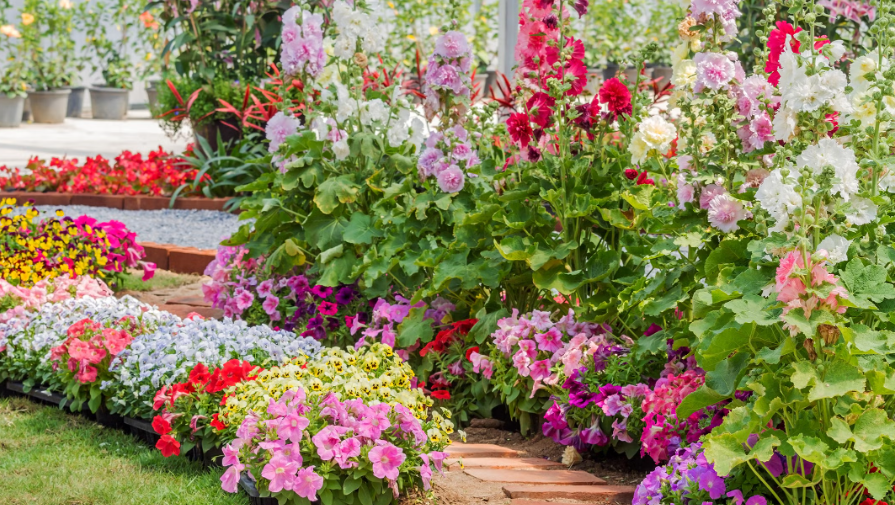
Annual flowers — plants that complete their entire life cycle in a single growing season — are the backbone of the summer garden. Unlike perennials, which may bloom for only a few weeks, the best summer annuals flower continuously and prolifically from late spring right through to the first autumn frosts, providing uninterrupted color for months on end. They are the workhorses of containers, window boxes, hanging baskets, and border plantings, delivering maximum impact with minimal effort when deadheaded regularly and fed well.
General Tips for Growing Summer Annuals: For continuous, prolific bloom throughout summer, deadhead regularly by removing spent flowers before they set seed. Feed container annuals every one to two weeks with a high-potassium liquid fertilizer to sustain prolific flowering. Water deeply and consistently rather than shallowly and frequently to encourage deep rooting and drought resilience. Pinch young plants early in the season to encourage bushy, well-branched growth and more abundant flowering.
Combine trailing, mounding, and upright forms in containers for the most visually dynamic summer displays. In the hottest climates, choose heat-tolerant species such as vinca, portulaca, lantana, pentas, and gomphrena for guaranteed summer-long performance. For cooler summer gardens, cool-season annuals such as lobelia, diascia, and nemesia will outperform heat-lovers in providing uninterrupted summer-long bloom.
Best Annuals For Summer Garden
Marigold (Tagetes spp.)
One of the most reliable and universally grown summer annuals in the world, marigolds produce an endless succession of densely petalled, pompom-like flowers in vivid shades of gold, orange, yellow, and burgundy from late spring until hard frost.
They thrive in full sun, tolerate heat and drought, and are famously useful as companion plants for repelling aphids, whitefly, and nematodes. Both African (T. erecta) and French (T. patula) types bloom prolifically all summer with minimal deadheading required.
Petunia (Petunia spp.)
Among the most popular summer annuals for containers, hanging baskets, and window boxes worldwide, petunias produce a non-stop cascade of large, trumpet-shaped flowers in every color of the rainbow — including near-black, striped, and bicolored forms.
Modern wave and spreading varieties require virtually no deadheading and bloom continuously from spring to frost. They thrive in full sun and warm temperatures and reward regular liquid feeding with an astonishing abundance of bloom throughout the entire summer season.
Zinnia (Zinnia elegans)
A heat-loving, drought-tolerant summer annual producing brilliantly colored, dahlia-like flowers in every shade from white through cream, yellow, orange, pink, red, and deep burgundy.
Zinnias thrive in the hottest summer conditions and actually improve their performance as temperatures rise, making them outstanding choices for summer-long color in hot climates. Regular deadheading prolongs flowering significantly. They are powerfully attractive to butterflies, hummingbirds, and bees, making them among the most wildlife-friendly summer annuals available.
Impatiens (Impatiens walleriana)
The classic shade annual, impatiens produces a continuous, unfailing display of flat, five-petaled flowers in white, pink, salmon, red, coral, lavender, and bicolored forms throughout the entire summer.
It is the go-to flowering annual for shaded beds, borders, and containers where most summer annuals fail to bloom. Modern series such as Beacon and SunPatiens have been bred for improved disease resistance and heat tolerance. Regular watering and feeding maintain their prolific flowering performance from late spring through the first autumn frosts.
Cosmos (Cosmos bipinnatus)
A tall, airy, graceful annual producing delicate, daisy-like flowers with silky petals in white, pink, rose, and deep crimson above feathery, fern-like foliage. Cosmos thrives in poor, dry soil and full sun, blooming prolifically from midsummer through autumn.
It self-seeds freely, returning year after year in many gardens. Few summer annuals combine such delicate beauty with such toughness and drought-tolerance. It is highly attractive to butterflies and beneficial insects and is outstanding for cut flower production throughout summer.
Calibrachoa (Million Bells)
A small-flowered relative of the petunia producing an extraordinary profusion of tiny, trumpet-shaped flowers in virtually every color imaginable — including yellow, which petunias cannot achieve. Calibrachoa trails vigorously from containers and hanging baskets, completely smothering itself in bloom from spring to hard frost.
It is self-cleaning, requiring no deadheading whatsoever, and thrives in full sun with regular liquid feeding. Modern trailing varieties can produce literally thousands of flowers per plant across a single summer season.
Lantana (Lantana camara)
A vigorous, heat-loving, drought-tolerant annual producing rounded clusters of tiny flowers in multicolored combinations of yellow, orange, pink, red, and white — often with different colors present simultaneously in the same cluster, creating a confetti-like effect. Lantana thrives in the hottest, driest summer conditions where many other annuals struggle.
It is powerfully attractive to butterflies and hummingbirds and blooms continuously from late spring through frost. It is tender perennial in frost-free climates but grown as an annual in temperate gardens.
Verbena (Verbena spp.)
Spreading and trailing verbenas produce flat-topped clusters of small, phlox-like flowers in vivid shades of red, purple, pink, white, and bicolored forms that cover the plant from spring to frost.
They thrive in full sun, heat, and well-drained soil and are outstanding performers in containers, hanging baskets, and ground-level border edging. Trailing verbena hybrids such as ‘Superbena’ and ‘Lanai’ series are particularly prolific and require minimal deadheading. They are highly attractive to butterflies and other pollinators throughout the summer.
Salvia (Salvia splendens / Salvia farinacea)
Scarlet sage (S. splendens) and mealycup sage (S. farinacea) are outstanding summer annuals producing tall, upright spikes of tubular flowers in vivid red, blue-purple, white, or salmon from early summer to frost. They thrive in full sun and heat, are moderately drought-tolerant, and attract hummingbirds and butterflies in abundance.
Mealycup sage with its silvery-blue spikes is particularly elegant and long-blooming. Both are excellent for formal bedding schemes, mixed border plantings, and cutting gardens throughout the summer months.
Alyssum (Lobularia maritima)
A low-growing, spreading annual producing a honey-scented froth of tiny white, pink, or purple flowers continuously from spring to frost. Sweet alyssum is a classic edging plant, spilling softly over the fronts of borders and containers.
It self-seeds prolifically and tolerates light shade, moderate drought, and cool temperatures with equal ease. Its intense, sweet fragrance is one of its greatest charms. It is an outstanding companion plant, attracting beneficial hover flies and parasitic wasps that prey on garden pests throughout the summer.
Lobelia (Lobelia erinus)
A compact, mounding or trailing annual producing an abundance of tiny, two-lipped flowers in vivid blue, purple, white, or red from spring through summer.
Trailing lobelias are classic companions for petunias and calibrachoa in mixed hanging baskets and containers. They prefer cool conditions and may slow down in the hottest part of midsummer but recover and reflower beautifully as temperatures moderate in late summer and early autumn. The intense, electric blue of cultivars like ‘Crystal Palace’ is unmatched among summer annuals.
Nicotiana (Nicotiana alata / Nicotiana sylvestris)
Flowering tobaccos produce elegant, tubular, star-shaped flowers in white, pink, red, and lime-green on tall, sticky-stemmed plants from early summer to frost. Many varieties are intensely fragrant, particularly in the evening, making them outstanding plants for summer garden ambiance.
They tolerate partial shade better than many summer annuals and self-seed freely in mild climates. Tall species such as N. sylvestris produce dramatic, pendant, white trumpet flowers on plants reaching 5 feet, creating spectacular summer structure in mixed border plantings.
Portulaca (Portulaca grandiflora — Moss Rose)
One of the most drought-tolerant and heat-resistant summer annuals available, moss rose produces jewel-bright, silky, rose-like flowers in yellow, orange, red, pink, and white above fleshy, needle-like succulent foliage.
It thrives in the hottest, driest, poorest soil conditions where most annuals fail completely. Flowers open in full sun and close at night and in cloudy conditions — modern varieties stay open longer than older types. It is outstanding for hot, dry slopes, gravel gardens, and containers in full, baking sun.
Celosia (Celosia argentea)
A striking, heat-loving annual available in two dramatically different flower forms — plumed types (plumosa) with feathery, flame-like flower heads and crested or cockscomb types (cristata) with velvety, brain-like, corrugated flower heads — both in vivid shades of red, orange, yellow, pink, and purple.
Celosia thrives in full sun and high heat, blooming continuously from midsummer until frost. The flowers dry beautifully on the plant, maintaining their vivid colors long after fresh blooms have faded, extending their ornamental value through autumn.
Snapdragon (Antirrhinum majus)
Classic cottage garden annuals producing dense spikes of distinctive, hinged, two-lipped flowers in virtually every color except blue, from early summer to frost. Snapdragons prefer cooler temperatures and bloom most prolifically in spring and early summer and again in autumn, sometimes slowing in the hottest midsummer heat.
Regular deadheading of spent flower spikes encourages continuous reblooming throughout summer. They are outstanding cut flowers and attract bumblebees, which are uniquely capable of forcing open the hinged flower to access nectar.
Gazania (Gazania rigens)
Brilliantly colored South African daisies producing vivid, multicolored, daisy-like flowers in orange, yellow, red, pink, and striped combinations that open in full sun and close at night and in overcast conditions. Gazanias are exceptionally heat and drought-tolerant, thriving in the hottest, driest positions in the summer garden.
They bloom from late spring continuously through summer and into autumn. Modern varieties with more consistently open flowers and a wider color range have made gazanias increasingly popular for containers, borders, and coastal garden plantings.
Geranium (Pelargonium spp.)
Zonal pelargoniums — universally known as geraniums — are among the most reliable and long-blooming summer annuals for containers, window boxes, and summer bedding. Their rounded heads of five-petaled flowers in red, salmon, pink, white, and bicolored forms bloom continuously from spring to frost above attractively zoned, rounded foliage.
They tolerate heat, moderate drought, and neglect better than many summer annuals and require minimal deadheading to maintain flowering. Ivy-leaved trailing types are outstanding for hanging baskets and cascading displays throughout summer.
Sunflower (Helianthus annuus)
The quintessential summer annual, sunflowers produce bold, cheerful, daisy-like flowers with distinctive dark centers and golden-yellow ray petals on tall, upright stems from midsummer to early autumn.
Modern multi-branching varieties such as ‘Autumn Beauty’ and ‘Italian White’ produce numerous smaller flowers over an extended period rather than a single large terminal bloom, providing weeks of continuous flowering. They are outstanding for cutting gardens and wildlife, providing abundant nectar for bees and seed for birds as summer progresses.
Dahlia (Dahlia spp. — Annual types)
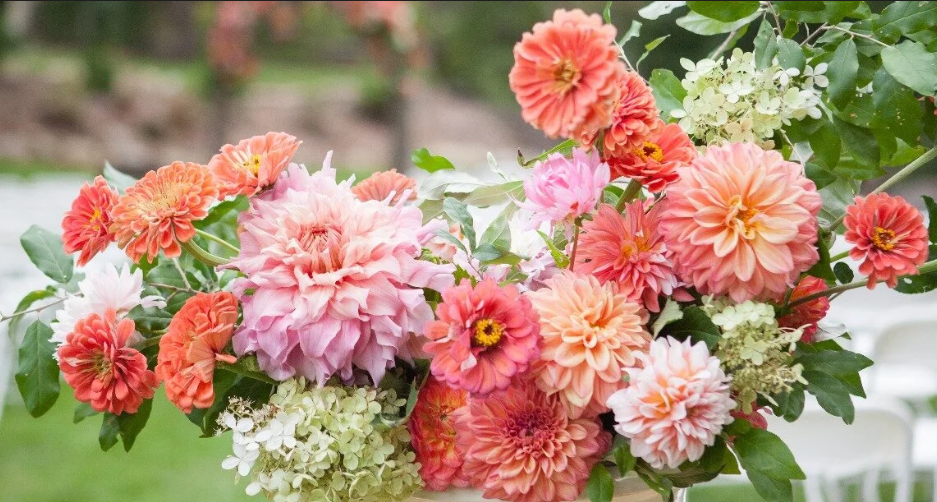
Seed-grown annual dahlias — including the popular ‘Bishop of Llandaff’ and Figaro series — produce an abundant succession of flowers in every form from simple singles to fully double, pompom-like blooms in virtually every color from white through yellow, orange, red, pink, and deep purple-black.
They bloom from midsummer to hard frost and are outstanding performers in beds, borders, and containers. Regular deadheading and liquid feeding maintain their prolific bloom production throughout the entire summer and well into autumn.
Torenia (Torenia fournieri — Wishbone Flower)
A charming, compact annual producing tubular, two-lipped flowers in delicate combinations of purple, lavender, pink, and white with distinctive yellow markings in the throat, resembling miniature snapdragons.
Torenia is one of the few flowering annuals that blooms prolifically in partial to full shade throughout the summer, making it a valuable alternative to impatiens in shaded summer gardens. It thrives in warm, humid conditions and flowers continuously from late spring through the first autumn frosts without requiring deadheading.
Cleome (Cleome hassleriana — Spider Flower)
A tall, dramatic, self-seeding annual producing large, airy, globe-shaped flower heads in pink, rose, purple, or white on tall, spiny stems from midsummer to frost. Cleome is exceptionally heat-tolerant and drought-resistant, thriving in the hottest summer conditions.
Its unusual, spider-like flowers with long protruding stamens are powerfully attractive to hummingbirds and sphinx moths. It self-seeds prolifically and returns reliably each year in most gardens, becoming a permanent feature with virtually no effort from the gardener.
Gomphrena (Gomphrena globosa — Globe Amaranth)
A tough, heat-loving annual producing rounded, clover-like flower heads in vivid magenta, purple, pink, orange, white, and red from midsummer to frost. Gomphrena is exceptionally drought and heat-tolerant, maintaining its performance in the most demanding summer conditions.
The papery flower heads dry beautifully and maintain their color for months, making it one of the best annuals for dried flower arrangements. It is highly attractive to butterflies and requires minimal maintenance to bloom prolifically throughout the entire summer.
Vinca / Catharanthus (Catharanthus roseus — Annual Vinca)
One of the most heat and drought-tolerant flowering annuals available, annual vinca produces flat, pinwheel-shaped flowers in white, pink, red, coral, and bicolored forms above glossy, dark green foliage from late spring to frost.
It is self-cleaning, requiring no deadheading, and maintains its prolific flowering performance even in the hottest, most humid summer conditions. Modern series such as Cora, Tattoo, and Pacifica have been specifically bred for outstanding summer performance, disease resistance, and extended bloom.
Osteospermum (Osteospermum spp. — African Daisy)
South African daisies producing large, cheerful, daisy-like flowers in white, yellow, orange, pink, purple, and bicolored forms with distinctive dark centers that bloom from spring through summer.
Modern heat-tolerant cultivars have significantly extended the summer performance of osteospermum, which previously slowed in high heat. They thrive in full sun with good drainage, are excellent in containers and borders, and attract bees and butterflies. Regular deadheading extends their prolific bloom season from spring well into autumn.
Bacopa (Sutera cordata)
A delicate, trailing annual producing a continuous cascade of tiny, five-petaled flowers in white, pink, or lavender over small, rounded, bright green leaves from spring to frost.
Bacopa is a classic trailer for mixed container plantings and hanging baskets, spilling gracefully over the edges of pots while the central, upright plants provide height. It is self-cleaning, requiring no deadheading, and blooms almost uninterruptedly throughout the entire summer season. It performs best in full sun to partial shade with consistent moisture.
Diascia (Diascia spp. — Twinspur)
A charming, delicate South African annual producing slender, upright spikes of small, two-spurred, flat-faced flowers in shades of pink, coral, salmon, and rose from late spring through summer.
Diascia prefers cool to moderate temperatures and blooms most prolifically in spring and early summer, sometimes resting in the hottest midsummer heat before resuming flowering in late summer and autumn. It is outstanding in mixed containers, hanging baskets, and cool-summer border plantings, adding refined, airy elegance to garden combinations.
Scaevola (Scaevola aemula — Fan Flower)
An Australian native annual producing unique, fan-shaped, five-petaled flowers that are split into a semicircle — half a flower — giving the plant its common name.
Flowers are produced in lavender-blue, purple, pink, or white in a continuous cascade from spring to frost. Scaevola is highly heat and humidity-tolerant, performing outstandingly in coastal and humid summer climates where many other annuals struggle. It trails beautifully from containers and hanging baskets and requires no deadheading, maintaining its prolific bloom throughout the entire summer.
Angelonia (Angelonia angustifolia — Summer Snapdragon)
Often called the summer snapdragon for its upright spikes of small, two-lipped flowers that resemble snapdragons in miniature, angelonia is one of the finest heat-tolerant annuals for summer-long performance.
Its flowers in purple, lavender, pink, white, and bicolored forms have a pleasant grape-like fragrance and are produced continuously on upright, bushy plants from late spring to hard frost. It thrives in full sun and high heat, requires no deadheading, and is outstanding for containers, borders, and mixed summer plantings.
Pentas (Pentas lanceolata — Egyptian Star Flower)
A superb heat-loving annual producing dense, rounded clusters of small, star-shaped flowers in vivid red, pink, white, and lavender from late spring to frost. Pentas is one of the most powerfully attractive plants for butterflies and hummingbirds available for the summer garden.
It thrives in full sun and high heat, blooms continuously throughout the hottest summer months without slowing, and requires minimal deadheading to maintain its prolific performance. It is outstanding for containers, border plantings, and pollinator-focused summer gardens.
Nemesia (Nemesia spp.)
A charming, cool-season annual producing an abundance of small, orchid-like, two-lipped flowers in vivid bicolored combinations of yellow, orange, red, purple, white, and pink from spring through early summer, with a second flush in autumn.
Nemesia prefers cooler temperatures and may slow in the hottest midsummer conditions before recovering beautifully as autumn approaches. Its delicate, jewel-bright flowers are outstanding in mixed containers, window boxes, and cool-summer border edging, and many varieties have a pleasant sweet fragrance.
Lavatera (Lavatera trimestris — Annual Mallow)
A fast-growing, bushy annual producing large, funnel-shaped, silky flowers resembling hollyhocks in shades of pink, rose, and white from midsummer to autumn. Lavatera grows quickly from direct-sown seed and develops into substantial, shrubby plants reaching 2–3 feet that provide excellent structure in the summer border.
It thrives in full sun, tolerates drought, and blooms prolifically throughout summer. The large, papery flowers are produced in great abundance and are highly attractive to bumblebees and other large pollinators.
Amaranth (Amaranthus spp.)
Ornamental amaranths include both upright types with dramatic, plume-like flower spikes (A. cruentus) and cascading types with long, rope-like, drooping flower tails (A. caudatus — love-lies-bleeding). Both produce extraordinary, richly colored flowers in deep red, burgundy, purple, and gold from midsummer through autumn.
They are exceptionally heat and drought-tolerant, thriving in the hottest summer conditions. Love-lies-bleeding in particular produces some of the most dramatically unusual flower forms of any summer annual, with long, tassel-like crimson flower tails reaching 18 inches.
Tithonia (Tithonia rotundifolia — Mexican Sunflower)
A tall, vigorous, heat-loving annual producing brilliant, vivid orange-scarlet, dahlia-like flowers on tall, branching plants from midsummer to frost. Tithonia is one of the most powerfully attractive plants for butterflies and hummingbirds in the summer garden.
It thrives in full sun, tolerates heat and drought, and grows quickly into large, bold plants 3–4 feet tall that provide outstanding structure and color at the back of summer borders. The flowers are excellent for cutting and the plant’s height makes it a dramatic summer presence.
Rudbeckia (Rudbeckia hirta — Black-Eyed Susan)
While technically a short-lived perennial, black-eyed Susan is almost universally grown as a summer annual and produces an outstanding display of golden-yellow, daisy-like flowers with distinctive dark brown-black centers from midsummer to hard frost.
It thrives in full sun, tolerates heat and moderate drought, and self-seeds freely to return year after year. The ‘Cherokee Sunset’ and ‘Prairie Sun’ series produce flowers in extended color ranges including orange, bronze, and mahogany. It is highly attractive to butterflies and provides vital seed for birds in autumn.
Echinacea (Echinacea purpurea — Annual-grown Coneflower)
While technically a perennial, coneflower is widely grown from seed as an annual for summer color, producing large, daisy-like flowers with prominent, spiky, orange-brown central cones and swept-back ray petals in pink, purple, white, orange, yellow, and red from midsummer to frost.
It thrives in full sun, tolerates drought, and is outstanding for wildlife — beloved by butterflies in summer and goldfinches in autumn when the seed heads ripen. Few summer-flowering plants provide such outstanding combined ornamental and ecological value.
Ageratum (Ageratum houstonianum — Floss Flower)
A compact, mounding annual producing fluffy, powder-puff-like flower clusters in soft shades of blue, lavender, purple, pink, and white from late spring to frost. Ageratum is one of the few true blue-flowering summer annuals, making it exceptionally valuable for color combinations.
It thrives in full sun to part shade, tolerates summer heat moderately well, and is outstanding for border edging, mass planting, and mixed container arrangements. It is highly attractive to butterflies and beneficial insects and blooms most prolifically with regular deadheading.
Statice (Limonium sinuatum — Sea Lavender)
A drought-tolerant annual producing papery, funnel-shaped flowers in vivid purple, blue, pink, yellow, and white on stiff, winged stems from midsummer to frost. Statice is exceptionally heat and drought-tolerant, thriving in sandy, well-drained soils in full sun.
Its papery flowers dry perfectly on the stem, maintaining their intense colors long after fresh blooms have faded, making it one of the most valuable annuals for dried flower arrangements. It is outstanding for coastal garden plantings where it tolerates salt wind and sandy soil with ease.
Scabiosa (Scabiosa atropurpurea — Annual Pincushion Flower)
A cottage garden classic producing delicate, pincushion-like flower heads in lavender, purple, pink, red, and white on long, slender stems from midsummer to autumn.
Annual scabiosa is outstanding for cut flower production and is highly attractive to butterflies, bees, and other beneficial insects throughout summer. It prefers full sun, good drainage, and moderately fertile soil. Regular deadheading significantly prolongs its prolific flowering season. It self-seeds freely in many gardens, establishing itself as a reliable returning annual with minimal intervention.
Nigella (Nigella damascena — Love-in-a-Mist)
A wonderfully romantic, self-seeding annual producing delicate, sky-blue, white, or pink flowers surrounded by an intricate ruff of finely divided, mist-like bracts from early to midsummer. Nigella self-seeds prolifically and returns reliably each year with no effort, scattering its seeds as the attractive, inflated seed pods ripen.
It prefers cool conditions and blooms most freely in late spring and early summer, making it an outstanding companion for early-summer border combinations. The decorative seed pods provide additional ornamental value through summer and into autumn.
Larkspur (Consolida spp.)
A tall, elegant, cool-season annual producing dense, upright spikes of delphinium-like flowers in vivid blue, purple, pink, and white from late spring through early summer.
Larkspur self-seeds prolifically and returns each year in most climates, establishing itself as a permanent garden presence. It prefers cool temperatures and blooms most freely before the hottest summer weather arrives, but in cool-summer climates it can provide spires of color throughout much of the summer. It is outstanding for cottage garden plantings and cut flower arrangements.
Strawflower (Xerochrysum bracteatum)
An everlasting annual producing papery, straw-textured, daisy-like flowers in vivid shades of red, orange, yellow, pink, white, and bronze that retain their color and texture perfectly when dried, making them among the finest annuals for dried flower arrangements. Strawflowers thrive in full sun, heat, and drought, blooming prolifically from midsummer to frost.
Fresh flowers are equally attractive in the garden and as cut flowers. They are long-lasting in both fresh and dried arrangements and require minimal care to bloom abundantly throughout summer.
Nasturtium (Tropaeolum majus)
A cheerful, fast-growing annual producing bright, five-petaled flowers in vivid shades of red, orange, yellow, and cream above distinctive, parasol-like, blue-green leaves from early summer to frost. Nasturtiums are edible — both flowers and leaves have a peppery, watercress-like flavor and are outstanding in salads.
They thrive in poor, dry soil in full sun, actually blooming more prolifically when stressed than when over-fed. Trailing varieties cascade beautifully from containers while bushy types provide cheerful, colorful ground cover throughout the summer garden.
Bidens (Bidens ferulifolia — Tickseed)
A vigorous, trailing annual producing a continuous cascade of small, bright golden-yellow, daisy-like flowers with five petals above delicate, finely cut, ferny foliage from spring to hard frost. Bidens is self-cleaning, requiring absolutely no deadheading, and blooms with extraordinary prolificacy throughout the entire summer season.
It trails vigorously from containers and hanging baskets, combining beautifully with petunias, calibrachoa, and verbena. It thrives in full sun, tolerates heat and moderate drought, and is highly attractive to bees and butterflies.
Stock (Matthiola incana)
A powerfully fragrant annual producing dense, upright spikes of densely petalled, clove-scented flowers in white, cream, pink, red, purple, and lavender from late spring through early summer.
Few summer annuals match stocks for sheer fragrance intensity — a single plant can perfume an entire garden area. They prefer cooler temperatures and perform best in spring and early summer, potentially slowing in the hottest midsummer heat. In cool-summer climates they provide outstanding fragrant color throughout much of the summer growing season.
Sutera / Chaenostoma (Chaenostoma cordatum — Snowflake Flower)
A dainty, trailing annual covered in tiny, pure white or pale pink, five-petaled flowers that cascade from containers, hanging baskets, and window boxes in an uninterrupted sheet of bloom from spring to frost. It is completely self-cleaning, requires no deadheading, and maintains its prolific flowering performance throughout the entire summer.
It combines beautifully with almost any other trailing or mounding container annual and is one of the most reliably floriferous small-flowered trailing annuals for summer container displays.
Coleus (Plectranthus scutellarioides)
Grown primarily for its spectacularly colored foliage rather than its flowers, coleus produces bold, vividly patterned leaves in an extraordinary range of colors and combinations — scarlet, burgundy, lime, chartreuse, bronze, orange, pink, and near-black — that remain vibrant and ornamental throughout the entire summer season.
Modern sun-tolerant varieties perform equally well in full sun or shade. Pinching out the flower spikes as they appear redirects energy into maintaining the brilliant foliage display through summer and into autumn.
Phlox (Phlox drummondii — Annual Phlox)
A sweetly fragrant, colorful annual producing rounded clusters of flat-faced, five-petaled flowers in vivid shades of red, pink, lavender, purple, white, and eye-catching bicolored combinations from late spring through midsummer.
Annual phlox prefers cooler temperatures and performs best in spring and early summer, occasionally slowing in peak summer heat before recovering later in the season. In cool-summer climates it provides outstanding fragrant color for much of the summer. Regular deadheading significantly prolongs its cheerful and fragrant flowering display.
Freesia (Freesia spp. — summer-grown)
When corms are planted in spring for summer flowering, freesias produce elegant, one-sided racemes of funnel-shaped, intensely fragrant flowers in white, yellow, orange, pink, red, and purple on wiry, arching stems. Few summer-flowering plants rival freesia for the extraordinary intensity of their fragrance.
They perform best in cool to moderate temperatures and are outstanding for cutting gardens, containers, and fragrant summer border plantings. Their delicate, refined flower form and extraordinary scent make them among the most sought-after cut flowers for summer arrangements.
Clarkia (Clarkia amoena — Farewell-to-Spring)
A beautiful, cool-season annual producing delicate, four-petaled, poppy-like flowers in shades of pink, salmon, red, lavender, and white — often with contrasting central markings — on upright, branching stems from late spring through midsummer.
Clarkia self-seeds prolifically and returns reliably each year, establishing itself as a permanent garden presence in mild climates. It prefers cool temperatures and direct-sown conditions. In cool-summer climates it provides outstanding, delicate floral color throughout much of the summer growing season.
Nemophila (Nemophila menziesii — Baby Blue Eyes)
A charming, low-growing, cool-season California native annual producing delicate, bowl-shaped flowers of sky-blue with distinctive white centers — one of the purest and most appealing blues in the annual flower palette.
It thrives in cool spring and early summer conditions, blooming most prolifically before the hottest summer weather arrives. It self-seeds freely and returns reliably each year, spreading to cover large areas of border in cool-summer climates. Its vivid blue flowers are outstandingly beautiful when mass-planted as ground-level sweeps in spring and early summer gardens.
Eschscholzia (Eschscholzia californica — California Poppy)
A drought-tolerant, self-seeding annual producing silky, cup-shaped flowers in vivid shades of orange, yellow, red, pink, cream, and bicolored forms above delicate, finely divided, blue-green foliage from late spring through summer.
California poppies thrive in full sun, poor, dry, sandy soil, and actually bloom most prolifically when stressed by drought and heat. They self-seed prolifically and return each year, establishing permanent colonies in suitable conditions. The flowers close at night and in overcast conditions, opening brilliantly in full sunshine.
Linum (Linum grandiflorum — Scarlet Flax)
A slender, elegant, fast-growing annual producing a profusion of brilliantly colored, five-petaled, saucer-shaped flowers in vivid scarlet, crimson, or pale blue (L. usitatissimum) on wiry, delicate stems throughout summer. Each individual flower is short-lived, lasting only a single day, but replaced by an endless succession of new blooms throughout the entire summer season.
Scarlet flax thrives in full sun, poor soil, and dry conditions, self-seeds freely, and provides outstanding color in wildflower meadow mixtures and cottage garden plantings.
Dimorphotheca (Dimorphotheca sinuata — Cape Daisy)
A South African native annual producing cheerful, large, daisy-like flowers in vivid orange, yellow, white, and salmon with distinctive darker centers that open fully in bright sunshine and close at night and in overcast conditions.
Cape daisies are highly heat and drought-tolerant, thriving in the hottest, driest, most exposed positions in the summer garden. They bloom prolifically from late spring to midsummer, self-seed freely, and provide outstanding color in hot, dry border plantings, gravel gardens, and containers in full sun.
Mimulus (Mimulus spp. — Monkey Flower)
Cheerful, compact annuals producing an abundance of tubular, two-lipped, monkey-faced flowers in vivid shades of yellow, orange, red, and bicolored combinations with distinctive spotted throats from spring through summer.
Mimulus prefers cool, moist conditions and partial shade, making it an outstanding annual for shaded, consistently moist garden positions where many other flowering annuals fail to perform. It blooms most prolifically in cool weather and is outstanding for shaded containers, bog garden edges, and moist, shaded summer border plantings.
Nemesia (Nemesia fruticans — Perennial Nemesia grown as annual)
A refined, compact South African annual producing an abundance of small, two-lipped, orchid-like flowers in soft shades of blue, lilac, pink, white, and bicolored combinations on neat, bushy plants from spring to autumn.
Modern perennial nemesia hybrids grown as annuals bloom more continuously and tolerate summer heat better than older annual species. They are outstanding in containers, window boxes, and cool-summer border edging, providing refined, delicate floral detail that complements bolder-flowered summer annuals beautifully throughout the season.
Mesembryanthemum (Cleretum bellidiforme — Livingstone Daisy)
A low-growing, mat-forming South African succulent annual producing jewel-bright, daisy-like flowers in extraordinary, vivid shades of pink, red, orange, yellow, white, and bicolored combinations that sparkle like satin in full sunshine.
Livingstone daisies open fully only in bright sun and close completely in shade or overcast conditions. They are exceptionally drought and heat-tolerant, thriving in the hottest, driest, sandiest positions in the summer garden. Few annuals produce such brilliantly vivid, jewellike flower colors for dry, sunny, challenging positions.
Phacelia (Phacelia tanacetifolia — Lacy Phacelia)
A beautiful, fast-growing annual producing spiraling clusters of small, vivid lavender-blue, bell-shaped flowers with prominent protruding stamens above finely divided, ferny foliage from late spring through summer.
Phacelia is one of the most powerfully attractive plants for bees — particularly honeybees and bumblebees — of any annual available. It self-seeds prolifically and thrives in full sun and poor, well-drained soil. In wildflower meadow mixtures it is an outstanding component, providing vivid blue color and outstanding pollinator value throughout summer.
Venidium (Arctotis fastuosa — Monarch of the Veldt)
A dramatic South African annual producing large, vivid, daisy-like flowers with orange ray petals marked with a distinctive dark purple-brown zone around a striking black central disc, on silver-felted stems and foliage.
The silver-white, woolly foliage is itself ornamental. Monarch of the Veldt thrives in full sun, heat, and drought, blooming from midsummer to frost. Its large, exotic, jewel-bright flowers and silver foliage create a bold, striking presence in hot, dry summer borders and gravel garden plantings throughout the season.
Viscaria (Silene coeli-rosa — Rose of Heaven)
A delicate, slender-stemmed, self-seeding annual producing a profusion of five-petaled, flat-faced flowers in vivid shades of pink, rose, lilac, and white with distinctive, slightly notched petals and a lighter central eye from late spring through midsummer.
Rose of heaven is a charming and underused cottage garden annual that self-seeds prolifically once established, returning reliably each year. It thrives in full sun, poor, well-drained soil, and actually performs better in lean conditions than in richly fertilized garden beds. It provides outstanding delicate floral texture in wildflower and cottage garden plantings.