Perennials are plants that live for more than two years, returning season after season from the same root system. Unlike annuals, which complete their life cycle in one growing season, perennials establish deeper roots and gradually become more resilient over time. They are widely appreciated for their reliability, often forming the backbone of gardens and landscapes.
One of the key advantages of perennials is their ability to adapt to different climates and soil conditions. Once established, many require less maintenance than other plant types, making them a practical choice for both beginner and experienced gardeners. Their recurring blooms and foliage provide long-term value and continuity in garden design.
Perennials come in a wide range of shapes, sizes, and colors, offering endless possibilities for creative planting. Some are grown for their vibrant flowers, while others are valued for attractive foliage or interesting textures. This diversity allows gardeners to design landscapes that change subtly with the seasons while maintaining a consistent structure.
Fast-growing perennials are especially popular because they quickly fill in empty spaces and create a lush, full appearance in a short time. These plants often establish themselves within a single season, reducing the waiting period for a mature-looking garden. They are ideal for new landscapes or areas that need rapid coverage.
Perennials that spread quickly often do so through underground runners, clumping growth, or self-seeding. This natural expansion helps them cover large areas efficiently, making them useful for ground cover, erosion control, or suppressing weeds. However, their vigorous nature means they may need occasional management to prevent overcrowding.
While fast-growing, spreading perennials offer many benefits, they should be chosen thoughtfully. Proper spacing, regular division, and occasional pruning help maintain balance in the garden.
Perennials That Grow Fast and Spread Quickly
Creeping Phlox (Phlox subulata)
A low-growing ground cover that forms dense mats of evergreen foliage and explodes in spring with a carpet of pink, purple, or white blooms. It spreads steadily by rooting along its stems and is perfect for slopes and rock gardens.
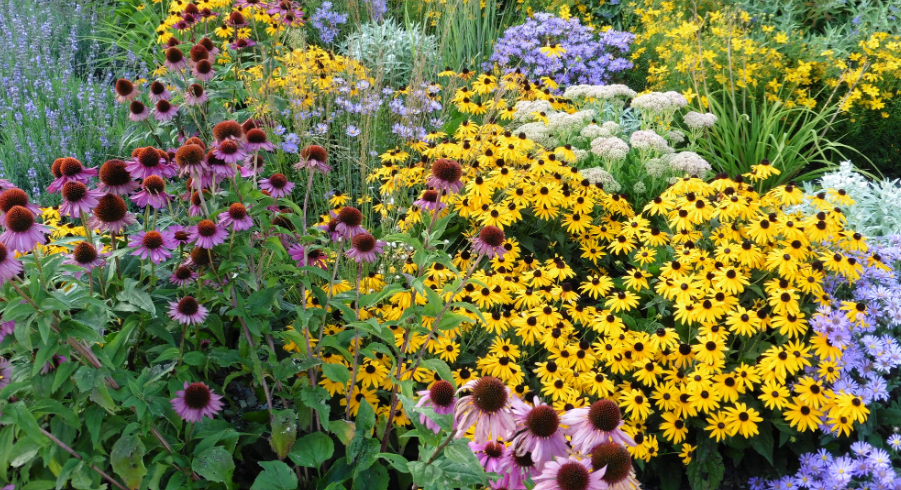
Black-Eyed Susan (Rudbeckia hirta)
This cheerful golden-yellow wildflower self-seeds prolifically and can colonize a garden bed within just a few seasons. It thrives in poor soils and full sun, making it one of the easiest perennials to establish.
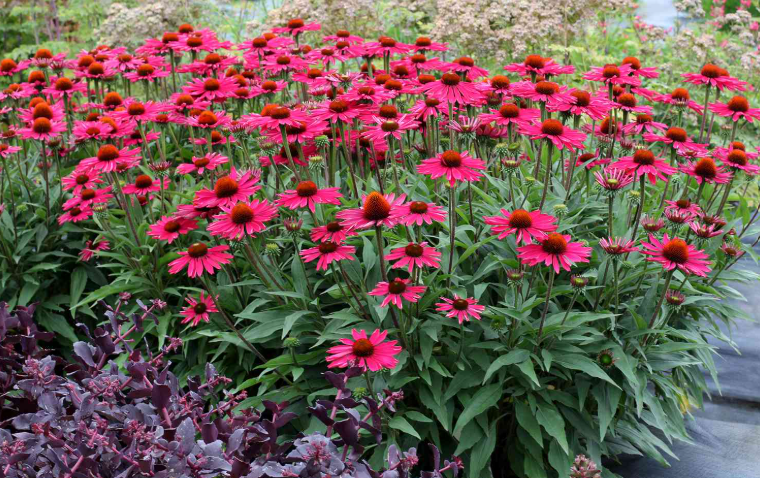
Coneflower (Echinacea purpurea)
Beloved by pollinators, coneflowers spread through both self-seeding and slowly expanding root clumps. Once established, a single plant can multiply into a bold, long-blooming colony within three to four years.
Bee Balm (Monarda didyma)
Bee balm is an aggressive spreader that travels underground via rhizomes, quickly filling in large areas with its shaggy red, pink, or purple blooms. It can double in size each year under good conditions.
Creeping Jenny (Lysimachia nummularia)
With its trailing, coin-leaved stems, Creeping Jenny races across the ground and over walls with impressive speed. The golden variety is especially vibrant and will root wherever its stems touch moist soil.
Yarrow (Achillea millefolium)
Yarrow spreads rapidly through both underground runners and prolific self-seeding. Its flat-topped flower clusters in shades of white, yellow, and pink rise above ferny foliage and naturalize readily in meadows and borders.
Lamb’s Ear (Stachys byzantina)
The soft, silver-felted leaves of Lamb’s Ear spread quickly by sending out low rosettes that root into the soil. It is drought-tolerant and can blanket a dry garden area in just a couple of seasons.
Catmint (Nepeta x faassenii)
Catmint billows into a wide, fragrant mound of lavender-blue flowers and spreads through self-seeding and gentle rhizome expansion. Cut it back after the first flush and it will rebloom vigorously and spread further.
Daylily (Hemerocallis)
Few perennials multiply as reliably as daylilies. Their thick clumps of tuberous roots expand steadily each year, and divisions can be taken regularly. They naturalize along roadsides and in meadows with minimal care.
Hostas (Hosta spp.)
Hostas grow into large, impressive clumps over time and are among the fastest-spreading shade perennials available. Established plants can be divided every three to four years to spread them throughout shady borders.
Lily of the Valley (Convallaria majalis)
This fragrant woodland groundcover spreads aggressively through underground rhizomes called pips. In the right shady, moist conditions, it can take over a bed entirely within a few years, forming a dense, sweet-smelling carpet.
Obedient Plant (Physostegia virginiana)
Aptly nicknamed “false dragonhead,” the Obedient Plant is anything but obedient in the garden — it spreads vigorously by underground stolons and can quickly dominate a border with its spikes of pink or white flowers.
Creeping Thyme (Thymus serpyllum)
This aromatic ground cover hugs the soil and spreads outward steadily, filling gaps between stones and covering bare patches with tiny purple flowers in summer. It tolerates foot traffic and thrives in poor, dry soils.
Goldenrod (Solidago canadensis)
Goldenrod is a vigorous native spreader that travels by both rhizome and prolific seed. Its plumes of golden yellow light up autumn gardens and naturalize rapidly in sunny, open spaces.
Speedwell (Veronica spicata)
Speedwell forms spreading mats of foliage topped with slender spikes of blue, purple, or pink flowers. It spreads through self-seeding and by slowly expanding clumps, making it a reliable filler in perennial beds.
Sedum (Sedum spp.)
Low-growing sedums, such as Sedum spurium, spread quickly across the ground by rooting along their fleshy stems. They are superb at carpeting dry, sunny areas and filling rock garden crevices with colorful foliage and starry flowers.
Ajuga (Ajuga reptans)
Also called Bugleweed, Ajuga is one of the most vigorous ground-covering perennials available. It sends out horizontal stolons in all directions, rooting as it goes and creating a thick, weed-suppressing carpet of bronze or green leaves.
Purple Loosestrife (Lythrum salicaria)
A stunning but extremely vigorous spreader, Purple Loosestrife produces tall spikes of vivid magenta flowers and self-seeds so freely it is considered invasive in many regions. Use sterile cultivars for garden plantings.
Tansy (Tanacetum vulgare)
Tansy spreads aggressively by underground rhizomes and self-seeds readily, quickly forming large colonies of ferny, aromatic foliage topped with button-like yellow flowers. It is best planted where it has room to roam.
Wild Ginger (Asarum canadense)
This native woodland groundcover spreads slowly but surely by creeping rhizomes, eventually forming a lush, weed-smothering carpet of heart-shaped leaves beneath trees. Its hidden brownish flowers bloom close to the soil in spring.
Perennial Geranium (Geranium sanguineum)
Hardy geraniums spread into wide, tidy mounds and self-seed modestly, making them excellent gap-fillers in sunny or partly shaded borders. They rebloom through summer and autumn with minimal deadheading required.
Sweet Woodruff (Galium odoratum)
A charming shade groundcover, Sweet Woodruff spreads rapidly via rhizomes in moist, shaded conditions. Its whorls of bright green leaves and tiny white spring flowers create an elegant carpet beneath shrubs and trees.
Asters (Symphyotrichum spp.)
Native asters spread readily through both self-seeding and expanding root clumps, naturalizing beautifully in meadow-style plantings. Their late-season purple and pink blooms are a crucial resource for autumn pollinators.
Lungwort (Pulmonaria officinalis)
Lungwort spreads steadily in shady spots, forming clumps of silver-spotted foliage that expand year after year. Its early pink and blue flowers are among the first to open in spring, making it doubly valuable.
Jerusalem Artichoke (Helianthus tuberosus)
This tall, sunflower-like perennial spreads aggressively through underground tubers that are nearly impossible to fully remove once established. It can grow six feet tall in a single season and colonize large areas quickly.
Comfrey (Symphytum officinale)
Comfrey grows with tremendous vigor, producing massive leafy clumps that suppress weeds effectively. Even small root fragments left in the soil will regenerate into new plants, making it extremely persistent and fast-spreading.
Meadow Sage (Salvia nemorosa)
Meadow Sage self-seeds freely and forms dense, expanding clumps of aromatic foliage and upright purple flower spikes. Shear it back after blooming and it will produce a second flush and continue to spread gently.
Lemon Balm (Melissa officinalis)
Lemon Balm spreads with enthusiasm through self-seeding, and a single plant can produce dozens of seedlings in one season. Its lemon-scented leaves make it a popular herb, though it needs to be kept in check in borders.
Plume Poppy (Macleaya cordata)
This tall, architectural perennial travels aggressively underground, sending up new shoots several feet from the parent plant each year. Its large, lobed, glaucous leaves and feathery cream flowers make a bold garden statement.
Evening Primrose (Oenothera biennis)
Evening Primrose self-seeds prolifically and can spread across a garden bed within a season or two. Its large, pale yellow flowers open in the evening and attract moths, making it as ecologically valuable as it is fast-spreading.
Fleabane (Erigeron speciosus)
Fleabane is a cheerful daisy-like spreader that self-seeds freely and slowly expands its clumps. Its slender-petaled flowers in pink, lavender, and white bloom for months and attract a wide range of beneficial insects.
Mint (Mentha spp.)
Perhaps the most famously aggressive spreader in any garden, mint races through beds via underground stolons and can invade large areas within a single growing season. It is best grown in containers to keep it in check.
Crocosmia (Crocosmia x crocosmiiflora)
Crocosmia multiplies rapidly through corms that divide and increase each year, quickly forming large, sword-leaved clumps topped with arching sprays of fiery orange and red flowers. Established colonies spread impressively fast.
Ostrich Fern (Matteuccia struthiopteris)
The Ostrich Fern spreads vigorously by underground stolons in moist, shaded conditions, forming dramatic colonies of tall, vase-shaped fronds. It can cover a shady bank or woodland edge in just a few seasons.
Russian Sage (Perovskia atriplicifolia)
Russian Sage grows into a large, airy shrub-like clump within its first season and self-seeds moderately. Its silver stems and lavender-blue flower spikes spread light and fragrance across dry, sunny borders.
Snow-in-Summer (Cerastium tomentosum)
This silver-leaved ground cover spreads vigorously across sunny, dry slopes, producing a froth of white flowers in late spring. It can spread several feet in a single season and is excellent for controlling erosion.
Cardinal Flower (Lobelia cardinalis)
Cardinal Flower self-seeds generously near water and in moist borders, building colonies of tall, brilliant red spikes that are irresistible to hummingbirds. New seedlings appear reliably near parent plants each spring.
Feverfew (Tanacetum parthenium)
Feverfew is a prolific self-seeder that can carpet a garden area with its ferny, pungent foliage and small white daisy-like flowers in just one or two seasons. Deadhead promptly if you wish to limit its spread.
Shasta Daisy (Leucanthemum x superbum)
Shasta Daisies spread through both self-seeding and expanding root clumps, quickly filling a sunny border with classic white-petaled blooms. Dividing clumps every few years is necessary to maintain their vigor and spread them further.
Peach-Leaved Bellflower (Campanula persicifolia)
This elegant campanula self-seeds generously, popping up across borders and between paving cracks. Its tall, airy stems bear open, bell-shaped blue or white flowers and spread with a delightful, informal naturalness.
Globe Thistle (Echinops ritro)
Globe Thistle self-seeds freely and forms large, spiny-leaved clumps that expand year after year. Its metallic blue spherical flowerheads are stunning in borders and highly attractive to bees and butterflies.
Perennial Salvia (Salvia x sylvestris)
This garden salvia spreads through self-seeding and gradually expanding basal clumps, filling sunny borders with upright spikes of deep violet-blue. It is a fast establisher and one of the most reliably spreading salvias.
Goat’s Beard (Aruncus dioicus)
Goat’s Beard grows quickly into an impressive, large clump of ferny foliage topped with creamy white plumes. While not a runner, it self-seeds in moist conditions and can establish sizeable new colonies near water features.
Ox-Eye Daisy (Leucanthemum vulgare)
This wildflower meadow staple self-seeds so abundantly that it can naturalize across a large area within just two seasons. Its simple white and yellow daisies are cheerful and beloved by pollinators.
Liatris (Liatris spicata)
Blazing Star multiplies through corm division and self-seeding, gradually building impressive colonies of grassy foliage and vibrant purple flower spikes. It naturalizes beautifully in prairie-style and pollinator gardens.
Tansy Ragwort (Jacobaea vulgaris)
A robust, fast-colonizing plant with bright yellow daisy-like flowers, it self-seeds prolifically and establishes quickly in disturbed or sunny ground. While ecologically complex, it spreads with extraordinary speed.
Peonies (Paeonia lactiflora)
While peonies are slower to spread than many perennials, their clumps expand steadily year on year and can be divided to create new plants. Established clumps grow larger and more floriferous with every passing season.
Tickseed (Coreopsis verticillata)
Threadleaf Coreopsis spreads vigorously through rhizomes and self-seeding, forming wide mounds of fine, ferny foliage studded with bright yellow daisy flowers all summer long. It can double in width within a single season.
Virginia Bluebells (Mertensia virginica)
Virginia Bluebells self-seed generously in moist, shaded conditions, naturalized colonies increasing noticeably each spring with their soft blue trumpet-shaped blooms. They go dormant by summer, allowing other plants to fill in.
Valerian (Valeriana officinalis)
Common Valerian grows tall and fast, self-seeding prolifically to spread across borders and wild areas. Its clusters of tiny pale pink flowers are intensely fragrant and highly attractive to cats, butterflies, and bees alike.