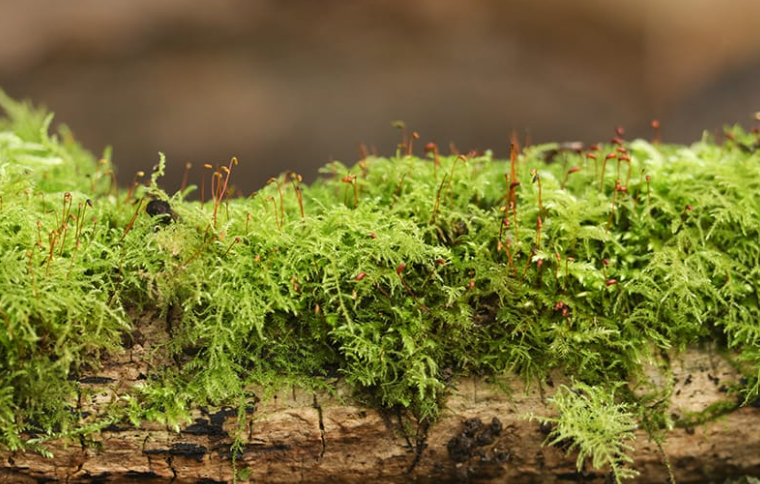
Mosses are ancient, resilient, non-vascular plants belonging to the division Bryophyta. With over 12,000 species worldwide, they colonize nearly every terrestrial habitat on Earth — from tropical rainforests to arctic tundra, from desert rocks to urban pavements. They play vital ecological roles in water retention, soil formation, carbon storage, and providing microhabitats for countless invertebrates.
General Identification Tips for Mosses: Key features to examine include leaf shape, arrangement, and whether leaves are curved, toothed, or have a midrib (costa); branching pattern (unbranched, pinnate, or bi-pinnate); habitat (aquatic, bog, woodland, wall, grassland); color (green, golden, silvery, reddish); spore capsule shape and posture (erect, drooping, cylindrical, spherical); and texture (glossy, matt, feathery, or wiry). A hand lens (10×) is an essential tool for moss identification.
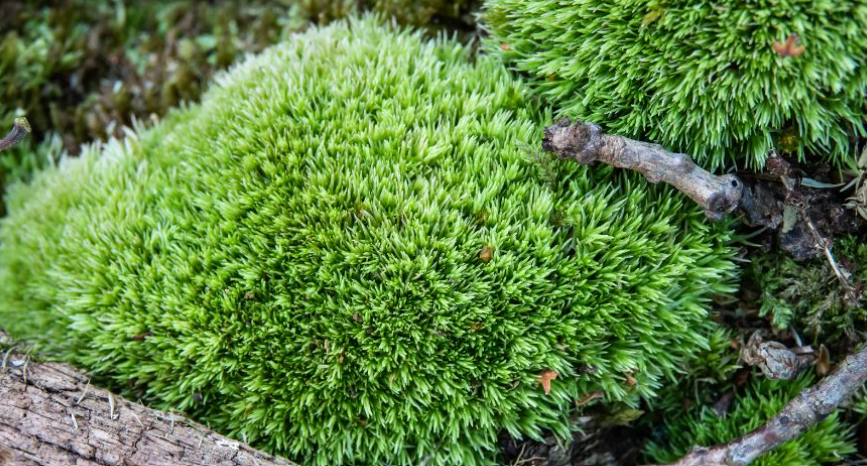
Types of Moss Plants
Sphagnum Moss (Sphagnum spp.)
The most ecologically significant moss genus on the planet, sphagnum dominates vast areas of peatland, bog, and fen across the Northern Hemisphere. Its unique, sponge-like cells can hold up to 20 times the plant’s dry weight in water. It forms pale green, yellowish, or deep red hummocks and carpets, and its slow decomposition over millennia has created the world’s great peat deposits, locking in enormous quantities of carbon.
Common Haircap Moss (Polytrichum commune)
Among the tallest of all mosses, common haircap can grow to 12 inches or more in height, forming dense, dark green colonies resembling miniature forests. Its stiff, lance-shaped leaves are equipped with rows of photosynthetic plates (lamellae) on their upper surface — a feature unique to Polytrichum. A shaggy, golden-haired cap covers its four-angled spore capsules, giving the genus its common name.
Broom Moss / Rock Cap Moss (Dicranum scoparium)
One of the most abundant and easily recognized forest mosses in the Northern Hemisphere, broom moss is instantly identified by its leaves that all sweep dramatically to one side — a trait called falcate-secund. It forms deep, lush, dark green tufts on forest floors, mossy boulders, and tree bases. The strongly “wind-swept” appearance of its leaf orientation makes it one of the most distinctive mosses in temperate woodlands.
Sheet Moss (Hypnum curvifolium)
A supremely elegant, carpet-forming moss that drapes smoothly over rocks, fallen logs, and forest floors in eastern North America. Its slender, curved, overlapping leaves give each branch a neat, feathery, plume-like appearance. It spreads in flat, weed-free, bright to golden-green mats and is one of the most popular mosses for use in terrariums, moss gardens, and floral design due to its refined, uniform texture.
Cushion Moss (Leucobryum glaucum)
Named for the perfectly rounded, firm hummocks it forms on the floors of acidic woodlands and heathlands, cushion moss is immediately recognizable by its striking pale blue-green to almost white coloration. This unusual color results from large, air-filled non-photosynthetic cells that surround the green cells within each leaf. When dry it turns nearly white; when wet it recovers its characteristic blue-green tint.
Feather Moss (Pleurozium schreberi)
A dominant ground cover moss across vast areas of boreal and montane forest worldwide, feather moss forms loose, deep, fluffy mats with a distinctive reddish stem that contrasts beautifully with its bright green leaves. It is pinnately branched like a feather, giving it its common name. Ecologically it is critically important as a host for nitrogen-fixing cyanobacteria, making it a key contributor to forest nutrient cycling.
Stair-step Moss (Hylocomium splendens)
One of the most architecturally fascinating mosses, stair-step moss produces a new tier of richly branched, feathery growth from the midpoint of the previous year’s stem each growing season. This annual layering creates a distinctive stacked, stair-step silhouette and allows you to estimate the plant’s age by counting the tiers. It forms deep, glossy, golden-green carpets in cool, humid boreal and montane forests.
Silver Moss (Bryum argenteum)
The most cosmopolitan moss species on Earth, silver moss has colonized every continent including Antarctica. It forms tiny, dense, silvery-green to white cushions on pavement cracks, rooftops, garden paths, lawns, and disturbed soils in cities worldwide. Its distinctive metallic sheen is produced by the colorless, transparent upper cells of each leaf. It is exceptionally drought-tolerant and pollution-resistant, thriving where few plants can.
Wall Screw Moss (Tortula muralis)
A remarkably hardy pioneer moss that colonizes the most inhospitable of surfaces — concrete walls, stone pavements, roof tiles, and mortar joints. Its leaves are tipped with a long, silvery, twisted hair-point that helps reflect intense light and reduce water loss. It forms small, compact, dark green to brownish cushions and is one of the most drought-tolerant mosses known, capable of surviving years of desiccation before reviving when wetted.
Luminous Moss (Schistostega pennata)
Perhaps the most magical of all mosses, luminous moss produces a soft, golden-green, almost otherworldly glow in the dim light of cave entrances, mine shafts, and overhanging rock banks. The glow comes from specialized, lens-shaped protonema cells that focus and reflect available light back toward the viewer. The leafy shoots themselves are delicate and fern-like. It grows only in very specific, persistently shaded, humid microhabitats.
Water Moss (Fontinalis antipyretica)
One of the largest and most widespread aquatic mosses in the world, water moss lives entirely submerged in clean, fast-flowing streams, rivers, and cool lakes. It forms long, flowing, dark olive-green to almost black streamers anchored firmly to rocks and submerged wood. The leaves are keeled — folded along their length like a boat hull — and arranged in three distinct rows around the stem. It provides essential spawning and refuge habitat for aquatic invertebrates and fish.
Tamarisk Moss (Thuidium tamariscinum)
Widely considered one of the most beautiful mosses in the world, tamarisk moss produces elaborately tri-pinnate branching — each stem divides three times over into progressively finer branchlets — creating a perfect, fern-like frond structure. The stems and branches are densely coated in tiny hair-like paraphyllia, giving them a fuzzy texture under magnification. It forms vivid, fresh green mats on shaded woodland floors and damp hedge banks.
Juniper Moss (Polytrichum juniperinum)
A close relative of common haircap, juniper moss is a smaller, stiffer species of dry, acidic habitats — heathlands, moorlands, sandy woodland clearings, and disturbed ground. Its leaves have reddish-brown hair-points and fold inward along their margins to cover the photosynthetic lamellae, conserving moisture. Spore capsules are strongly four-angled and covered by a golden, hairy calyptra. It often grows alongside heather and gorse.
Woolly Fringe Moss (Racomitrium lanuginosum)
A dominant landscape-forming moss of exposed mountain summits, subarctic heathlands, and volcanic lava fields. It creates vast, pale silvery-grey carpets across open moorland and mountain plateaus, giving many highland landscapes their characteristic grey-green complexion. The silver-grey color comes from long, white hair-points on each leaf that protect the plant from intense UV radiation and reduce water loss in windswept environments.
Lesser Meadow Moss (Calliergonella cuspidata)
An extremely common wetland and damp grassland moss, found in lawns, meadows, marshes, and the edges of fens and bogs. Its most distinctive feature is its tightly cuspidate — sharply pointed — shoot tips, where the leaves cluster together into a neat point. Leaves are broad, concave, and lack a midrib. It forms pale yellow-green to light green mats that can carpet large areas of wet grassland and often indicates waterlogged soil.
Comb Moss (Ctenidium molluscum)
A glossy, golden to yellow-green moss of limestone grasslands, rock ledges, and woodland floors on calcium-rich soils, where it forms dense, shimmering mats with a notably silky or metallic sheen. Its stems are intricately pinnate and the slender, curved, overlapping leaves give the plant the appearance of an elaborately combed surface, explaining its common name. It is one of the strongest indicators of calcium-rich substrate among British mosses.
Flat-leaved Moss (Neckera complanata)
A strikingly beautiful moss of shaded limestone rocks and base-rich tree bark, immediately identifiable by its strongly flattened, ribbon-like appearance — stems and leaves are all compressed into a single plane. The individual leaves are wavy and transversely undulating, creating a rippled texture that shimmers in dim woodland light. It forms overlapping, spreading patches that drape elegantly over bark and rock surfaces in ancient, undisturbed woodlands.
Apple Moss (Bartramia pomiformis)
One of the most charming and easily identified mosses, apple moss is named for its perfectly round, apple-shaped, ribbed spore capsules that age from green to brown. It forms deep, stiff, grey-green to silvery cushions with narrow, strongly crisped leaves that give the tufts a frosted, textured appearance when dry. Found on dry, acidic rock ledges, earth banks, and old walls in upland and mountain environments throughout the Northern Hemisphere.
Bog Moss (Sphagnum magellanicum)
One of the most widespread and ecologically important sphagnum species, bog moss forms the large, prominent hummocks that define the surface structure of raised bogs and blanket bogs. It is distinguished from other sphagnums by its deep red to wine-purple coloration, especially in exposed, high-light conditions. Like all sphagnums, it has extraordinary water-holding capacity and plays a central role in peat formation and bog hydrology.
Toothed Plagiomnium Moss (Plagiomnium cuspidatum)
An unusually broad-leaved moss that stands out from most other mosses by virtue of its wide, tongue-shaped leaves with clearly toothed margins — a feature more reminiscent of a flowering plant than a typical moss. It forms loose, sprawling mats on moist, shaded woodland floors, damp garden soil, and rotting logs. Leaves are bright green with a distinct midrib. Spore capsules hang on long, arching, reddish stalks.
Pincushion Moss (Leucobryum juniperoideum)
Very similar to the larger cushion moss (L. glaucum) but forming tighter, smaller, more compact domes in acidic heathlands and woodlands. Its characteristic pale, almost white coloration immediately sets it apart from surrounding mosses. The leaf structure — with large, air-filled hyaline cells surrounding small green cells — gives the plant its distinctive pallor and its remarkable ability to survive extended dry periods.
Mnium Moss (Mnium hornum)
One of the most familiar woodland mosses, Mnium hornum forms dense, dark green tufts at the base of trees, on rotting stumps, and on shaded, acidic soil. Male and female plants differ visibly — female plants are erect and capsule-bearing, while male plants produce distinctive star-shaped rosettes of leaves. Its relatively large, oval, toothed leaves are notable for a moss, and spore capsules hang on long, curved red-brown stalks.
Common Crane’s-bill Moss (Atrichum undulatum)
A distinctive and common woodland moss with unusually large, translucent, wavy-margined leaves that are toothed along their edges — giving the plant an almost tropical appearance when examined closely. It forms loose, spreading patches on moist, fertile woodland soil, ditch banks, and hedge bases. The cross-wave undulation of the leaves is one of its most reliable identifying features. Spore capsules are long, curved, and cylindrical.
Rough-stalked Feather Moss (Brachythecium rutabulum)
One of the most abundant and adaptable mosses in temperate regions, found in gardens, lawns, woodland floors, hedgebanks, and rock surfaces across Europe and North America. It forms robust, spreading, bright to mid-green mats with pinnately branched stems. Leaves are broadly oval with a strong midrib. The spore-stalk (seta) is rough and papillose — a key identification feature. It tolerates a remarkably wide range of light, moisture, and nutrient conditions.
Glittering Wood Moss (Hylocomiastrum umbratum)
A moss of cool, shaded montane and boreal forests, forming deep, richly pinnate mats with a distinctly glossy, glittering surface in dim woodland light. Leaves are strongly plicate (folded lengthwise), giving each branch a ridged, sculptural quality. It resembles Hylocomium splendens but lacks the stair-step growth habit. It thrives in humid, undisturbed mountain forests and is often found growing over large boulders and decaying logs.
Springy Turf Moss (Rhytidiadelphus squarrosus)
An extremely common and vigorous lawn and grassland moss recognized by its distinctive habit of having leaves that abruptly bend back (squarrose) from the stem at almost right angles, giving the plant a spiky, star-burst appearance. It forms loose, untidy, bright green mats and is one of the most frequent “weed” mosses in garden lawns, playing fields, and moist grasslands. Stems are often tinged red-orange at the base.
Swan’s-neck Thyme Moss (Mnium stellare / Pohlia nutans)
Pohlia nutans is an abundant moss of acidic habitats — heathlands, bog edges, moorland, and decaying wood — forming loose, pale green tufts with lance-shaped leaves. Its most recognizable feature is its drooping, nodding spore capsules hanging at the tip of long, reddish stalks — the swan’s-neck posture giving this group their evocative common name. It is one of the first mosses to colonize burnt ground and disturbed peat.
Greater Calcareous Moss (Ctenidium molluscum var. robustum)
A larger, more robust form of comb moss found in wet, base-rich flushes and calcareous spring habitats. It forms denser, more luxuriant golden-green mats than the typical form. The combination of extreme calcium-richness in its preferred habitat and its shimmering, silky texture make it one of the most attractive mosses of upland limestone springs and flushes. It is an important component of rich fen and calcareous marsh communities.
Cypress-leaved Plait Moss (Hypnum cupressiforme)
One of the most widespread mosses on Earth, found on virtually every continent in an enormous range of habitats — tree bark, rocks, soil, sand dunes, rooftops, and walls. It forms flat to rounded mats with slender, curved, overlapping leaves that give branches a smooth, cypresslike appearance. Enormous variation across its many ecotypes and varieties makes it a taxonomically complex species. Its adaptability and abundance make it a dominant moss across much of the world.
Capillary Thread Moss (Bryum capillare)
A very common and widespread moss of walls, rocks, soil, and tree bark, forming tufted, dark green to reddish-brown cushions with distinctive leaves that are broadly oval with a hair-point and show strong twisting when dry. Hanging, cylindrical, pear-shaped spore capsules on long, reddish stalks are produced abundantly. It is an urban generalist, frequently found on old walls, headstones, and pavement edges across temperate regions worldwide.
Bog Grove Moss (Calliergon giganteum)
A large, robust aquatic and semi-aquatic moss of fens, bogs, and shallow lake margins, forming expansive, lax, pale green submerged or emergent mats. Leaves are broad, concave, nerveless, and rounded at the tip, with shoot tips forming distinctive hooded, rounded points. It is one of the largest non-sphagnum bog mosses and plays an important peat-forming role in fen and reedbed communities. It provides important habitat for wetland invertebrates.
Waved Silk Moss (Plagiothecium undulatum)
A striking moss of humid, shaded woodlands, ravines, and cool upland slopes, immediately recognizable by its strongly flattened, glossy, pale whitish-green appearance and the pronounced transverse undulations (waves) across each broad leaf. It forms loose, overlapping patches on acidic soil, peat banks, and humus-rich woodland floors. Its pale, almost bleached color and glossy sheen make it one of the most visually distinctive mosses of Atlantic woodland.
Neat Feather Moss (Pseudoscleropodium purum)
A robust, neatly pinnate moss forming dense, rounded, pale grey-green to whitish-green mats in grasslands, heathlands, woodland edges, and calcareous dunes. Stems are thick and worm-like in cross-section, with tightly overlapping, concave, broadly oval leaves that give each stem a sausage-like, tubular appearance. It is one of the most abundant and easily identified grassland mosses in Europe, often forming extensive, pale, cloud-like carpets in chalk downland.
Delicate Fern Moss (Thuidium delicatulum)
A North American counterpart to the European tamarisk moss, delicate fern moss forms lush, intricately pinnate, bright green mats on moist woodland floors, shaded rocks, and stream banks. Its bi- to tri-pinnate branching pattern creates a perfect fern-frond appearance. Stems are densely covered in minute paraphyllia. It is a common and attractive component of moist, shaded forest understory communities throughout eastern and central North America.
Electrified Cat’s Tail Moss (Rhytidium rugosum)
A distinctive, robust moss of dry, calcareous grasslands, rocky slopes, and open woodland on limestone, forming deep, loose, golden-brown to yellowish-green mats. Each leaf is strongly plicate (folded) and curved, giving the plant a deeply rugose, wrinkled texture entirely unlike most other mosses. Shoots are irregularly branched and somewhat resembles crumpled golden foil. It is a strong indicator of ancient, undisturbed calcareous grassland in Europe.
Heron’s-bill Moss (Rhynchostegium confertum)
A common and adaptable moss of shaded, moist rocks, tree bases, and damp walls in lowland areas. It forms dense, flat, interwoven green mats with slender, tapering leaves and a characteristic long, beak-like seta tip on its spore capsules — giving rise to the heron’s-bill name. It is frequently found in urban environments on damp, shaded stone, brick, and mortar, and is one of the most common urban rock-dwelling mosses in Europe.
Rigid Beard Moss (Didymodon rigidulus)
A small, compact, dark green to blackish-green moss of limestone walls, calcareous rock faces, and mortar, forming short, dense tufts or mats. It is one of a large and challenging genus of small mosses specialized for dry, calcium-rich substrates. The leaves are narrow and lance-shaped with a strong nerve. It is highly drought-tolerant and is frequently one of the earliest colonizers of freshly laid mortar and limestone masonry.
Matted Thread Moss (Bryum pseudotriquetrum)
A tall, robust Bryum species of marshes, fens, wet rock ledges, and spring flushes, forming loose, deep, often reddish-tinged tufts in persistently wet habitats. Its leaves are broadly oval with a long, excurrent nerve (nerve running out beyond the leaf tip). Hanging, cylindrical spore capsules are produced on long reddish setae. It grows in calcareous to moderately acidic conditions and is one of the most characteristic mosses of upland flushes.
Willow Moss (Fontinalis squamosa)
A close relative of Fontinalis antipyretica, willow moss is a fully aquatic species found in fast-flowing, clear, acidic streams and mountain rivers. It differs from water moss in its preference for soft, acidic water and its slightly more robust, squarrose leaves. It forms long, trailing, dark green streamers anchored to boulders and bedrock in clean upland watercourses. Like all aquatic mosses, it is highly sensitive to water pollution and is used as a bioindicator of stream health.
Glaucous Bristle Moss (Orthotrichum cupulatum)
A specialist moss of dry, calcareous rock surfaces, limestone outcrops, and stone walls, forming small, compact, dark olive-green to brownish cushions. It is most easily identified when fertile — the erect, ribbed, cylindrical spore capsules are held upright and emerge only partly from a crown of spreading leaves, giving the plant a distinctive cup-like appearance at the capsule base. It belongs to a large genus of epiphytic and epilithic mosses important in limestone habitats across Europe and North America.