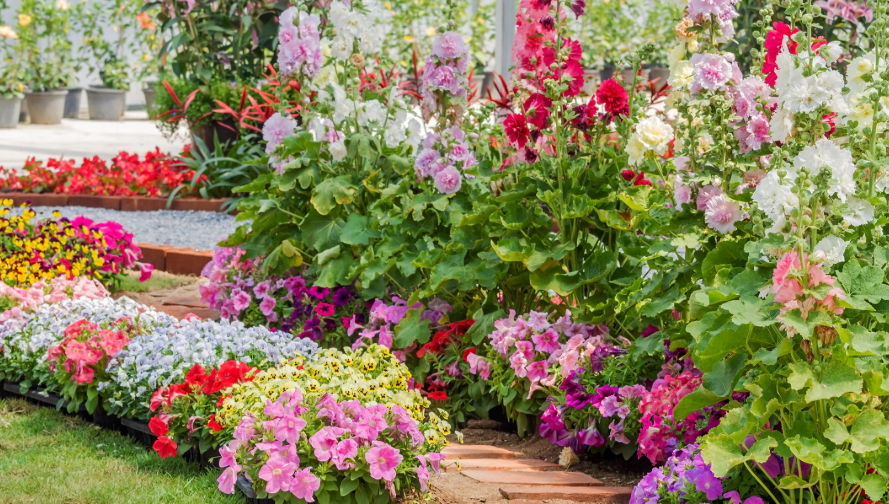
Deadheading — the practice of removing spent flower heads to encourage continued blooming — is one of the most time-consuming regular tasks in the summer garden. While deadheading undeniably prolongs flowering in many plants, a remarkable selection of annuals, perennials, and shrubs are either self-cleaning — dropping their spent blooms automatically — or bloom so continuously from new buds that the presence of spent flowers never significantly diminishes their overall display.
These low-maintenance, no-deadhead flowers are the ultimate solution for busy gardeners, public plantings, large-scale landscapes, and anyone who simply wants a beautiful garden without the weekly labor of flower removal.
A self-cleaning plant actively sheds its spent blooms automatically, dropping them cleanly without any intervention. A no-deadhead plant may not drop its spent blooms but produces new flowers so continuously and abundantly that the presence of fading blooms is inconspicuous and does not significantly reduce the overall floral display.
Both types are equally valuable for low-maintenance gardening. Perennials that benefit from leaving seed heads — such as echinacea, rudbeckia, sedum, and achillea — provide the additional value of winter garden structure, bird food, and habitat, rewarding gardeners who resist the urge to deadhead with months of continued ornamental interest and outstanding wildlife value long after the fresh flowers have faded.
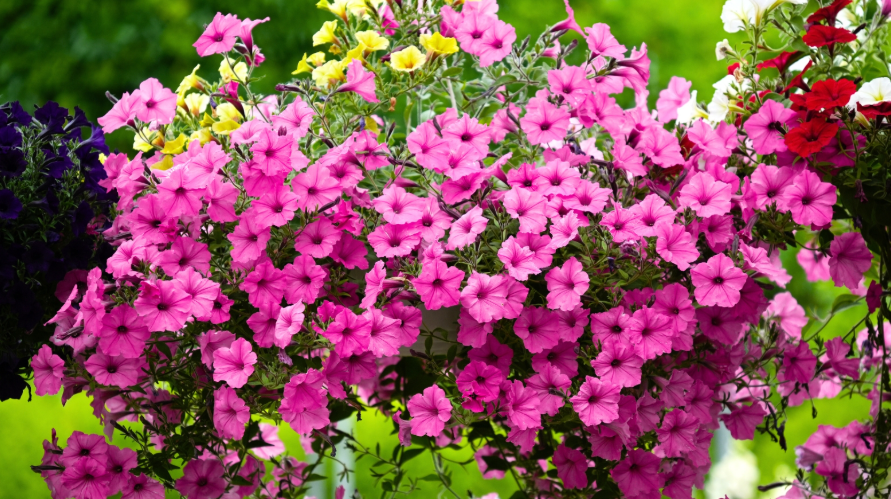
Plants that Don’t Need Deadheading
Calibrachoa (Million Bells)
One of the finest self-cleaning flowering plants available, calibrachoa drops its spent blooms automatically and continuously produces new flowers without any intervention whatsoever. Its trailing stems cascade from containers and hanging baskets in an uninterrupted waterfall of tiny, petunia-like flowers in virtually every color from spring to hard frost.
The extraordinary prolificacy of calibrachoa — producing literally thousands of individual flowers per plant across a single season — makes it the gold standard of no-deadhead annuals for container gardening throughout the entire summer.
Vinca / Catharanthus (Catharanthus roseus — Annual Vinca)
Annual vinca is a supremely self-cleaning, no-deadhead annual that maintains a perfectly tidy, continuously flowering appearance from late spring to frost entirely without intervention. Its pinwheel-shaped flowers in vivid pink, red, white, coral, and bicolored forms are shed cleanly as they fade, immediately replaced by new blooms from the plant’s prolific, continuously budding growth.
It thrives in full sun and high heat, performing most impressively in the hottest summer conditions, and requires only regular watering and occasional feeding to maintain its extraordinary flowering performance.
Begonia (Begonia semperflorens — Wax Begonia)
Wax begonias are outstanding self-cleaning annuals that drop their spent flowers automatically and maintain a continuously fresh, tidy appearance throughout the entire growing season without any deadheading.
Their compact, mounding habit, glossy bronze or green foliage, and endless succession of small white, pink, or red flowers from spring to frost make them among the most effortlessly maintained flowering annuals for both sun and shade positions. They are outstanding for formal bedding schemes, container plantings, and shaded border edging where a consistently neat appearance is required.
Lantana (Lantana camara)
Lantana is a naturally self-cleaning, no-deadhead annual that produces continuous waves of its multicolored, confetti-like flower clusters from late spring to frost without requiring spent bloom removal. New flower clusters form so rapidly and abundantly that old ones are inconspicuous as they fade.
Its extraordinary heat and drought tolerance, prolific flowering performance, and powerful attraction for butterflies and hummingbirds make it one of the most valuable and effortlessly maintained flowering annuals for hot, sunny summer gardens and container displays throughout the season.
Scaevola (Scaevola aemula — Fan Flower)
An Australian native annual that is completely self-cleaning and requires absolutely no deadheading to maintain its prolific, continuous production of unique, fan-shaped, semi-circular flowers in lavender-blue, purple, and pink from spring to frost.
Its trailing habit makes it outstanding for hanging baskets and containers where its cascading stems produce an uninterrupted display of bloom throughout the entire summer. Few trailing annuals combine such effortless self-maintenance with such prolific, long-season flowering performance as scaevola does in warm, sunny summer conditions.
Torenia (Torenia fournieri — Wishbone Flower)
A charming, compact shade annual that is naturally self-cleaning and requires no deadheading to maintain continuous bloom from late spring to frost. Its tubular, two-lipped flowers in purple, lavender, pink, and white with distinctive yellow throat markings are shed cleanly as they fade, immediately replaced by new blooms from the plant’s vigorous, continuously budding stems.
As one of the very few genuinely shade-loving, self-cleaning flowering annuals, torenia is especially valuable for shaded container plantings, window boxes, and partially shaded border positions throughout the summer season.
Angelonia (Angelonia angustifolia — Summer Snapdragon)
Angelonia is one of the finest no-deadhead annuals for hot-summer gardens, producing continuous upright spikes of grape-scented, two-lipped flowers in purple, lavender, pink, and white from late spring to hard frost entirely without deadheading. Individual flowers drop cleanly as they fade while new buds on the same spike open in succession, maintaining a constantly fresh floral display.
Its outstanding heat tolerance, self-cleaning habit, and continuous bloom make it one of the most effortlessly maintained and reliably performing summer annuals for sunny borders and container plantings.
Pentas (Pentas lanceolata — Egyptian Star Flower)
Pentas is a naturally self-cleaning annual that produces continuous rounded clusters of star-shaped flowers in vivid red, pink, white, and lavender from late spring to frost without requiring deadheading. New flower clusters form continuously and abundantly at the tips of vigorous, bushy stems, maintaining a perpetually fresh floral display throughout the hottest summer months.
Its extraordinary heat tolerance, self-cleaning habit, and powerful attraction for butterflies and hummingbirds make it one of the most valuable and low-maintenance flowering annuals for hot-summer garden and container plantings.
New Guinea Impatiens (Impatiens hawkeri)
Like its smaller relative, New Guinea impatiens is a perfectly self-cleaning annual that sheds its spent blooms automatically and maintains a continuously fresh floral display throughout summer without any deadheading.
Its larger flowers — up to 2–3 inches across — in vivid orange, red, coral, pink, purple, and white above attractive lance-shaped foliage create bold, tropical-looking color in partially shaded positions. Its self-cleaning habit, vigorous growth, and spectacular flower size make it one of the most effortlessly maintained large-flowered shade annuals for summer containers and borders.
Bacopa (Sutera cordata)
A delicate, trailing annual that is completely self-cleaning, requiring no deadheading to maintain its continuous cascade of tiny, five-petaled flowers in white, pink, or lavender from spring to frost.
Its naturally prolific and continuously budding growth habit ensures that new flowers replace old ones so rapidly that the plant always appears to be smothered in fresh bloom. Bacopa is an outstanding self-cleaning trailer for mixed container plantings and hanging baskets, combining effortlessly with other trailing and mounding annuals to create continuously beautiful summer container displays.
Alyssum (Lobularia maritima)
Sweet alyssum is a naturally self-cleaning annual that maintains its honey-fragrant froth of tiny white, pink, or purple flowers continuously from spring to frost without deadheading. If flowering does slow slightly in peak summer heat, a light shearing back restores bloom within weeks.
Its low, spreading habit, intense fragrance, and effortlessly self-cleaning bloom make it one of the most practical and charming no-deadhead edging and container annuals available. As a bonus, it attracts beneficial hover flies and parasitic wasps that prey on common garden pests throughout summer.
Bidens (Bidens ferulifolia)
An extraordinarily prolific, self-cleaning trailing annual producing a completely uninterrupted cascade of small, bright golden-yellow daisy flowers over delicate, finely cut, ferny foliage from spring to hard frost.
Bidens is one of the most genuinely self-cleaning annuals available — spent flowers disappear so rapidly and completely that the plant always appears to be covered exclusively in fresh, perfect blooms. Its vigorous trailing habit, vivid golden flower color, and completely effortless, no-deadhead performance make it an outstanding companion plant in mixed container and hanging basket plantings throughout summer.
Verbena (Verbena spp.)
Modern trailing and spreading verbena hybrids — particularly the Superbena and Lanai series — are highly self-cleaning annuals that require minimal to no deadheading to maintain their prolific, continuous production of vivid flower clusters in red, purple, pink, white, and bicolored forms from spring to frost.
While older verbena varieties benefited from occasional deadheading, modern breeding has produced varieties that are essentially self-maintaining in their flowering performance. Their trailing habit, wide color range, and low-maintenance self-cleaning bloom make them outstanding container and hanging basket performers throughout summer.
Echinacea (Echinacea purpurea — Coneflower)
A tough, drought-tolerant perennial that blooms prolifically throughout summer and into autumn without requiring deadheading — and actually benefits from leaving spent flower heads in place.
The prominent, spiky, orange-brown seed heads that develop after the petals fall are ornamentally attractive in their own right and provide vital seed food for goldfinches and other small birds throughout autumn and winter. Coneflower blooms most abundantly in its first year, producing large, daisy-like flowers with swept-back ray petals in pink, purple, white, orange, yellow, and red around prominent central cones.
Rudbeckia (Rudbeckia hirta — Black-Eyed Susan)
Black-eyed Susan is a vigorous, self-sufficient annual and short-lived perennial that blooms prolifically throughout summer and autumn without requiring deadheading. Its golden-yellow, daisy-like flowers with distinctive dark brown-black centers are produced in such abundance that spent flowers are scarcely noticeable among the continuous succession of fresh blooms.
Leaving spent flower heads in place provides vital seed for birds in autumn and allows prolific self-seeding that ensures the plant returns reliably the following year. It is one of the most effortlessly maintained, wildlife-friendly no-deadhead summer flowers.
Salvia (Salvia nemorosa — Perennial Salvia)
Hardy perennial salvias are outstanding no-deadhead plants, producing dense spikes of small, two-lipped flowers in vivid blue, purple, and pink that transition naturally from fresh bloom to attractive dried seed spikes without appearing untidy.
Modern varieties such as ‘Caradonna’, ‘May Night’, and ‘East Friesland’ rebloom abundantly without deadheading, producing multiple flushes of flower spikes from late spring through autumn. Their upright, architectural habit, wildlife value, and effortlessly self-maintaining flowering performance make them among the most reliable and low-maintenance perennial garden plants available.
Agastache (Agastache spp. — Hyssop)
Agastaches are outstanding no-deadhead perennials and tender annuals producing tall, densely packed spikes of small, tubular flowers in vivid orange, red, purple, and pink that remain ornamental even as they transition from fresh bloom to dried seed spikes. Hummingbirds, butterflies, and bees visit agastache spikes at all stages of development.
The dried flower spikes add attractive winter structure to the garden and provide seed food for birds. Modern varieties such as ‘Kudos Coral’ and ‘Morello’ rebloom prolifically without deadheading throughout summer and well into autumn.
Gaura (Oenothera lindheimeri — Whirling Butterflies)
A graceful, airy perennial producing delicate, butterfly-like flowers in white or pink on long, wand-like stems that dance elegantly in every breeze from late spring to frost. Gaura is a completely self-cleaning plant — individual flowers drop cleanly as they fade and new ones open in rapid succession along the continuously elongating flower wands.
No deadheading is required or beneficial. Its extraordinary drought tolerance, self-cleaning continuous bloom, and delicate, ethereal beauty make it one of the most effortlessly maintained and graceful no-deadhead perennials for sunny summer border plantings.
Hemerocallis (Hemerocallis spp. — Daylily)
Despite each individual daylily flower lasting only a single day, daylilies are outstanding low-maintenance perennials that bloom prolifically throughout summer without requiring deadheading.
Each scape carries numerous buds that open in succession over many weeks, and modern re-blooming varieties such as ‘Stella de Oro’, ‘Happy Returns’, and ‘Rosy Returns’ produce multiple flowering cycles from late spring through autumn. While removing spent scapes after all buds have opened tidies the plant, it is not strictly necessary and plants bloom perfectly well without any intervention.
Coreopsis (Coreopsis spp. — Tickseed)
Thread-leaf coreopsis (C. verticillata) and its popular cultivars — including ‘Moonbeam’, ‘Zagreb’, and ‘Route 66’ — are outstanding no-deadhead perennials producing masses of small, daisy-like flowers in golden-yellow, lemon, and bicolored forms continuously from early summer to frost without any deadheading required.
Their finely divided, thread-like foliage creates a delicate, airy texture in the border, and the plants bloom so continuously that spent flowers are never noticeably accumulated. They are highly drought-tolerant, completely self-maintaining, and among the most reliably long-blooming no-deadhead perennials.
Catmint (Nepeta spp.)
Hardy, aromatic perennials producing long, cascading wands of small, lavender-blue or purple flowers from late spring through summer that require no deadheading to maintain a prolonged and attractive floral display. After the first main flush of bloom, catmint can be cut back hard to encourage a vigorous second flush, but even without this intervention it continues producing flowers on new growth throughout summer.
Its aromatic, grey-green foliage is attractive year-round and highly repellent to deer and rabbits, making catmint one of the most low-maintenance and trouble-free no-deadhead perennial border plants.
Perovskia (Salvia yangii — Russian Sage)
A spectacular, drought-tolerant perennial producing tall, airy, branching stems of tiny, vivid lavender-blue flowers above aromatic, silver-grey foliage from midsummer to frost. Russian sage requires absolutely no deadheading — its flower spikes transition gracefully from fresh bloom to attractive silver-grey dried stems that maintain excellent ornamental value through autumn and winter.
It is completely self-maintaining, extraordinarily drought-tolerant once established, and provides some of the finest blue flower color of any no-deadhead summer perennial. Its dried winter stems add outstanding structural interest to the garden.
Lavender (Lavandula spp.)
One of the most beloved and widely grown garden shrubs in the world, lavender produces its fragrant spikes of tiny, tubular, purple, blue, or white flowers from early to midsummer without requiring deadheading for continued ornamental value. The spent flower spikes dry attractively in place, maintaining their silver-grey color and fragrance for months.
While a light trim after flowering encourages compact growth and occasional reblooming, lavender performs perfectly well without any deadheading. Its extraordinary fragrance, drought tolerance, and effortlessly self-maintaining habit make it a garden classic.
Sedum / Stonecrop (Hylotelephium spp. — Autumn Stonecrop)
Tall sedums including the beloved ‘Autumn Joy’ and ‘Matrona’ are outstanding no-deadhead perennials that transition beautifully through multiple ornamental stages — from tight, broccoli-like flower buds in late summer through vivid pink and copper-red fresh blooms in early autumn to attractive, russet-brown dried seed heads that persist through winter.
No deadheading is required or desirable at any stage — the dried winter seed heads are among the most ornamentally valuable dried plant structures in the winter garden and provide vital seed food for birds throughout the coldest months.
Achillea (Achillea millefolium — Yarrow)
Hardy, drought-tolerant perennials producing flat-topped flower clusters in white, yellow, pink, red, and salmon from early summer through autumn that transition gracefully from fresh bloom to attractive dried flower heads without requiring deadheading. Modern yarrow cultivars such as ‘Paprika’, ‘Moonshine’, and ‘Coronation Gold’ are particularly long-blooming and self-maintaining.
The dried flower heads provide winter structure and seed food for birds. Yarrow spreads steadily by rhizomes and self-seeds freely, gradually establishing naturalistic drifts in sunny, dry garden positions with absolutely no maintenance.
Erigeron (Erigeron karvinskianus — Mexican Fleabane)
A charming, self-seeding perennial producing an extraordinary abundance of tiny, daisy-like flowers that open white and gradually age through pink to deep rose — creating a delightful, constantly changing, multicolored floral display from late spring continuously through autumn without any deadheading required.
Mexican fleabane self-seeds prolifically into wall crevices, paving gaps, and gravel, naturalizing freely to create beautiful, spontaneous plantings in the most unlikely positions. It requires absolutely no care once established and is one of the most effortlessly beautiful no-deadhead flowering plants available.
Portulaca (Portulaca grandiflora — Moss Rose)
One of the most genuinely self-cleaning and no-deadhead annuals available, portulaca drops its spent blooms automatically and continuously produces new silky, jewel-bright flowers in yellow, orange, red, pink, and white from late spring to frost without any intervention.
It thrives in the hottest, driest, most exposed positions in the garden and actually performs better under stress than in rich, moist conditions. Its succulent, needle-like foliage, brilliant flower colors, and completely effortless, no-deadhead performance make it the perfect choice for hot, dry, neglected garden positions.
Gomphrena (Gomphrena globosa — Globe Amaranth)
A tough, heat-loving annual producing rounded, papery, clover-like flower heads in vivid magenta, purple, pink, orange, and white from midsummer to frost that require absolutely no deadheading. The papery, everlasting flower heads dry beautifully in place, maintaining their vivid colors as they transition from fresh bloom to dried seed heads on the plant.
Spent flowers are simply not noticeable among the plant’s continuously prolific production of new blooms. Its extraordinary heat and drought tolerance, self-maintaining habit, and exceptional dried flower value make it one of the finest no-deadhead annuals for summer gardens.
Celosia (Celosia argentea)
A striking, heat-loving annual available in plumed and cockscomb forms that requires no deadheading to maintain a continuously ornamental and colorful display from midsummer through autumn. The dramatic, velvety or feathery flower heads in vivid red, orange, yellow, and pink transition gradually from fresh bloom to beautifully colored dried structures that maintain their ornamental value for weeks after the fresh flowers have faded.
Celosia’s ability to look magnificent at every stage of its development from fresh flower to dried seed head makes it one of the most effortlessly ornamental no-deadhead summer annuals.
Penstemon (Penstemon spp. — Beard Tongue)
Hardy perennial penstemons produce tall, elegant spikes of tubular, two-lipped flowers in vivid red, scarlet, pink, purple, and white that bloom prolifically throughout summer without requiring deadheading. Individual flower spikes transition gracefully from fresh bloom to attractive seed pods that provide winter structure and bird food without appearing untidy.
Modern hybrid penstemons such as ‘Husker Red’, ‘Dark Towers’, and ‘Midnight’ are particularly long-blooming and self-maintaining. They are outstanding no-deadhead perennials for sunny summer borders with excellent hummingbird and pollinator value.
Diascia (Diascia spp. — Twinspur)
Modern diascia cultivars are highly self-cleaning annuals that require minimal to no deadheading to maintain continuous production of their slender spikes of small, two-spurred flowers in pink, coral, salmon, and rose from late spring through summer and into autumn.
Their naturally prolific budding habit ensures new flowers open in rapid succession along continuously elongating stems, keeping the plant in perpetually fresh-looking bloom. Diascia performs best in cool to moderate temperatures and is outstanding for partially shaded mixed container combinations and cool-summer border edging with no deadheading required.
Helenium (Helenium spp. — Sneezeweed)
A bold, cheerful, late-summer perennial producing an abundance of daisy-like flowers with distinctive reflexed ray petals in vivid shades of gold, orange, bronze, and deep red-brown around prominent, rounded central cones from midsummer to autumn.
Helenium is a vigorous, self-sufficient perennial that blooms prolifically without deadheading, and its spent flower heads provide attractive dried structure and vital seed food for birds through autumn. Modern cultivars such as ‘Moerheim Beauty’, ‘Mardi Gras’, and ‘Sahin’s Early Flowerer’ are particularly prolific and long-blooming without any deadheading intervention.
Ageratum (Ageratum houstonianum — Floss Flower)
Modern ageratum series — particularly the Artist and Bumble series — have been specifically bred for significantly improved self-cleaning performance, requiring minimal to no deadheading to maintain their prolific, continuous production of fluffy, powder-puff-like flower clusters in soft blue, lavender, purple, pink, and white from late spring to frost.
Their compact, mounding habit, continuous self-cleaning bloom, and outstanding soft blue flower color — one of the most difficult colors to achieve in the summer annual garden — make modern ageratum varieties among the most valuable and effortlessly maintained no-deadhead annual edging and bedding plants.