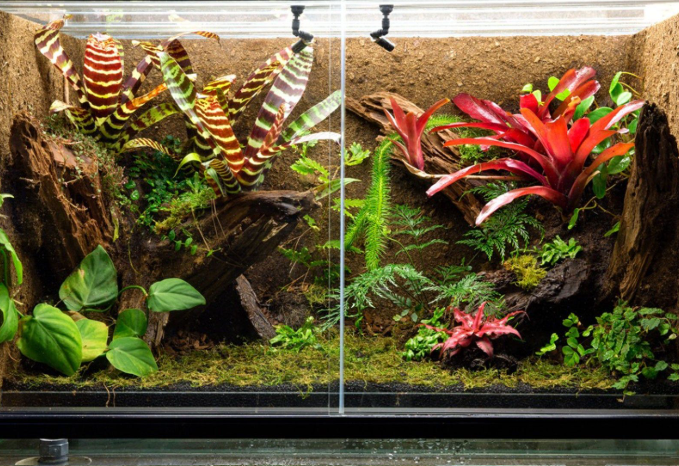
Creating a naturalistic vivarium or terrarium with live plants transforms a reptile enclosure from a bare functional space into a rich, stimulating, and biologically active environment. Live plants provide hiding spots, climbing opportunities, humidity regulation, and psychological enrichment for reptiles.
However, plant selection is critically important — many common houseplants and garden plants are toxic to reptiles and can cause serious illness or death if ingested. The following 30 plants have been widely recognized by herpetologists, veterinarians, and experienced reptile keepers as safe, non-toxic options suitable for use in reptile enclosures.
Tips for Using Plants in Reptile Enclosures
Always verify the safety of any plant before introducing it to a reptile enclosure — when in doubt, consult a reptile veterinarian or a reputable herpetological resource. Source plants from reptile-safe suppliers or grow your own from seed, as plants from garden centers may have been treated with pesticides, fungicides, or systemic insecticides that are highly toxic to reptiles.
Quarantine new plants for several weeks before introducing them to an established enclosure to check for pests. Match plants to the vivarium environment — tropical species require humidity and warmth while succulents and Mediterranean herbs need bright light and dry conditions. Bioactive setups using live plants with a custodian clean-up crew of isopods and springtails create the most stable, naturalistic, and enriching environments for reptile health and wellbeing. Always remove dying or rotting plant material promptly to prevent bacterial growth in the enclosure substrate.
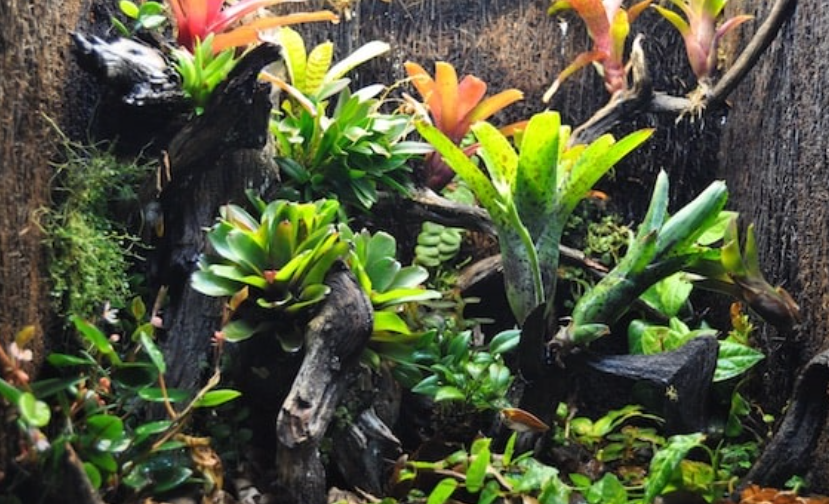
Best Live Plants For Reptile Terrarium
Pothos (Epipremnum aureum)
One of the most widely used and universally recommended plants for reptile enclosures, pothos is a vigorous, fast-growing, trailing vine that thrives in the warm, humid conditions of most tropical reptile setups. Its heart-shaped, glossy leaves in green, golden, or variegated forms provide excellent cover and climbing opportunities for arboreal and semi-arboreal species.
It tolerates low light, irregular watering, and the high humidity of tropical terrariums with remarkable resilience. It is non-toxic to reptiles and grows quickly enough to recover from any incidental damage caused by curious or browsing animals.
Bromeliads (Bromeliaceae family)
Bromeliads are among the most ecologically appropriate and visually stunning plants for tropical reptile enclosures, particularly for tree frogs, anoles, geckos, and chameleons. Their rosettes of stiff, strap-like leaves form natural water-collecting cups — the tank — that provide drinking water for arboreal reptiles that prefer to drink droplets from leaves rather than from a standing water bowl.
Many bromeliad species are fully epiphytic and can be mounted directly onto cork bark or driftwood. They are completely non-toxic and provide excellent hiding, perching, and egg-laying sites.
Ficus (Ficus benjamina / Ficus pumila)
Weeping fig (Ficus benjamina) is a classic and widely used plant for large tropical reptile enclosures housing chameleons, large geckos, and arboreal lizards. Its dense, branching canopy provides outstanding climbing structure and natural-looking cover.
Creeping fig (Ficus pumila) is a vigorous, fast-growing, small-leaved vine that covers backgrounds and walls rapidly, creating a lush, jungle-like appearance. Both species are non-toxic to reptiles and tolerate the warmth and humidity of tropical vivarium conditions. Note that the milky sap of Ficus can occasionally cause minor skin irritation in humans.
Hibiscus (Hibiscus rosa-sinensis)
A superb plant for enclosures housing herbivorous and omnivorous reptiles such as tortoises, iguanas, and uromastyx, as not only is it completely non-toxic but its flowers, leaves, and stems are actively edible and nutritious.
The large, brilliantly colored flowers — in red, orange, yellow, pink, and white — are eagerly eaten by many reptile species and provide enrichment through foraging behavior. It thrives in warm, bright conditions and grows vigorously in the basking zones of large tortoise and iguana enclosures. Dried hibiscus flowers are also a popular and nutritious food supplement.
Spider Plant (Chlorophytum comosum)
A widely available, easy-to-grow, and completely safe houseplant that performs well in reptile enclosures. Its arching, strap-like, green and white striped leaves and cascading baby plantlets make it an attractive, naturalistic addition to a variety of setups.
Spider plants tolerate a wide range of light conditions and irregular watering, making them forgiving choices for beginner reptile keepers. They are non-toxic to reptiles, provide ground-level cover for smaller species, and their fast growth rate allows them to recover quickly from any physical disturbance by enclosure inhabitants.
Snake Plant (Dracaena trifasciata — formerly Sansevieria)
Despite its slightly misleading common name, snake plant is a safe, non-toxic, and highly practical choice for reptile enclosures — particularly desert and arid setups for bearded dragons, leopard geckos, and uromastyx. Its stiff, upright, sword-like leaves in dark green with grey-green banding create naturalistic vertical structure in arid terrariums.
It is extraordinarily drought-tolerant, requires minimal watering, and thrives in the low-humidity, high-temperature conditions typical of desert reptile enclosures. Its tough, leathery leaves withstand physical disturbance from even large, active reptiles.
Tillandsia / Air Plants (Tillandsia spp.)
Air plants are among the most versatile and ecologically appropriate plants for reptile enclosures, requiring no soil whatsoever and absorbing all their water and nutrients through their leaves. They can be mounted on cork bark, driftwood, or rocks to create spectacularly naturalistic vivarium scapes for arboreal reptiles.
Tillandsias are completely non-toxic and safe for all reptile species. They thrive in the warm, humid, well-ventilated conditions of tropical vivarium setups and are a favorite choice for bioactive enclosures housing dart frogs, day geckos, crested geckos, and anoles.
Aloe Vera (Aloe vera)
Aloe vera is a safe, non-toxic succulent that is an excellent choice for desert and arid reptile enclosures. Its thick, fleshy, serrated, grey-green leaves store water efficiently, making it perfectly adapted to the low-humidity, high-temperature conditions of bearded dragon, tortoise, and uromastyx setups.
It provides natural-looking structure and cover in arid vivariums and is edible — the gel-filled leaf interior is actually mildly beneficial for reptile digestion if consumed incidentally. It is drought-tolerant, easy to care for, and available everywhere.
Haworthia (Haworthia spp.)
Small, compact, rosette-forming succulents closely related to aloe, haworthias are outstanding plants for arid reptile enclosures. Their attractive, patterned, fleshy leaves — often with translucent windows or white stripes — add visual interest and naturalistic texture to desert setups.
They are completely non-toxic, very slow-growing, require minimal watering, and tolerate the high temperatures and low humidity of desert vivarium conditions exceptionally well. Their compact size makes them ideal for smaller enclosures housing leopard geckos, skinks, and small tortoise species.
Echeveria (Echeveria spp.)
Rosette-forming succulents with beautifully symmetrical, fleshy leaves in soft shades of blue-grey, purple, green, and pink, echeverias are attractive, safe, and practical plants for arid reptile enclosures.
They are completely non-toxic and are actually edible — many tortoise keepers deliberately grow echeverias as supplemental food plants in tortoise enclosures. They thrive in well-drained, sandy soil in full-spectrum lighting conditions typical of arid vivarium setups. Their low, compact growth habit and slow growth rate make them long-lasting additions to arid terrariums.
Jade Plant (Crassula ovata)
A robust, slow-growing succulent with thick, oval, fleshy, dark green leaves and a sturdy, woody trunk that gives mature specimens a tree-like appearance. It is non-toxic to reptiles and makes an outstanding structural plant in arid and semi-arid enclosures.
Its woody branches provide climbing and basking opportunities for smaller lizard species, and its drought-tolerance and low maintenance requirements make it ideal for desert vivarium conditions. It grows slowly enough to remain appropriately scaled for vivarium use for many years.
Opuntia Cactus (Opuntia spp. — Spineless varieties)
Spineless varieties of prickly pear cactus are among the most ecologically authentic and nutritionally valuable plants for desert reptile enclosures, particularly for tortoises and iguanas. The pads, flowers, and fruits of spineless opuntia are highly nutritious and eagerly eaten by many herbivorous reptile species.
They thrive in full-spectrum lighting, sandy, well-drained soil, and low humidity — exactly the conditions of desert reptile setups. Always use certified spineless varieties to prevent injury to reptile inhabitants. They provide outstanding naturalistic structure and supplemental nutrition simultaneously.
Dracaena (Dracaena fragrans / Dracaena marginata)
Several Dracaena species are safe and highly practical plants for tropical and semi-tropical reptile enclosures. Their upright, arching, strap-like foliage in green, variegated, or red-margined forms provides good cover and perching opportunities for arboreal and semi-arboreal reptiles.
They are non-toxic, tolerate low to moderate light, handle the warmth and humidity of tropical vivarium conditions, and grow robustly enough to withstand the physical activity of active lizards and snakes moving through the enclosure. Note that Dracaena species are toxic to dogs and cats but safe for reptiles.
Peperomia (Peperomia spp.)
A large and diverse genus of compact, low-growing tropical plants with an enormous variety of leaf textures, colors, and forms — making them among the most versatile and decorative safe plants for tropical reptile enclosures.
Watermelon peperomia (P. argyreia), ripple peperomia (P. caperata), and trailing peperomia (P. rotundifolia) are all outstanding vivarium choices. All peperomias are non-toxic to reptiles, tolerate high humidity and warmth, require moderate light, and stay compact enough for use in smaller enclosures. Their varied textures add outstanding naturalistic diversity to vivarium plantings.
Calathea and Maranta (Calathea spp. / Maranta leuconeura)
Prayer plants (Maranta) and calatheas are beautiful, non-toxic tropical plants that thrive in the warm, humid, lower-light conditions of tropical reptile enclosures. Their broad, patterned, vividly marked leaves — with intricate geometric patterns in green, silver, burgundy, and purple — add spectacular color and texture to vivarium plantings.
They tolerate and actually prefer the high humidity of rainforest vivarium setups, making them naturally compatible with the requirements of tropical reptile species. Their large, broad leaves provide excellent cover and visual barriers for shy reptile species.
Orchids (Dendrobium and Epidendrum spp.)
Many tropical orchid genera — particularly Dendrobium, Epidendrum, and Oncidium — are safe, non-toxic, and spectacularly ornamental plants for tropical reptile enclosures. Epiphytic orchids can be mounted on cork bark or driftwood, adding extraordinary natural beauty to bioactive vivarium setups.
They thrive in the warm, humid, well-ventilated conditions of tropical vivariums and reward reptile keepers with breathtaking flower displays. Their roots are fully exposed when mounted, contributing to the naturalistic appearance of the enclosure. They are completely safe for all tropical reptile species.
Sansevieria Hahnii (Dracaena hahnii)
A compact, low-growing, bird’s-nest form of snake plant producing dense rosettes of short, broad, dark green leaves with attractive grey-green banding. It is an excellent choice for the ground level of arid and semi-arid reptile enclosures where full-sized snake plants would be too tall.
Non-toxic and extremely drought-tolerant, it thrives in the low-humidity, high-temperature conditions of desert vivarium setups. Its compact, rosette habit provides natural shelter and cover for smaller reptile species such as leopard geckos, skinks, and small agamid lizards.
Tradescantia (Tradescantia zebrina / Tradescantia fluminensis)
Wandering dudes (formerly wandering Jews) are vigorous, fast-growing, trailing plants with attractively striped purple-green or green-and-white leaves that provide excellent ground cover and visual interest in tropical reptile enclosures.
They are non-toxic to reptiles, grow quickly enough to recover rapidly from any physical damage, and tolerate the warm, humid conditions of tropical vivarium setups. Their fast growth rate makes them particularly useful for quickly establishing lush, natural-looking ground cover in newly set-up bioactive enclosures housing tropical lizards, geckos, and skinks.
Boston Fern (Nephrolepis exaltata)
One of the most popular and widely grown ferns worldwide, Boston fern is a safe, non-toxic, and lushly beautiful plant for humid tropical reptile enclosures. Its long, gracefully arching fronds of bright green, finely divided leaflets create a naturalistic, forest-floor appearance and provide outstanding ground-level cover for shy or secretive reptile species.
It thrives in the high humidity and warmth of tropical vivarium conditions and is an outstanding choice for enclosures housing tree frogs, day geckos, crested geckos, and small chameleons. It requires consistently moist substrate to perform well.
Staghorn Fern (Platycerium bifurcatum)
A spectacular epiphytic fern that can be mounted on cork bark or driftwood panels within large tropical reptile enclosures, providing dramatic vertical structure and naturalistic visual interest. Its distinctive antler-like fertile fronds and flat shield fronds are completely non-toxic and safe for all reptile species.
Mounted staghorn ferns contribute to the humidity and air quality of bioactive enclosures and provide outstanding perching and resting surfaces for arboreal species such as chameleons, day geckos, and tree monitors. They thrive in the warm, humid, well-ventilated conditions of large tropical vivariums.
Nerve Plant (Fittonia albivenis)
A small, compact, creeping tropical plant with extraordinarily decorative leaves intricately veined in white, pink, or red against a dark green background — one of the most visually striking small plants for tropical vivarium use.
Nerve plants are completely non-toxic to reptiles, thrive in the high humidity and warmth of tropical enclosures, and tolerate the lower light levels typical of the ground level in planted vivariums. They stay low and compact, providing attractive ground cover beneath taller plants and excellent visual detail in naturalistic bioactive enclosures.
Dwarf Umbrella Plant (Schefflera arboricola)
A compact, fast-growing tropical shrub producing palmate compound leaves of glossy, oval leaflets radiating from a central point like the spokes of an umbrella. It is non-toxic to reptiles, tolerates warmth and moderate humidity, and grows into a branching, multi-stemmed shrub that provides excellent structure, climbing opportunities, and visual cover in large tropical enclosures.
It is widely used in large chameleon and arboreal lizard setups where its woody, branching structure provides natural climbing pathways through the vivarium space.
Parlor Palm (Chamaedorea elegans)
A graceful, small-growing tropical palm that is completely non-toxic and safe for all reptile species. Its slender, arching stems of pinnate, dark green leaves create an authentic tropical rainforest atmosphere in vivarium setups and provide outstanding visual cover and climbing structure for arboreal reptiles.
It tolerates lower light levels and high humidity better than most palms, making it well-suited to indoor vivarium conditions. It is a popular choice for large chameleon enclosures and tropical lizard vivariums where its authentic palm form adds unmatched naturalistic beauty.
Rosemary (Salvia rosmarinus)
An aromatic, drought-tolerant Mediterranean herb that is completely non-toxic and safe for reptiles — and is actually edible and nutritious for many herbivorous and omnivorous species including tortoises and iguanas.
Its needle-like, grey-green aromatic foliage and woody, branching stems provide natural structure and cover in arid and Mediterranean-climate vivarium setups. It thrives in the bright, full-spectrum lighting, low humidity, and warm temperatures of desert and Mediterranean reptile enclosures and provides supplemental foraging enrichment for plant-eating species.
Lavender (Lavandula spp.)
A fragrant, drought-tolerant Mediterranean shrub that is safe and non-toxic for reptiles and completely appropriate for use in arid and Mediterranean vivarium setups. Its aromatic, silver-grey foliage and purple flower spikes provide natural structure and an authentic appearance in tortoise and agamid lizard enclosures.
Many tortoise keepers grow lavender directly in outdoor tortoise enclosures as both a structural plant and a supplemental browse plant. It thrives in bright full-spectrum lighting, sandy well-drained substrate, and low humidity — conditions typical of Mediterranean reptile setups.
Dandelion (Taraxacum officinale)
Widely regarded as a weed by gardeners, dandelion is one of the most nutritious and beneficial plants that can be grown in reptile enclosures or provided as fresh food. It is completely non-toxic and is actively relished by tortoises, iguanas, bearded dragons, and many other herbivorous and omnivorous reptile species.
Every part of the plant — leaves, flowers, and roots — is edible and nutritious, providing calcium, vitamins, and minerals. Dandelion can be grown in pots within outdoor tortoise enclosures or in sunny windowsill planters for year-round provision of fresh, nutritious greens.
Sedum (Sedum spp.)
A large, diverse genus of low-growing, drought-tolerant succulents that are safe, non-toxic, and highly practical plants for arid and semi-arid reptile enclosures. Many sedum species are edible and provide nutritious supplemental browse for herbivorous reptile species.
Their fleshy, colorful, rosette-forming or mat-forming habit adds naturalistic variety and ground-level texture to desert and Mediterranean vivarium setups. They thrive in sandy, well-drained substrate under full-spectrum lighting and tolerate the temperature extremes and low humidity of desert reptile enclosures with ease.
Hen and Chicks (Sempervivum spp.)
Hardy, rosette-forming succulents producing tight clusters of fleshy, pointed leaves in shades of green, red, purple, and bronze, with smaller “chick” rosettes proliferating around the central “hen.” They are completely non-toxic to reptiles and are useful plants for arid and outdoor reptile enclosures including tortoise tables and outdoor tortoise pens.
They tolerate temperature extremes, drought, and physical disturbance by reptile inhabitants remarkably well. Their tough, fleshy leaves resist browsing damage effectively, and their low, compact growth habit makes them suitable for ground-level planting in a wide range of arid reptile setups.
Mulberry (Morus spp.)
Mulberry trees and their leaves are among the most highly regarded and nutritious food plants for herbivorous reptiles — particularly tortoises and green iguanas. The leaves are rich in calcium and protein and are eagerly eaten by many plant-eating species.
Small mulberry plants or rooted cuttings can be grown in large outdoor tortoise enclosures or in pots near reptile enclosures for use as fresh browse material. The fruits are also enjoyed by omnivorous reptile species. White mulberry (Morus alba) is most commonly recommended for reptile feeding due to its prolific leaf production and known nutritional profile.
Elephant Bush (Portulacaria afra)
A succulent shrub native to South Africa, elephant bush produces small, rounded, fleshy, bright green leaves on reddish-brown woody stems. It is completely non-toxic to reptiles and is in fact an actively beneficial food plant — it is a natural and nutritious browse plant for herbivorous reptiles including tortoises, iguanas, and uromastyx.
Its succulent leaves are rich in moisture and nutrients. It thrives in the warm, bright, low-humidity conditions of arid vivarium setups and is drought-tolerant and easy to care for. In its native habitat it is browsed heavily by elephants — hence its common name — making it exceptionally well-adapted to withstanding herbivory.