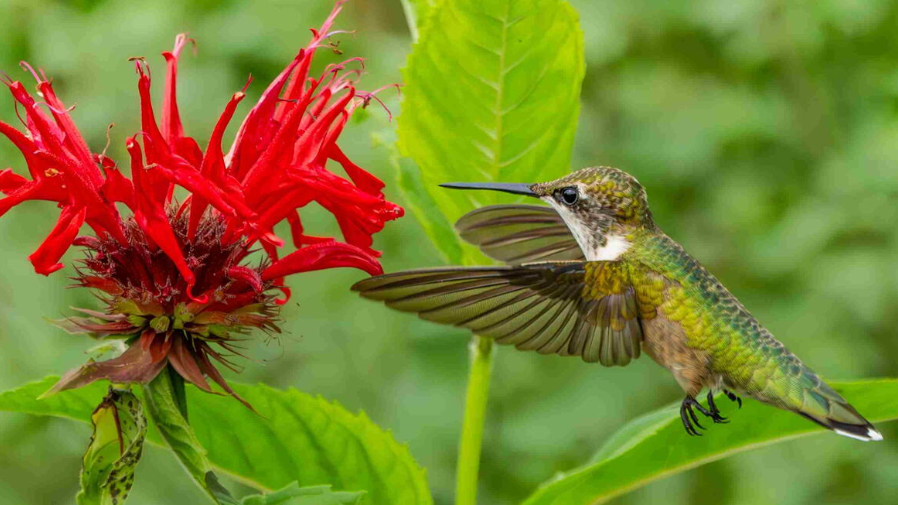
Hummingbirds are among the most thrilling and sought-after garden visitors in North America. These tiny, jewel-bright birds burn energy at an extraordinary rate — their hearts beat up to 1,200 times per minute — and must consume approximately half their body weight in nectar every single day to survive.
They are powerfully attracted to tubular, brightly colored flowers — particularly those in shades of red, orange, and pink — that are perfectly shaped to accommodate their long, specialized bills and extensible tongues. Planting a generous selection of nectar-rich annual flowers is one of the most reliable and rewarding ways to attract hummingbirds to your garden throughout the summer season.
Plant red, orange, and hot-pink flowers as a priority — these colors are the most powerful visual signals to hummingbirds. Choose a diversity of flower shapes and bloom times to provide continuous nectar from late spring through autumn. Mass plantings of single species are significantly more attractive to hummingbirds than scattered individual plants — aim for groups of at least three to five plants of each variety.
Avoid pesticides entirely in hummingbird gardens — hummingbirds feed on small insects as well as nectar and are highly susceptible to chemical contamination. Supplement flowering plants with hummingbird feeders filled with fresh sugar water (one part white sugar to four parts water) positioned near the most attractive annual plantings.
Provide water sources such as misters and dripper attachments near plantings, as hummingbirds bathe and drink frequently throughout the day. Plant in full sun wherever possible — most hummingbird annuals perform best and bloom most prolifically in maximum sunlight, and hummingbirds feed most actively in bright, open, sunny garden spaces.
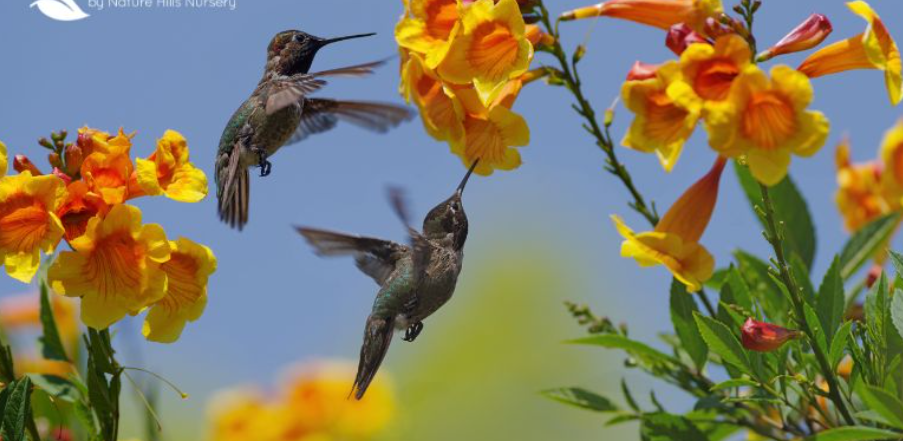
Best Annual Flowers That Attract Hummingbirds
Salvia (Salvia splendens / Salvia coccinea)
Salvias are universally regarded as the single finest group of annual flowers for attracting hummingbirds. Their long, tubular, nectar-rich flowers — particularly in vivid scarlet red — are perfectly shaped for hummingbird feeding and are produced in extraordinary abundance on tall, upright spikes from early summer to hard frost.
Scarlet sage (S. splendens) and blood sage (S. coccinea) are especially irresistible to hummingbirds, which visit them repeatedly throughout the day. Few annual plants reward hummingbird gardeners more reliably or more generously than a well-grown clump of red salvia in full summer bloom.
Lantana (Lantana camara)
One of the most powerfully attractive plants for hummingbirds in the summer garden, lantana produces rounded clusters of tiny, tubular flowers in multicolored combinations of red, orange, yellow, and pink that provide continuous nectar throughout the hottest summer months.
Hummingbirds visit lantana repeatedly and persistently throughout the day, feeding from the dense flower clusters with extraordinary enthusiasm. It thrives in full sun and heat, blooms continuously from late spring to frost, and is equally attractive to monarch butterflies — making it one of the most wildlife-valuable summer annuals available.
Pentas (Pentas lanceolata — Egyptian Star Flower)
Pentas is one of the most reliably hummingbird-attractive annuals for hot-summer gardens, producing dense, rounded clusters of small, star-shaped, nectar-rich flowers in vivid red, pink, white, and lavender continuously from late spring to frost.
Hummingbirds are powerfully drawn to the red and hot-pink varieties in particular and visit pentas plantings with remarkable frequency throughout the day. It thrives in full sun and high heat, requires minimal deadheading, and is outstanding for containers, border plantings, and dedicated hummingbird garden designs throughout summer.
Petunia (Petunia spp.)
Petunias — particularly those in red, pink, and purple shades with long, trumpet-shaped, nectar-rich flowers — are outstanding hummingbird attractors for containers, hanging baskets, and window boxes. Hummingbirds hover effortlessly before the large, open-throated flowers, probing deep into the floral tube for nectar with their long bills.
Wave and spreading petunia varieties produce such extraordinary quantities of bloom throughout summer that they represent a reliable, long-season nectar source for hummingbirds visiting residential gardens. Red and hot-pink varieties are the most powerfully attractive to hummingbirds.
Impatiens (Impatiens walleriana / SunPatiens)
Standard and SunPatiens impatiens are among the most effective hummingbird-attracting annuals for shaded and partially shaded garden positions where other hummingbird plants fail to perform.
Their flat, five-petaled, nectar-bearing flowers in vivid red, orange, coral, and hot pink are visited by hummingbirds throughout the day in shaded woodland garden settings. SunPatiens — a heat-tolerant, mildew-resistant hybrid — performs particularly well in sunny positions, extending the usefulness of impatiens as a hummingbird plant into full-sun garden situations throughout the entire summer season.
Fuchsia (Fuchsia spp.)
Few plants are more immediately, powerfully, and consistently attractive to hummingbirds than fuchsia, whose pendant, bicolored, lantern-like flowers in combinations of red, pink, purple, and white are perfectly designed for hummingbird feeding.
Hummingbirds hover beneath the hanging flowers to access nectar, and a well-planted hanging basket of fuchsia in a shaded or partially shaded position can attract hummingbirds with extraordinary regularity throughout summer. Trailing fuchsia varieties for hanging baskets and upright varieties for containers both attract hummingbirds reliably from late spring to the first autumn frosts.
Zinnia (Zinnia elegans)
While all zinnia colors attract hummingbirds, red, orange, and hot-pink varieties are the most powerfully attractive to these tiny birds. Hummingbirds visit zinnias to feed on nectar from the central disc florets and are particularly drawn to single and semi-double varieties where the nectar-bearing flowers are more easily accessible than in fully double types.
Zinnias bloom prolifically throughout the hottest summer months, providing a long-season, continuously replenished nectar source. They are simultaneously outstanding for butterflies and are among the easiest and most rewarding summer annuals to grow from direct-sown seed.
Cleome (Cleome hassleriana — Spider Flower)
The tall, dramatic, globe-shaped flower heads of cleome are powerfully attractive to hummingbirds, which hover around the large clusters of tubular, nectar-rich individual flowers with great enthusiasm. Hummingbirds are particularly drawn to the pink and rose-colored varieties.
Cleome grows quickly into tall, substantial plants — reaching 4–5 feet — that create impressive vertical structure in the hummingbird garden while providing nectar from midsummer through autumn. It self-seeds prolifically and returns each year reliably, establishing itself as a permanent, low-maintenance feature of the hummingbird garden.
Nicotiana (Nicotiana alata / Nicotiana sylvestris)
The long, tubular, star-shaped flowers of flowering tobacco are perfectly shaped for hummingbird feeding, and hummingbirds visit nicotiana plantings with great regularity throughout the summer. White and red-flowered varieties are particularly attractive to hummingbirds.
Tall species such as Nicotiana sylvestris — with its long, pendant, pure-white trumpet flowers — are especially effective hummingbird attractors and create dramatic, elegant structure in the hummingbird border. Many varieties are intensely fragrant in the evening, adding the bonus of outstanding garden fragrance to their significant hummingbird-attracting value.
Calibrachoa (Million Bells)
Despite their small, petunia-like flower size, calibrachoas are surprisingly effective hummingbird attractors, particularly in hanging baskets and elevated containers where hummingbirds can hover comfortably before the cascading stems of bloom. Red and hot-pink varieties are the most powerfully attractive to hummingbirds.
The extraordinary prolificacy of calibrachoa — producing literally thousands of nectar-bearing flowers per plant across a single season with no deadheading required — makes it one of the most continuously productive nectar sources among trailing annual flowers for summer hummingbird gardens.
Angelonia (Angelonia angustifolia — Summer Snapdragon)
Angelonia is an outstanding hummingbird annual that combines exceptional heat tolerance with a long, continuous bloom season and great attractiveness to hummingbirds throughout summer. Its upright spikes of small, two-lipped, grape-scented flowers in purple, lavender, pink, and white are visited regularly by hummingbirds from late spring to hard frost.
Hummingbirds are particularly attracted to the deeper purple and pink varieties. It thrives in full sun and high summer heat, requires no deadheading, and is one of the most reliable and low-maintenance hummingbird-attracting annuals for hot-summer gardens.
Tithonia (Tithonia rotundifolia — Mexican Sunflower)
Mexican sunflower is one of the most powerfully hummingbird-attractive tall annuals available for the summer garden. Its vivid, brilliant, orange-scarlet, dahlia-like flowers on tall, branching, robust plants are visited enthusiastically by hummingbirds throughout the day from midsummer to frost.
The bold, vivid orange-red color of tithonia flowers is among the most irresistible hummingbird signals in the plant kingdom. Growing to 3–4 feet tall, tithonia creates impressive, dramatic structure in the hummingbird border while providing an abundant, continuously replenished nectar supply throughout the hottest summer months.
Cuphea (Cuphea ignea / Cuphea hyssopifolia — Cigar Plant / Bat-faced Cuphea)
Cupheas are among the most specialized and effective hummingbird-attracting annuals available, with their tubular, brightly colored flowers so perfectly shaped for hummingbird feeding that they appear to have co-evolved specifically with these birds.
Cigar plant (C. ignea) produces narrow, tubular, vivid orange-red flowers with dark tips that resemble tiny lit cigars and are irresistible to hummingbirds. Bat-faced cuphea (C. llavea) produces distinctive, dark purple and red flowers equally attractive to hummingbirds. Both bloom prolifically from spring to frost and are outstanding dedicated hummingbird plants.
Mimulus (Mimulus spp. — Monkey Flower)
The tubular, two-lipped flowers of monkey flower — particularly those in vivid red, orange, and yellow with spotted throats — are outstanding hummingbird attractors for shaded, moist garden positions where most other hummingbird plants cannot perform.
Hummingbirds are particularly drawn to the red and orange varieties whose tubular flower shape is perfectly adapted for hummingbird bill length. Mimulus prefers cool, moist, partially shaded conditions and is an outstanding choice for shaded container plantings, moist border edges, and woodland garden settings in hummingbird gardens throughout summer.
Lobelia (Lobelia cardinalis — Cardinal Flower, grown as annual)
Cardinal flower is one of the single most powerfully hummingbird-attractive plants in North America — its vivid scarlet-red color and perfectly tubular flower shape appearing to have evolved specifically for hummingbird pollination. While technically a short-lived perennial, it is widely grown as an annual from transplants.
Hummingbirds visit cardinal flower with extraordinary frequency and enthusiasm, making it one of the most valuable and rewarding plants for any dedicated hummingbird garden. It prefers moist to wet soil and partial shade — conditions where other red hummingbird annuals may not perform.
Verbena (Verbena spp.)
Trailing and spreading verbenas in vivid red, hot-pink, and purple are reliably attractive to hummingbirds throughout summer, providing accessible nectar from their flat-topped, clustered flowers. Hummingbirds hover before verbena plantings and feed readily from the dense flower clusters throughout the day.
Their long, continuous bloom season from spring to frost makes verbenas outstanding long-season nectar sources in the hummingbird garden. They are particularly effective in hanging baskets and elevated containers where hummingbirds can feed comfortably without obstruction from surrounding garden plantings.
Scabiosa (Scabiosa atropurpurea — Annual Pincushion Flower)
While primarily known as a butterfly plant, annual scabiosa also attracts hummingbirds to its pincushion-like flower heads — particularly the deeper red and rose-colored varieties whose tubular individual florets provide accessible nectar. Hummingbirds probe the numerous small tubular flowers of each scabiosa head individually, spending considerable time feeding at each bloom cluster.
Scabiosa blooms continuously from midsummer to frost with regular deadheading, providing a sustained nectar source throughout the hummingbird season and simultaneously attracting an outstanding diversity of butterflies and beneficial insects.
Nasturtium (Tropaeolum majus)
The long-spurred, tubular nectar spur at the back of each nasturtium flower — containing a concentrated reservoir of sweet nectar — makes nasturtiums outstanding hummingbird plants, as hummingbirds are perfectly equipped with long bills to access the nectar hidden in the floral spur.
Red and orange varieties are the most powerfully attractive to hummingbirds. Nasturtiums bloom from early summer to frost, thrive in poor dry soil, and are completely edible — providing ornamental value, hummingbird attraction, and culinary interest simultaneously in a single, effortlessly grown annual plant.
Dahlia (Dahlia spp. — Annual single-flowered types)
Single and semi-double annual dahlias — particularly those in vivid red, orange, and hot-pink — are outstanding hummingbird attractors, with their open, accessible flower centers providing abundant nectar for visiting hummingbirds. Fully double, densely petalled varieties are less accessible to hummingbirds than single forms where nectar is more easily reached.
Hummingbirds visit dahlias repeatedly throughout the day and are particularly drawn to tall-growing varieties whose flowers are held at a comfortable hovering height. Dahlias bloom prolifically from midsummer to hard frost, providing a sustained late-season nectar source.
Geranium (Pelargonium spp.)
Hummingbirds visit zonal pelargoniums regularly for nectar — particularly red-flowered varieties whose rounded flower heads present numerous individual tubular florets accessible to hummingbird bills.
While not among the most powerfully hummingbird-attractive annuals, pelargoniums provide a useful supplemental nectar source throughout summer, particularly in containers, window boxes, and hanging baskets where hummingbirds feed alongside other container companions.
Red-flowered varieties are significantly more attractive to hummingbirds than pink, white, or salmon forms and are recommended for hummingbird-focused garden designs.
Agastache (Agastache spp. — Hyssop / Hummingbird Mint)
While technically perennial in mild climates, agastache is widely grown as an annual in colder gardens and is one of the finest hummingbird-attracting plants available. Its tall, densely packed spikes of small, tubular flowers in vivid orange, red, purple, and pink are extraordinarily attractive to hummingbirds, which visit them with remarkable frequency and persistence throughout the day.
The anise-scented foliage adds further sensory interest. Varieties such as ‘Apricot Sunrise’, ‘Kudos Coral’, and ‘Ava’ are outstanding dedicated hummingbird plants for the summer annual garden.
Penstemon (Penstemon spp. — Beard Tongue, grown as annual)
Many penstemon species and hybrids are grown as annuals in colder climates and are among the most powerfully hummingbird-attractive plants available. Their tall spikes of tubular, two-lipped flowers in vivid red, scarlet, pink, and purple are perfectly shaped for hummingbird feeding and are visited with extraordinary enthusiasm throughout the summer.
The brilliant scarlet Penstemon barbatus is particularly outstanding as a hummingbird annual. Penstemons bloom from early summer through autumn, providing one of the longest-season hummingbird nectar sources among annual and annual-grown plants.
Gaillardia (Gaillardia pulchella — Annual Blanket Flower)
Annual blanket flower produces vivid, bold, daisy-like flowers in striking combinations of red, orange, and yellow — colors that are powerfully attractive to hummingbirds — from early summer to hard frost. Hummingbirds visit gaillardia repeatedly for nectar from both the ray and disc florets.
It thrives in full sun, tolerates heat and drought remarkably well, and blooms prolifically throughout the hottest summer months when hummingbird activity is at its peak. Its extended bloom season, drought tolerance, and vivid hummingbird-attractive coloring make it an outstanding choice for hot-summer hummingbird gardens.
Four O’Clock (Mirabilis jalapa)
Four o’clocks are outstanding hummingbird plants that earn their common name by opening their fragrant, trumpet-shaped flowers in the late afternoon and remaining open through the night — providing nectar for hummingbirds during the active evening feeding period that occurs before roosting.
Their vivid flowers in red, pink, yellow, white, and multicolored bicolors are powerfully attractive to hummingbirds during their late-day feeding frenzy. They grow quickly from direct-sown seed into substantial, bushy plants and bloom prolifically from midsummer through the first autumn frosts.
Cypress Vine (Ipomoea quamoclit)
A vigorous, fast-climbing annual vine producing an extraordinary profusion of small, star-shaped, vivid scarlet-red, tubular flowers against a delicate background of feathery, finely divided, fern-like foliage from midsummer to frost.
The brilliant scarlet tubular flowers are among the most powerfully hummingbird-attractive of any climbing annual — hummingbirds visit cypress vine plantings with exceptional frequency and enthusiasm throughout the day. It climbs quickly to 10–15 feet on a trellis or fence, creating an outstanding vertical hummingbird-attracting feature in the summer garden.
Cardinal Climber (Ipomoea × multifida)
A close relative of cypress vine and morning glory, cardinal climber is a vigorous annual vine producing deeply divided, palmate leaves and a profusion of small, vivid scarlet-red, tubular, star-shaped flowers from midsummer to frost. The brilliant red tubular flowers are powerfully and reliably attractive to hummingbirds throughout the summer season.
It climbs quickly on a trellis, fence, or arbor and provides outstanding vertical structure in the hummingbird garden. Like cypress vine, its red color, tubular flower shape, and abundant nectar production make it one of the finest climbing annuals for dedicated hummingbird gardens.
Torenia (Torenia fournieri — Wishbone Flower)
A charming, compact annual that earns its place in the hummingbird garden by providing reliable nectar in partially shaded positions where most other hummingbird plants cannot perform.
Its tubular, two-lipped flowers in combinations of purple, lavender, pink, and white with distinctive yellow throat markings are visited by hummingbirds in shaded woodland garden settings throughout summer. Torenia is one of very few shade-tolerant annuals that reliably attracts hummingbirds, making it invaluable for hummingbird gardeners with predominantly shaded outdoor spaces and limited full-sun growing positions.
Scarlet Runner Bean (Phaseolus coccineus)
A vigorous, fast-growing annual climbing vine producing racemes of vivid, brilliant scarlet-red, pea-like flowers that are powerfully and irresistibly attractive to hummingbirds throughout summer. Hummingbirds visit scarlet runner bean plantings with extraordinary frequency and enthusiasm, returning repeatedly throughout the day to feed from the abundant, nectar-rich flowers.
As an added bonus, the large, edible beans produced after flowering are delicious and nutritious. Climbing quickly to 10 feet or more on a trellis or fence, it simultaneously provides food, hummingbird attraction, and vertical garden structure.
Lemon Bee Balm (Monarda citriodora — Annual Bee Balm)
Annual bee balm produces whorled, tiered clusters of tubular, two-lipped flowers in lavender-pink and purple on tall, aromatic, lemon-scented stems from midsummer through autumn. Hummingbirds are powerfully attracted to the tiered, tubular flower whorls and visit bee balm plantings with great regularity throughout the hummingbird season.
The lemon-scented foliage adds outstanding fragrance to the hummingbird garden. It grows quickly from direct-sown seed, self-seeds freely to return each year, and provides simultaneous outstanding value for hummingbirds, butterflies, and bees throughout the entire summer and autumn season.