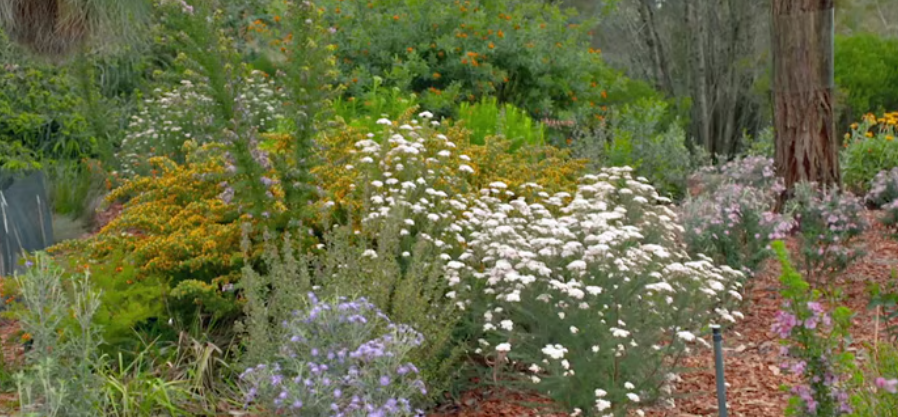
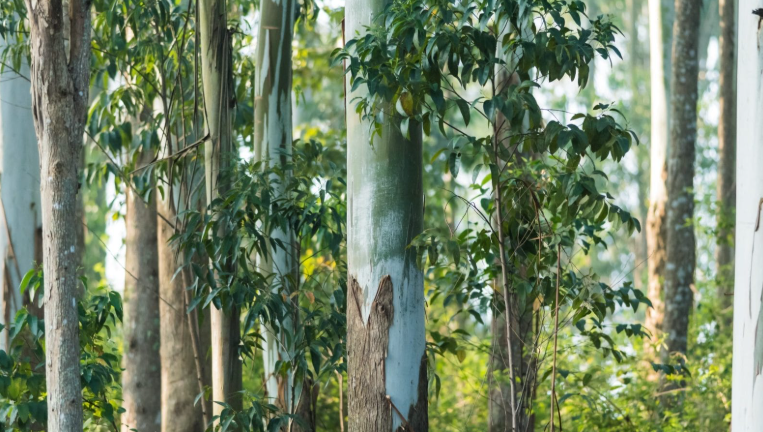
Growing plants beneath eucalyptus trees presents a genuine gardening challenge. Eucalyptus creates difficult conditions for most plants — dense shade, highly competitive surface roots, allelopathic leaf litter that inhibits germination, and dry, nutrient-poor soil. However, a surprising number of tough, drought-tolerant, and shade-adapted plants have proven capable of thriving in this demanding environment.
Key Tips for Planting Under Eucalyptus: Always choose plants that are drought-tolerant and can compete with surface roots. Avoid digging deeply near the tree to minimize root disturbance. Do not remove eucalyptus leaf litter — instead, plant through it and allow naturally adapted species to establish. Water new plants well for the first season until established, then reduce irrigation. Planting at the dripline or outer canopy edge where competition is less fierce often gives young plants the best start. Mulching with non-eucalyptus mulch can help establish new plantings in the critical first growing season.
Plants That Grow Well Under Eucalyptus Trees
Acanthus (Acanthus mollis)
Known as bear’s breeches, acanthus is one of the most reliable performers under eucalyptus. Its bold, deeply lobed, glossy dark green leaves are striking enough to stand as a ground cover on their own, and its tall spikes of white and purple hooded flowers add drama in late spring and summer. It tolerates dry shade, poor soil, and root competition with remarkable resilience, spreading steadily once established.
Agapanthus (Agapanthus africanus)
One of the toughest and most widely recommended plants for planting beneath eucalyptus trees. Its strap-like, fleshy, dark green leaves form dense, weed-suppressing clumps, and its tall stems of blue or white trumpet flowers are spectacular in summer. Agapanthus is highly drought-tolerant once established, thrives in poor soil, and its thick, fleshy roots allow it to compete effectively with eucalyptus surface roots.
Kangaroo Paw (Anigozanthos spp.)
A uniquely Australian plant that shares the same native landscape as many eucalyptus species, making it naturally adapted to the conditions they create. Kangaroo paws produce exotic, velvety tubular flowers in vivid shades of red, orange, yellow, and pink on tall stems above strap-like foliage. They thrive in the dry, free-draining, nutrient-poor soils typical under eucalyptus and are highly drought-tolerant.
Rosemary (Salvia rosmarinus)
A Mediterranean herb well-suited to the dry, sunny, root-competitive conditions often found under open-canopied eucalyptus trees. Its aromatic, needle-like grey-green leaves and small blue-purple flowers are familiar worldwide. Rosemary requires excellent drainage and full sun — conditions that can be found at the dripline and outer reaches of eucalyptus canopy — and thrives in the type of poor, alkaline-to-neutral soil that eucalyptus tends to create.
Lavender (Lavandula spp.)
Like rosemary, lavender is a Mediterranean drought-tolerant subshrub that can succeed in the dry, fast-draining soils at the margins of eucalyptus canopies. Its fragrant silver-grey foliage and purple flower spikes provide year-round interest. It performs best where the eucalyptus canopy is open enough to allow ample light. Lavender tolerates the allelopathic leaf litter relatively well and requires minimal supplemental watering once established.
Gazania (Gazania rigens)
A low-growing South African daisy that thrives in hot, dry, sunny conditions — precisely what the edge of a eucalyptus canopy often provides. Gazanias produce vivid, daisy-like flowers in orange, yellow, red, and multicolored patterns that open in full sun and close at night. They are highly drought-tolerant, cope well with poor, sandy soils, and spread to form a cheerful, low-maintenance ground cover in difficult dry conditions.
Osteospermum (Osteospermum spp.)
African daisies are vigorous, spreading, drought-tolerant ground covers that perform well in the dry, sunny margins beneath eucalyptus trees. They produce an abundance of white, purple, pink, or yellow daisy flowers over a long season. Their sprawling habit allows them to cover ground quickly, suppressing weeds. They are unfazed by poor, dry soils and handle the competition from eucalyptus roots well once they are properly established.
Westringia (Westringia fruticosa)
An Australian native shrub sometimes called coastal rosemary, westringia is closely related in appearance and cultural requirements to Mediterranean rosemary. It produces small, white to pale lilac flowers almost year-round on compact, grey-green leaved shrubs. As an Australian native, it is naturally adapted to the soil conditions and leaf-litter chemistry associated with eucalyptus and is highly drought-tolerant and hardy in difficult positions.
Lomandra (Lomandra longifolia)
One of the most popular and practical Australian native ground covers for planting under eucalyptus trees. This tough, strap-leaved tussock grass forms dense, arching clumps of dark green to olive foliage that smother weeds and stabilize soil. It tolerates drought, dry shade, root competition, and poor soils extremely well. Small, fragrant cream flowers appear on arching stems in spring. Numerous compact cultivars such as ‘Tanika’ and ‘Breeze’ are widely available.
Dianella (Dianella tasmanica)
A graceful Australian native lily grown for both its arching, strap-like blue-green foliage and its stunning, long-lasting clusters of vivid purple-blue berries in autumn. Dianella forms spreading, clumping ground covers that tolerate dry shade, root competition, and the allelopathic conditions under eucalyptus trees. Its berry display is one of the most ornamental of any shade-tolerant native ground cover in Australian gardens.
Native Violet (Viola hederacea)
A delightful, low-growing Australian native ground cover that forms a dense, soft carpet of kidney-shaped leaves studded with small white and violet flowers almost year-round. Native violet is one of the few flowering ground covers that copes with the deep, dry shade under dense eucalyptus. Once established, it spreads by runners to create a weed-suppressing carpet. It prefers slightly moister conditions than many eucalyptus companions but handles light shade and competition well.
Myoporum (Myoporum parvifolium)
A fast-growing, prostrate Australian native ground cover with small, bright green leaves and tiny white star-shaped flowers. It spreads rapidly to form a dense, weed-smothering mat only a few inches tall, covering large areas under eucalyptus canopies efficiently. It is highly drought-tolerant, thrives in poor, well-drained soil, and handles the allelopathic leaf litter of eucalyptus better than most introduced ground covers.
Hardenbergia (Hardenbergia violacea)
A stunning Australian native vine or scrambling shrub producing chains of vivid purple, pea-shaped flowers in late winter and early spring — one of the most spectacular flowering displays of any eucalyptus companion plant. Also known as purple coral pea or false sarsaparilla, it scrambles through shrubs or can be trained as a ground cover. It is drought-tolerant, fixes nitrogen, thrives in poor soils, and is well-adapted to the conditions created by eucalyptus.
Grevillea (Grevillea spp.)
Many of the low-growing, ground-cover grevillea species and hybrids are excellent companions under eucalyptus, sharing the same native habitat in the wild. Varieties such as Grevillea ‘Poorinda Royal Mantle’ and G. lanigera ‘Mt Tamboritha’ produce spreading mats of fine foliage decorated with spider-like red, orange, or pink flowers beloved by nectar-feeding birds. They thrive in poor, free-draining soil and dry conditions beneath the eucalyptus canopy.
Cistus (Cistus spp.)
Mediterranean rock roses are among the toughest and most drought-tolerant shrubs for planting under eucalyptus trees. They produce an abundance of delicate, papery, rose-like flowers in white, pink, or magenta with a crinkled texture, followed by a long season of aromatic, sticky foliage. They thrive in the hot, dry, poor soils at the edge of eucalyptus canopies and are fully adapted to summer drought — exactly the conditions eucalyptus imposes.
Salvia (Salvia spp.)
Many of the drought-tolerant salvias — particularly Mediterranean and South American species — perform well in the dry, difficult conditions beneath eucalyptus trees. Species such as Salvia nemorosa, S. leucantha, and S. officinalis tolerate poor, dry soil, root competition, and the chemistry of eucalyptus leaf litter. Their long spikes of blue, purple, red, or white flowers are ornamental and highly attractive to bees and butterflies.
Achillea (Achillea millefolium)
Common yarrow is a remarkably tough, drought-tolerant perennial that can colonize the dry, nutrient-poor soil beneath eucalyptus. Its finely divided, feathery, aromatic grey-green foliage forms spreading mats, topped in summer with flat-topped clusters of white, yellow, pink, or red flowers. It spreads by rhizomes, filling in gaps under the tree canopy, and is notably unbothered by the allelopathic compounds in eucalyptus leaf litter.
Iris (Iris germanica and Iris unguicularis)
Bearded irises and Algerian irises are both well-suited to the hot, dry, root-competitive conditions under eucalyptus. Bearded irises thrive in free-draining, nutrient-poor soil and full sun at the canopy edge. The Algerian iris (I. unguicularis) is particularly useful, as it flowers in winter on lavender-blue blooms and actively prefers the dry shade, poor soil, and rubble-like conditions that eucalyptus creates beneath its canopy.
Pelargonium (Pelargonium spp.)
Many of the shrubby, drought-tolerant pelargonium species — particularly the scented-leaf and species pelargoniums from South Africa — perform admirably in the dry, bright conditions under eucalyptus. Their aromatic foliage, ranging from rose-scented to peppermint-scented to nutmeg-scented, and their cheerful pink, red, or white flowers make them highly ornamental. They cope well with dry soil, root competition, and the challenging chemistry of eucalyptus leaf litter.
Echium (Echium candicans)
Pride of Madeira is a bold, fast-growing shrub that produces enormous, conical spires of vivid blue-purple flowers beloved by bees and butterflies. It thrives in poor, dry, well-drained soil in full sun — exactly the conditions often found at the edge of a eucalyptus canopy. Its tolerance of drought, salt, wind, and poor soils makes it one of the most resilient and dramatic large shrubs for challenging dry garden positions.
Coprosma (Coprosma repens)
A tough, glossy-leaved New Zealand native shrub that tolerates a remarkable range of difficult conditions — dry shade, root competition, poor soil, salt wind, and heat. Its leaves are exceptionally glossy and can be green, variegated, or bronzed depending on the cultivar. It makes a dense, weed-suppressing hedge or ground cover under eucalyptus and is one of the most adaptable shrubs for difficult dry-shade positions in mild-climate gardens.
Pennisetum (Pennisetum setaceum)
Purple fountain grass is a warm-season ornamental grass that thrives in the hot, dry, sunny conditions at the margins and under the open canopy of eucalyptus trees. Its arching, burgundy to green foliage and feathery, rose-purple flower plumes wave gracefully through summer and autumn. It is highly drought-tolerant, thrives in poor soils, and its deep root system competes effectively for available moisture. Note that it can be invasive in mild climates.
Festuca (Festuca glauca)
Blue fescue is a small, compact ornamental grass forming neat, spiky tufts of intensely blue-grey foliage. It thrives in the dry, free-draining, poor soil conditions typical beneath eucalyptus and makes a stylish, low-maintenance ground cover when planted in mass drifts. It is highly drought-tolerant and requires little feeding or watering once established. Its cool blue tones complement the grey-green palette of the eucalyptus canopy beautifully.
Bergenia (Bergenia cordifolia)
Elephant’s ears is a robust, evergreen perennial with large, glossy, paddle-shaped leaves that turn bronze-red in winter. It is one of the toughest shade-tolerant perennials for difficult dry positions and copes surprisingly well with the root competition and leaf litter chemistry under eucalyptus. Clusters of pink to magenta flowers appear in late winter and early spring. It spreads steadily by rhizomes to form a bold, weed-suppressing ground cover in even the most challenging shade.
Liriope (Liriope muscari)
Lilyturf is a versatile, clumping, grass-like perennial that is widely used as a ground cover in difficult dry-shade situations. Its dark green, strap-like leaves form dense, arching tufts that suppress weeds effectively, and spikes of small violet-purple to white flowers appear in late summer above the foliage. It is highly tolerant of drought, dry shade, poor soil, and root competition — making it one of the most reliable choices for underplanting eucalyptus trees.
Ophiopogon (Ophiopogon japonicus)
Mondo grass is an exceptionally versatile, low-growing, grass-like perennial that forms a dense, dark green carpet just a few inches tall. It tolerates deep shade, dry soil, root competition, and poor fertility with equal equanimity. The black mondo grass (O. planiscapus ‘Nigrescens’) offers the dramatic option of jet-black, strap-like foliage for a striking contrast beneath the pale bark of eucalyptus trees. Both green and black forms spread slowly but reliably.
Ajuga (Ajuga reptans)
Bugle weed is a fast-spreading, mat-forming ground cover with attractive, bronzed to dark purple, oval leaves and short spikes of vivid blue flowers in spring. It tolerates dry shade remarkably well and can carpet large areas under eucalyptus with minimal care. Its runners spread quickly to fill gaps. While it performs best in slightly moist soil, many cultivars have been selected for improved drought and dry-shade tolerance. Its low profile keeps it safely beneath falling leaf litter.
Aloe (Aloe vera and other Aloe spp.)
Aloes are among the most drought-tolerant and low-maintenance plants available for underplanting eucalyptus trees, sharing similar climatic origins in hot, dry regions of the Southern Hemisphere. Their fleshy, succulent, often spine-edged rosettes store water efficiently, allowing them to survive the extreme dry-soil conditions created by eucalyptus roots. Tall spikes of tubular orange, red, or yellow flowers are highly attractive to birds. Many species, including Aloe arborescens and A. striatula, are particularly robust performers.