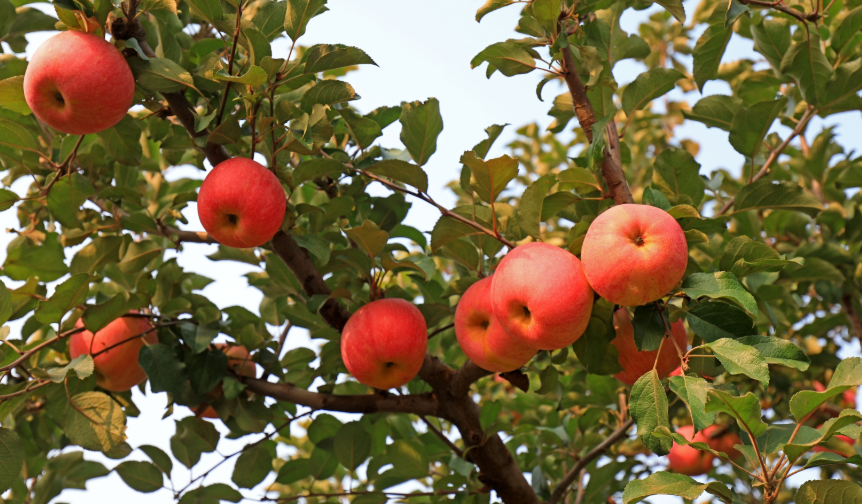
Growing apples in Florida presents unique challenges, as most traditional apple varieties require hundreds of chilling hours — hours of temperatures below 7°C (45°F) — to break dormancy and produce fruit. Florida’s warm, humid climate means that only specially selected low-chill varieties succeeding on as few as 50 to 300 chilling hours are suitable, with North Florida offering the most favourable conditions and Central Florida requiring the lowest-chill cultivars available.
Other than choosing low-chill apple varieties timing of planting is also important. Apple trees in Florida are usually planted during the cooler months to help them establish before the intense summer heat arrives. Young trees benefit from careful watering and protection from strong sunlight as they adapt to their environment.
Soil conditions play a big role in apple production. Well-drained soil is essential, as apple trees do not tolerate standing water around their roots. In areas with sandy soil, which is common in Florida, adding organic matter can help improve moisture retention and nutrient availability.
Pest and disease management is another key factor. Warm and humid conditions can encourage fungal diseases and insect problems, so regular monitoring and proper care are necessary. Pruning also helps improve air circulation, which reduces the risk of disease and supports healthy growth.
Despite the challenges, growing apples in Florida can be rewarding with the right approach. With suitable varieties, good care, and proper management, gardeners can enjoy fresh, homegrown apples even in a subtropical climate.
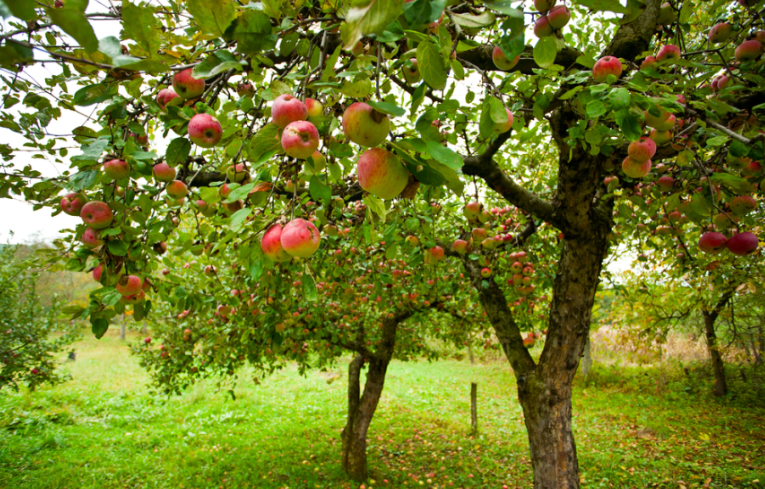
Apples that Grow in Florida
Anna Apple (Malus domestica ‘Anna’)
The Anna apple is the most widely grown and most reliably productive apple in Florida, a low-chill Israeli variety requiring only 200 to 300 chilling hours that produces large, crisp, sweet-tart fruits with a pale yellow-green skin attractively blushed with red in late spring to early summer — a remarkably early harvest by any standard. It is the essential foundation variety for Florida apple growing and performs well across North and Central Florida, bearing generous crops when grown alongside a compatible pollinator such as Dorsett Golden.
Dorsett Golden (Malus domestica ‘Dorsett Golden’)
Developed in the Bahamas by Irene Dorsett in the 1950s, Dorsett Golden is a yellow-skinned, sweet, mild-flavoured apple of good quality that requires only 100 to 200 chilling hours, making it one of the lowest-chill apples available and one of the few varieties that will reliably fruit even in the warmer parts of Central Florida. It is an outstanding pollinator for Anna apple, with the two varieties flowering simultaneously and cross-pollinating each other very effectively to ensure generous crops on both trees.
TropicSweet (Malus domestica ‘TropicSweet’)
TropicSweet is a low-chill apple variety developed specifically for Florida conditions by the University of Florida’s breeding programme, requiring only around 200 to 250 chilling hours and producing medium to large, yellow-green fruits with a sweet, mild flavour and firm, crisp flesh in early summer. It was released for commercial and home garden production in Florida and performs particularly well in the northern and north-central parts of the state where its combination of low chill requirement and good disease resistance can be fully exploited.
Ein Shemer (Malus domestica ‘Ein Shemer’)
Ein Shemer is another Israeli low-chill variety requiring only 200 to 300 chilling hours that has proven itself well-adapted to warm-climate apple growing in Florida and the Gulf South. It produces medium-sized, yellow-green, mildly sweet fruits with a pleasant, clean flavour and firm texture in late spring, and it is a reliable, consistent performer that benefits from cross-pollination with Anna or Dorsett Golden to achieve the best possible fruit set and crop size.
Fuji (Malus domestica ‘Fuji’ — low-chill selections)
While standard Fuji apples require around 600 chilling hours and are therefore unsuitable for most of Florida, certain low-chill Fuji selections and sports have been identified that perform adequately in North Florida with its relatively higher chill accumulation. Low-chill Fuji selections produce the characteristic large, dense, exceptionally sweet and crisp red-flushed fruits that have made Fuji one of the most popular apple varieties in the world, and they are among the most sought-after apples for Florida home orchardists willing to manage their trees carefully.
Gala (Malus domestica ‘Gala’ — low-chill selections)
Certain low-chill Gala selections have shown promise in North Florida, where sufficient winter chilling can accumulate in most years to satisfy their relatively modest requirements. The distinctive orange-red striped fruits of characteristic Gala type — sweet, aromatic, crisp, and medium-sized — are produced in early summer under Florida conditions and are of excellent quality when the tree receives adequate winter chill to break dormancy fully and set a good crop.
Granny Smith (Malus domestica ‘Granny Smith’ — early-strain selections)
Standard Granny Smith requires around 400 chilling hours, which limits it to North Florida in most years, but early-maturing low-chill selections of this classic tart, green apple have been grown successfully by dedicated Florida home orchardists in areas with reliable chill accumulation. The characteristic bright green skin, intensely tart and refreshing flesh, and excellent keeping quality make Granny Smith worth attempting in the most favourable North Florida locations despite its relatively higher chill requirement.
Crimson Gold (Malus domestica ‘Crimson Gold’)
Crimson Gold is a compact, naturally semi-dwarf apple variety bearing small, bicoloured red and yellow fruits of remarkably good flavour — sweet, slightly tart, aromatic, and richly complex — that has shown good adaptability to warm-climate growing conditions with relatively low chill requirements. Its naturally compact size makes it particularly suitable for small home gardens and container growing, and its attractive fruit and reliable bearing habit have earned it a devoted following among Florida home fruit growers.
Lodi (Malus domestica ‘Lodi’)
Lodi, also known as Yellow Transparent in some catalogues, is an early-ripening variety bearing pale yellow-green fruits of tart, juicy, soft flesh that are best used for cooking, sauce, and pies rather than fresh eating. It requires relatively few chilling hours compared to most classic varieties and ripens very early in summer, providing a useful early-season harvest before most other apple varieties in North Florida gardens. The soft flesh deteriorates quickly after picking and the fruits should be used promptly.
Golden Delicious (Malus domestica ‘Golden Delicious’ — low-chill strains)
Golden Delicious is a classic, universally known apple of sweet, mild, honey-flavoured yellow fruits that has been the subject of low-chill breeding and selection efforts, and certain low-chill strains perform adequately in North Florida where winter chill is sufficient. As a parent variety it has contributed its low-chill tendencies to many warm-climate apple breeding programmes, including several Florida-adapted varieties that carry its sweetness and mild flavour into a more heat-tolerant genetic package.
Tropic Beauty (Malus domestica ‘Tropic Beauty’)
Tropic Beauty is a University of Florida release specifically developed for the warm-climate growing conditions of Florida and the Gulf South, bearing attractive, red-blushed, medium-sized fruits of good sweet-tart flavour and firm, crisp texture. It requires approximately 250 to 300 chilling hours and ripens in early to midsummer in North and Central Florida, providing a reliable and locally adapted option for home orchardists seeking a named, research-backed variety developed with Florida’s specific growing challenges in mind.
Pink Lady (Malus domestica ‘Cripps Pink’ — low-chill selections)
Pink Lady is one of the most popular apple varieties in the world, its characteristic pink-blushed skin, dense crisp flesh, and sweet-tart, highly aromatic flavour making it a premium commercial and home garden choice wherever it can be grown. Certain low-chill Pink Lady selections have shown reasonable performance in North Florida, and the variety’s natural tendency toward late maturity is an advantage in Florida where a late harvest extends the apple season into summer when other varieties have already ripened.
Honeycrisp (Malus domestica ‘Honeycrisp’ — warm-climate trials)
Honeycrisp is one of the most beloved apple varieties ever developed, famous worldwide for its extraordinary explosive crunchiness, balanced sweet-tart flavour, and remarkable juiciness, and while it is primarily a cold-climate apple, ongoing trials and selection work in warm-climate growing programmes have identified strains with reduced chill requirements showing promise in North Florida. Success with Honeycrisp in Florida remains inconsistent and site-dependent, but results from experimental plantings continue to encourage interest in its potential adaptation.
Braeburn (Malus domestica ‘Braeburn’ — early selections)
Braeburn is a New Zealand-bred apple of outstanding flavour — spicy, rich, complex, and well-balanced between sweet and tart — that has attracted interest from warm-climate apple growers due to its origins in a relatively mild climate. Early-ripening Braeburn selections have been trialled in North Florida with mixed but occasionally encouraging results, and the variety’s excellent flavour makes it a worthwhile subject for experimentation in the most favourable North Florida apple-growing locations with consistent winter chill accumulation.
Reverend Morgan (Malus domestica ‘Reverend Morgan’)
The Reverend Morgan is a locally recognised low-chill apple selection that has demonstrated reliable performance in North Florida and the Florida Panhandle region where it was developed and selected. It bears medium-sized, red-blushed fruits of pleasant sweet flavour and represents the kind of locally selected, locally adapted variety that often outperforms widely marketed commercial cultivars in specific regional conditions, making it a valued choice for North Florida home orchardists seeking proven local performance.
White Gippsland (Malus domestica ‘White Gippsland’)
White Gippsland is an Australian low-chill apple variety that has attracted attention from warm-climate apple growers including those in Florida for its low chilling requirement and the attractive, near-white to pale cream skin of its medium to large fruits, which have a pleasant, mild, sweet flavour. Its Australian origin in a warm-summer, mild-winter climate makes it a logical candidate for Florida trialling, and its unusual white or pale skin colouration gives it considerable novelty appeal in the home orchard.
Pettingill (Malus domestica ‘Pettingill’)
Pettingill is a Californian low-chill apple developed in Southern California and requiring only around 100 to 200 chilling hours, making it one of the better-adapted varieties for Central Florida’s limited winter chill conditions. It produces very large, red-striped fruits of mild, sweet flavour and has the additional advantage of an extended ripening season that allows fruits to be harvested over several weeks, reducing the pressure of processing and consuming a large crop in a short window.
Beverly Hills (Malus domestica ‘Beverly Hills’)
Beverly Hills is a low-chill California apple variety specifically developed for warm-winter climates that requires only around 300 chilling hours and produces attractive, red and yellow striped fruits of pleasant, mild-sweet flavour in early summer. Though it is not among the best-flavoured apples available, its adaptability to warm climates and reliable bearing in low-chill conditions make it a practical choice for Florida home orchardists, particularly in North Florida where it performs most consistently.
Mollie’s Delicious (Malus domestica ‘Mollie’s Delicious’)
Mollie’s Delicious is a Rutgers University development bearing large, attractive, yellow-green fruits flushed with red and possessing a pleasantly sweet, mildly flavoured flesh that ripens in early summer. It requires approximately 400 chilling hours, restricting it to the coolest parts of North Florida and the Panhandle region, but in those areas it performs reliably and its large, attractive fruits of good eating quality make it a worthwhile addition to the North Florida home orchard where sufficient chill can be accumulated.
Ozark Gold (Malus domestica ‘Ozark Gold’)
Ozark Gold is a golden-yellow apple of the Missouri origin that requires around 700 chilling hours in standard form, restricting it to the most favourable North Florida and Panhandle locations, but it is included here because its progeny and related low-chill selections have shown promise in warm-climate trials. The original variety produces high-quality, rich, sweet, yellow fruits of excellent flavour, and breeders have used it as a parent in crosses aimed at developing new low-chill selections that retain its outstanding flavour characteristics.
Pristine (Malus domestica ‘Pristine’)
Pristine is an early-season, disease-resistant apple variety developed by Purdue University that bears attractive yellow fruits with a light red blush, firm and crisp flesh, and a pleasant sweet-tart flavour ripening in early summer. Its very early ripening season is an advantage in Florida conditions, and its notable resistance to apple scab, fire blight, and powdery mildew — the three most significant apple diseases in warm, humid climates — makes it particularly well-suited to Florida’s challenging disease pressure.
Scarlet Sentinel (Malus domestica ‘Scarlet Sentinel’)
Scarlet Sentinel is a naturally columnar apple variety bearing bright red, medium-sized fruits of sweet, firm flesh that is particularly valuable for small Florida gardens where space is limited and a traditional spreading apple tree is impractical. Its columnar growth habit means it can be planted in a very narrow border, against a fence, or even in a large container, and its moderate disease resistance and reasonable adaptability to warm conditions make it a practical choice for North Florida home gardeners with limited growing space.
Fukunishiki (Malus domestica ‘Fukunishiki’)
Fukunishiki is a Japanese low-chill apple variety that has attracted interest from warm-climate apple growers in the United States for its very low chilling requirement of approximately 200 hours and its production of attractive, red-flushed fruits of firm, crisp, sweet flesh. Its Japanese breeding background in mild coastal climates gives it natural adaptability to warm, humid growing conditions, and it has demonstrated reliable performance in low-chill apple trials conducted by research institutions exploring new variety options for the southeastern United States.
Sundowner (Malus domestica ‘Cripps Red’)
Sundowner, also known as Cripps Red, is a Western Australian bred apple variety bearing deep red, firm, dense, sweet-tart fruits of exceptional quality that ripen late in the season. Certain early-ripening Sundowner selections have shown interest for North Florida trialling, where the variety’s warm-climate Australian origins and consistent performance in mild winters give it potential for adaptation to Florida growing conditions. Its outstanding fruit quality — firm, dense, richly flavoured, and with excellent keeping characteristics — makes it a highly desirable variety for Florida orchardists wherever sufficient chilling can be reliably accumulated.